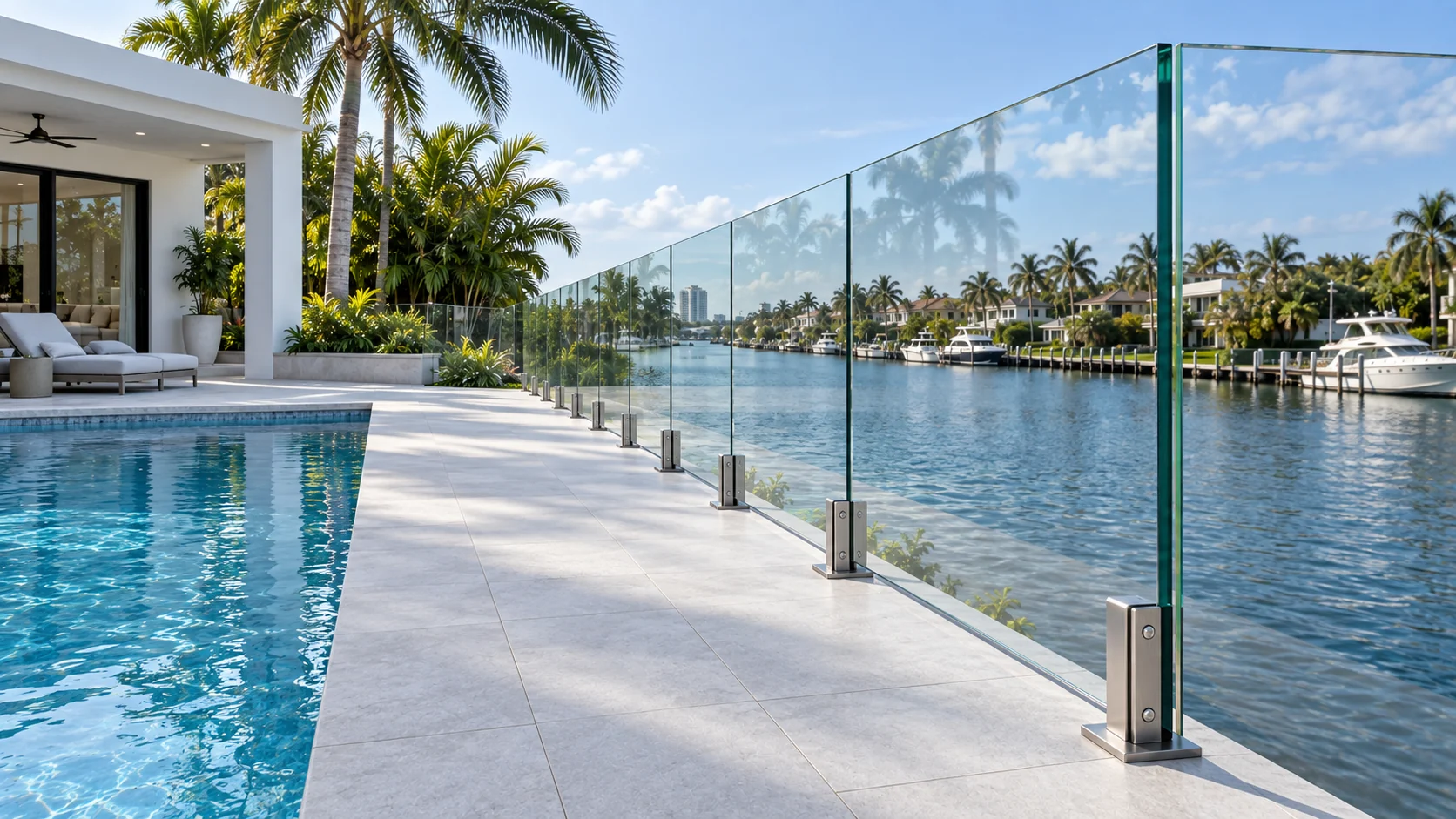
Pool barriers in Florida. Plan the boundary, not just the view.
A glass pool fence is part of the pool safety system. In Florida, the barrier, gates, nearby objects, and access route need to be considered together before fabrication.
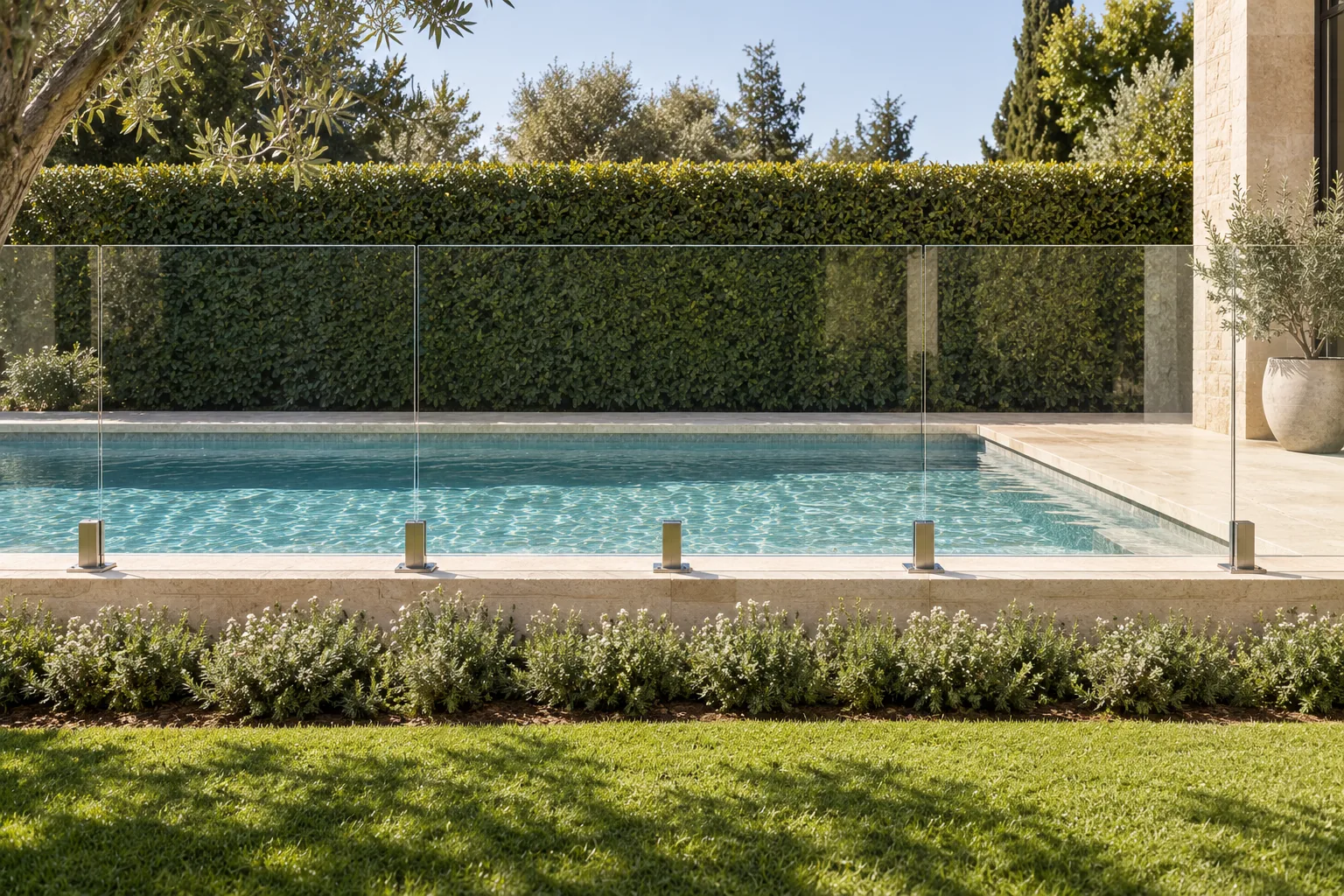
Florida’s residential pool barrier statute generally describes a barrier at least four feet high, placed around the pool area and arranged to limit access by young children. The statute, local amendments, and the permit review control the actual project requirements.
02
Gaps, footholds, and climbing routes matter
A compliant barrier is not only a sheet of glass. Openings, protrusions, landscaping, furniture, retaining walls, steps, and adjacent structures can create a route over, under, or through the boundary. The layout should be reviewed from the child-safety perspective before hardware is ordered.
03
Gates need their own review
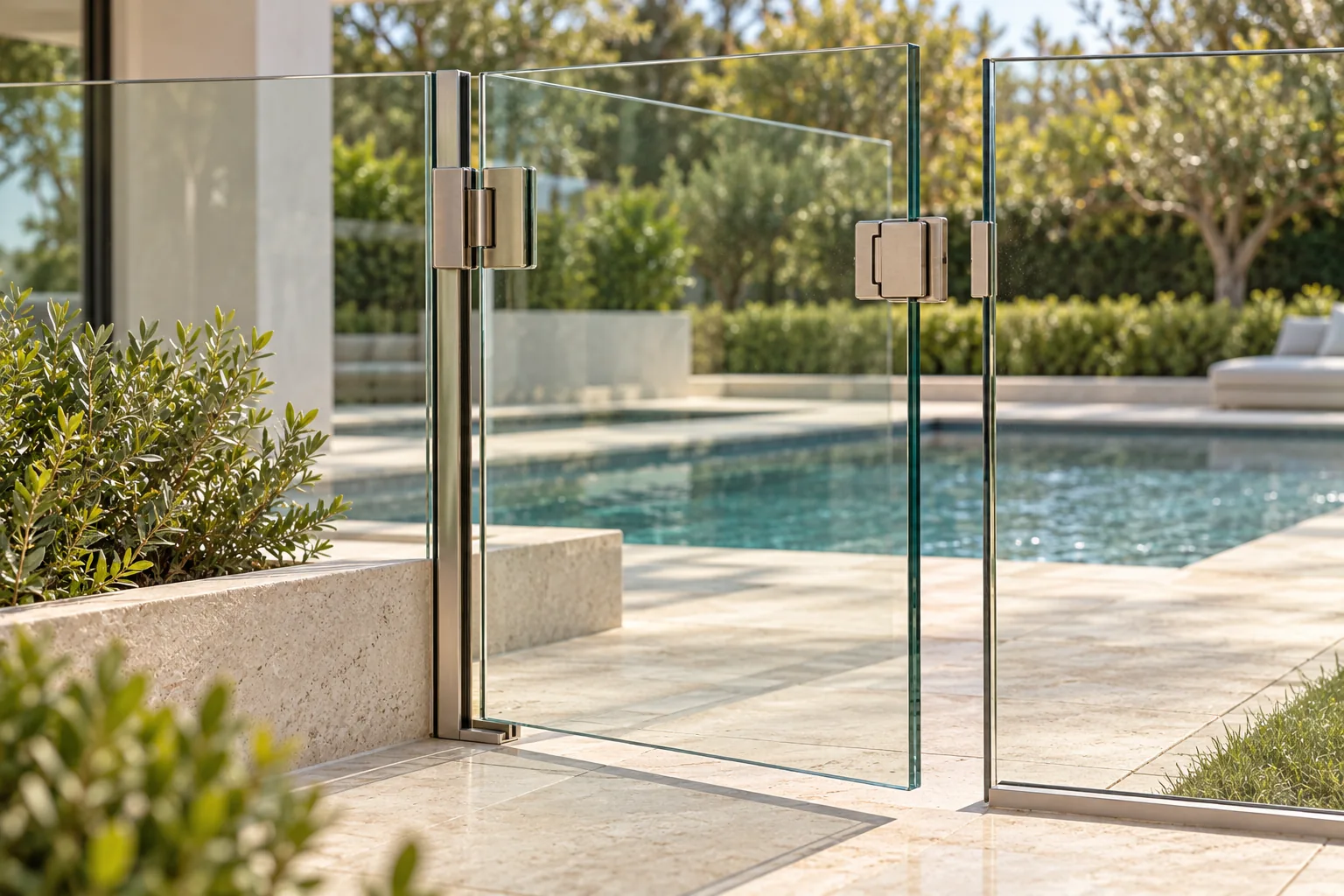
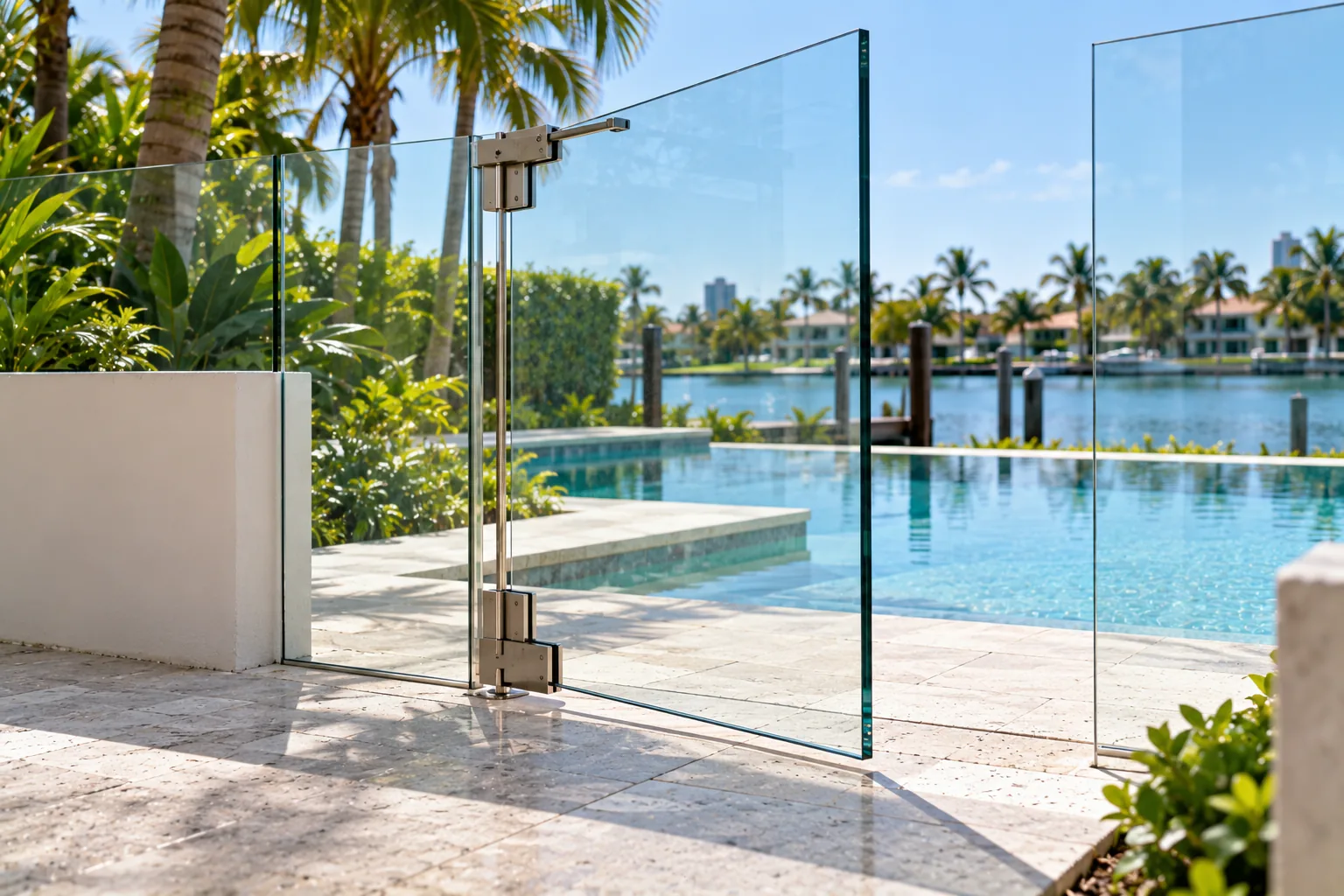
Pool gates are typically required to swing outward from the pool area, close automatically, and latch securely. The release hardware must be positioned so a young child cannot reach it from the pool side. Gate width, hinge clearances, latch type, and the surrounding deck all affect the final detail.
04
Choose the barrier line with the site
Setbacks, deck drainage, coping, retaining walls, screen enclosures, outdoor showers, and access to the home can all change where the glass should run. A clean visual line is valuable, but the safety boundary and service access come first.
05
What to photograph before a quote
Send the pool perimeter, house doors, gates, steps, raised decks, screen enclosure, and any objects within reach of the proposed line. Include a wide view from each access point so the review starts with the complete barrier, not an isolated panel.
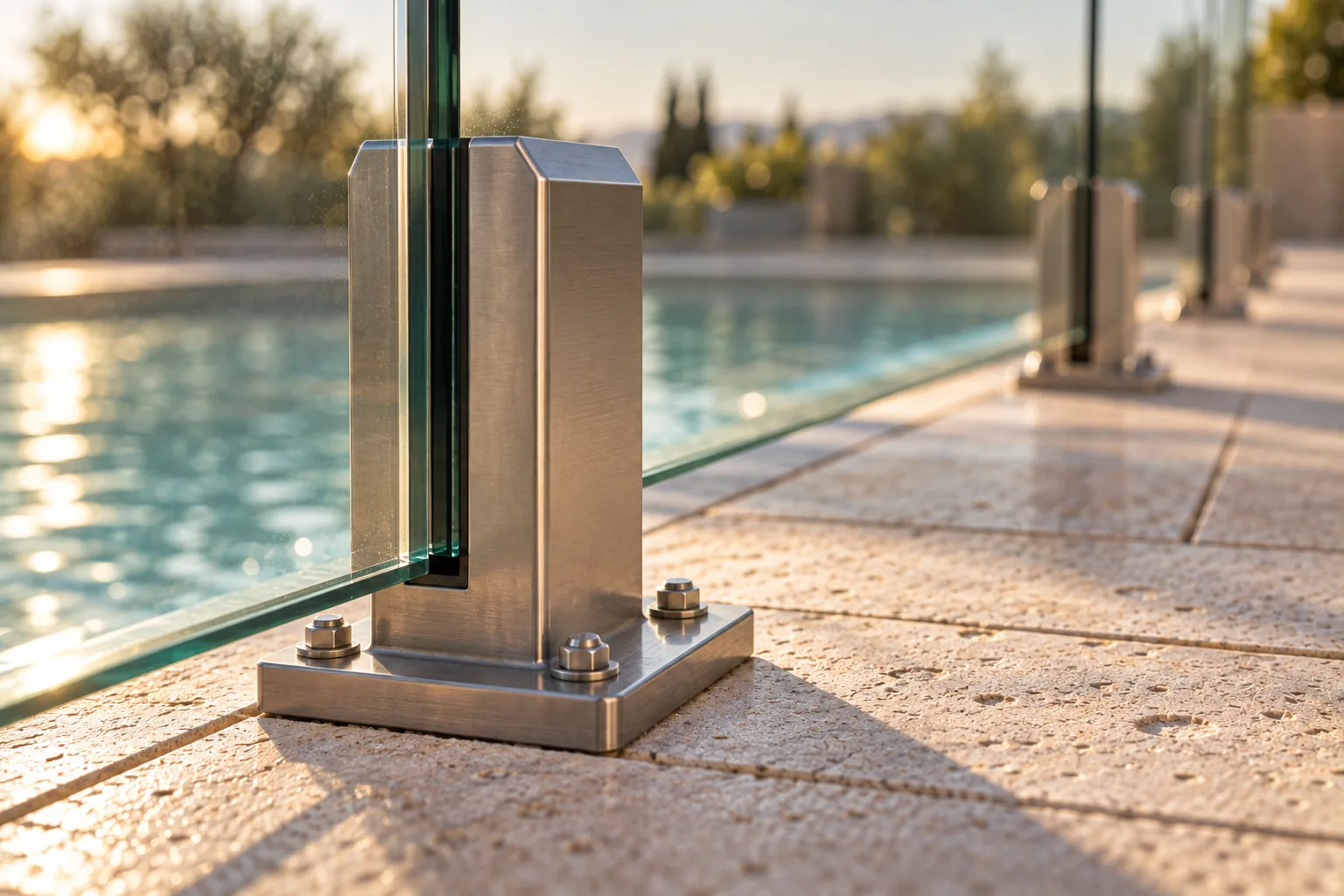
Which system suits a project depends on the surface it fixes to and how the space is used. Send photographs or a plan and we will go through the options against your own site rather than in general.