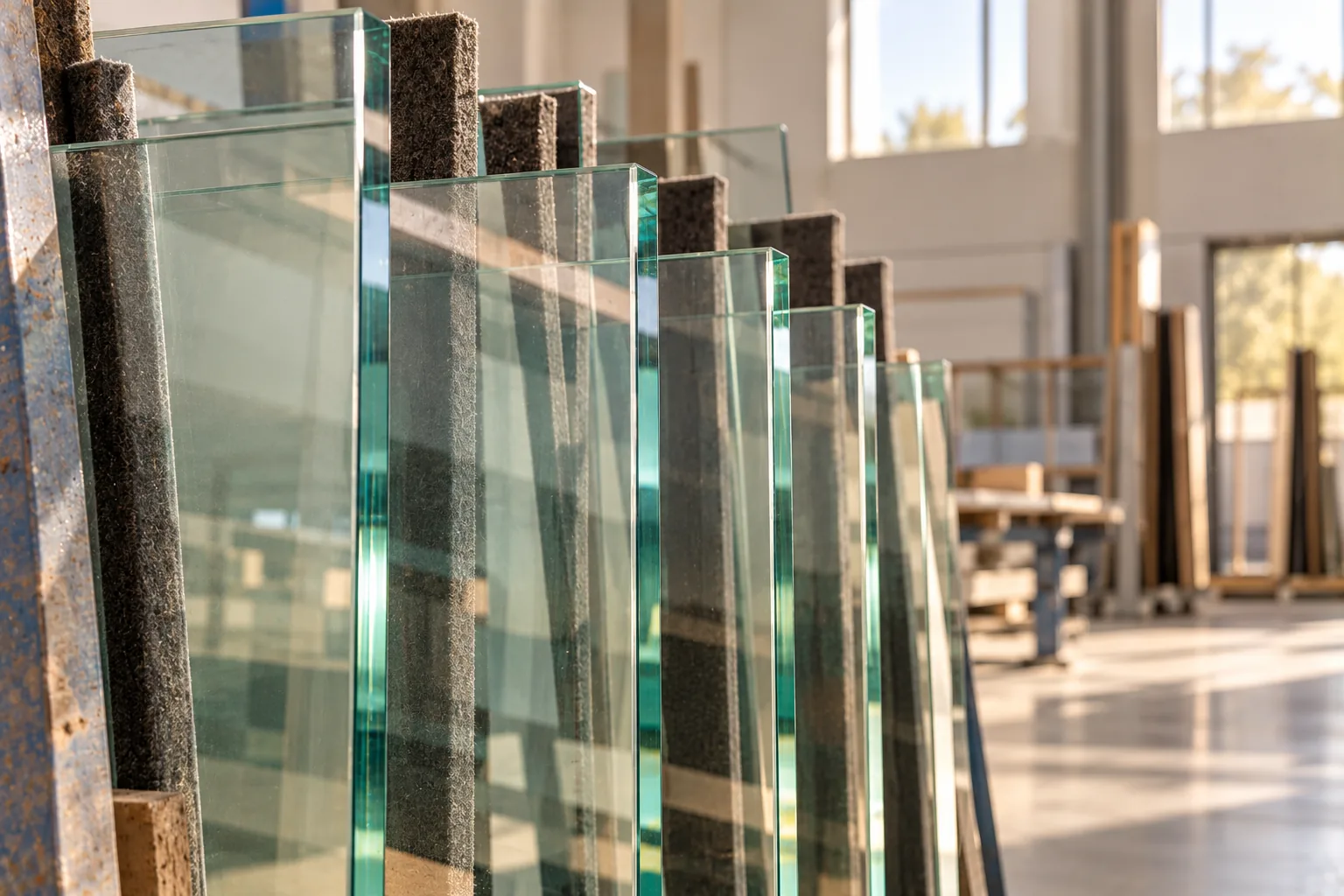
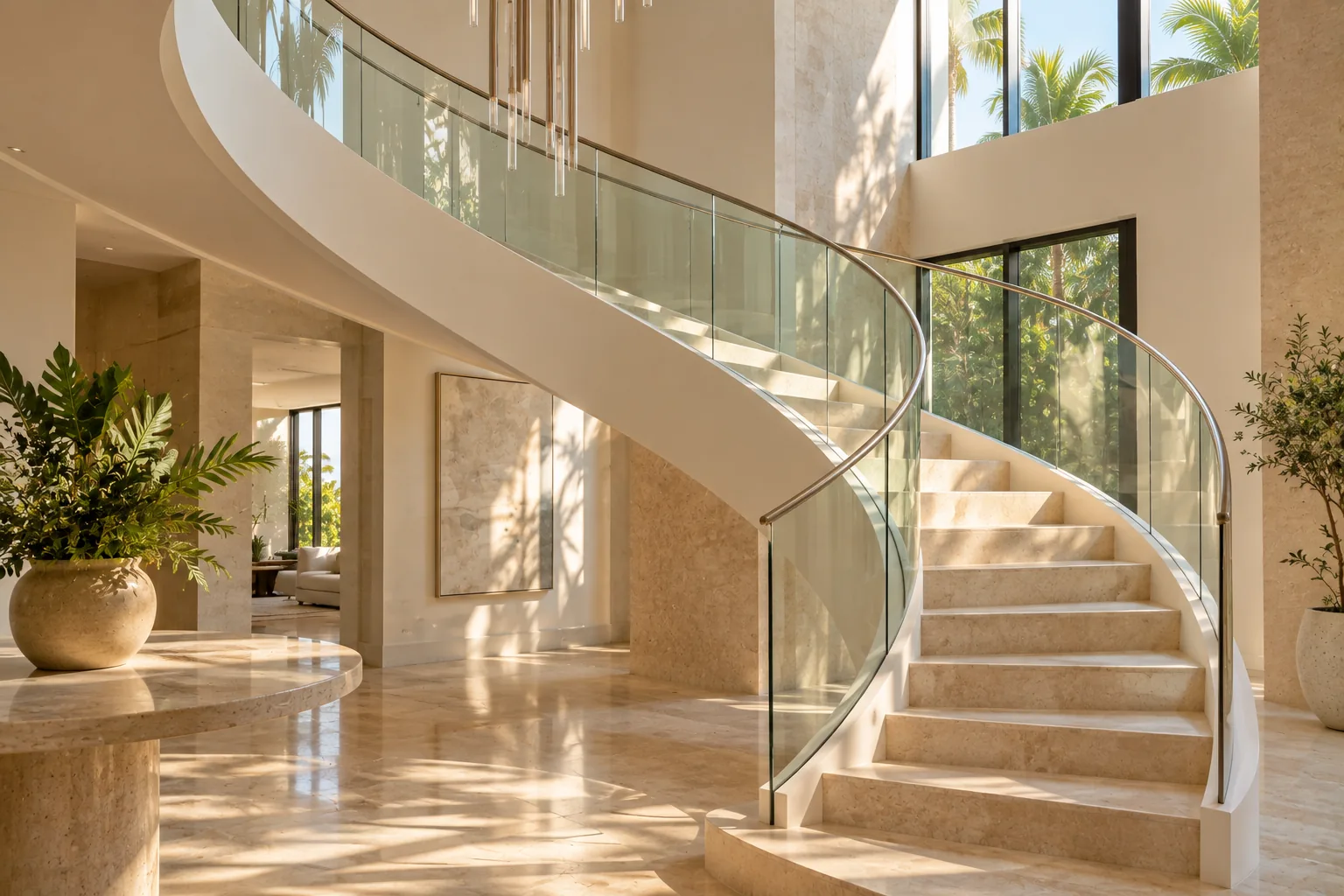
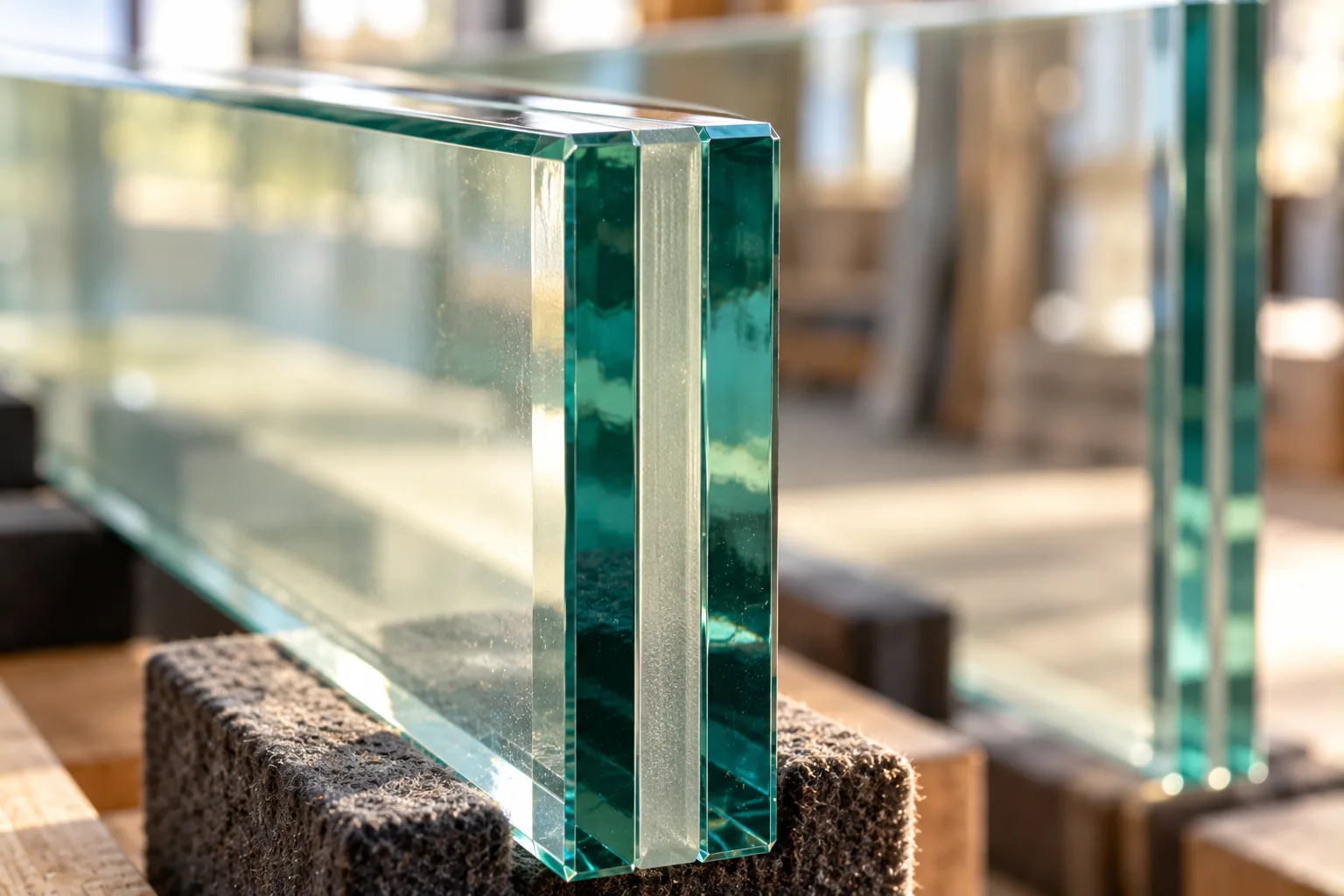
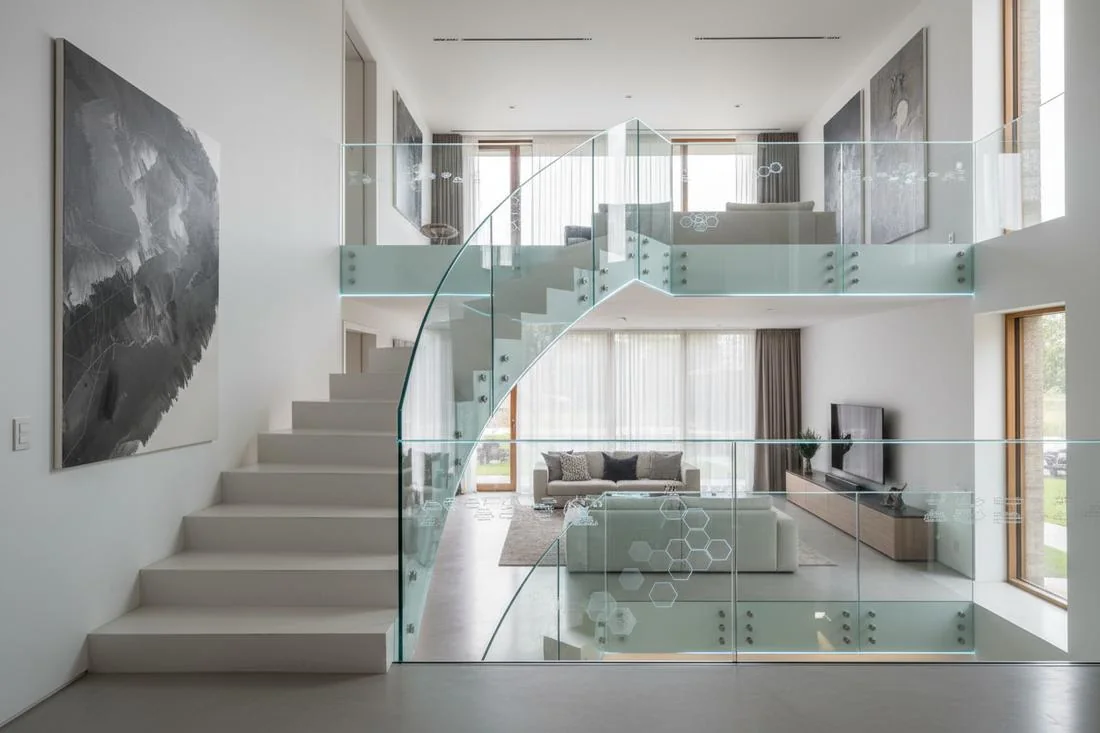
Bent glass is formed over a mould in a furnace and then tempered or laminated in that shape. Nothing about the curve happens on site, which is why a curved stair is a measuring problem long before it is a glass problem.
A flat panel is heated until it slumps onto a mould cut to the radius, then cooled in the shape it has taken. After that the panel is what it is: it cannot be eased into a slightly different curve, trimmed at the ends to pick up a few inches, or flipped end for end if the radius is not constant. Every panel is made for one position in one run, and the order it is installed in is decided before anything is cut.
02
The template is the whole job
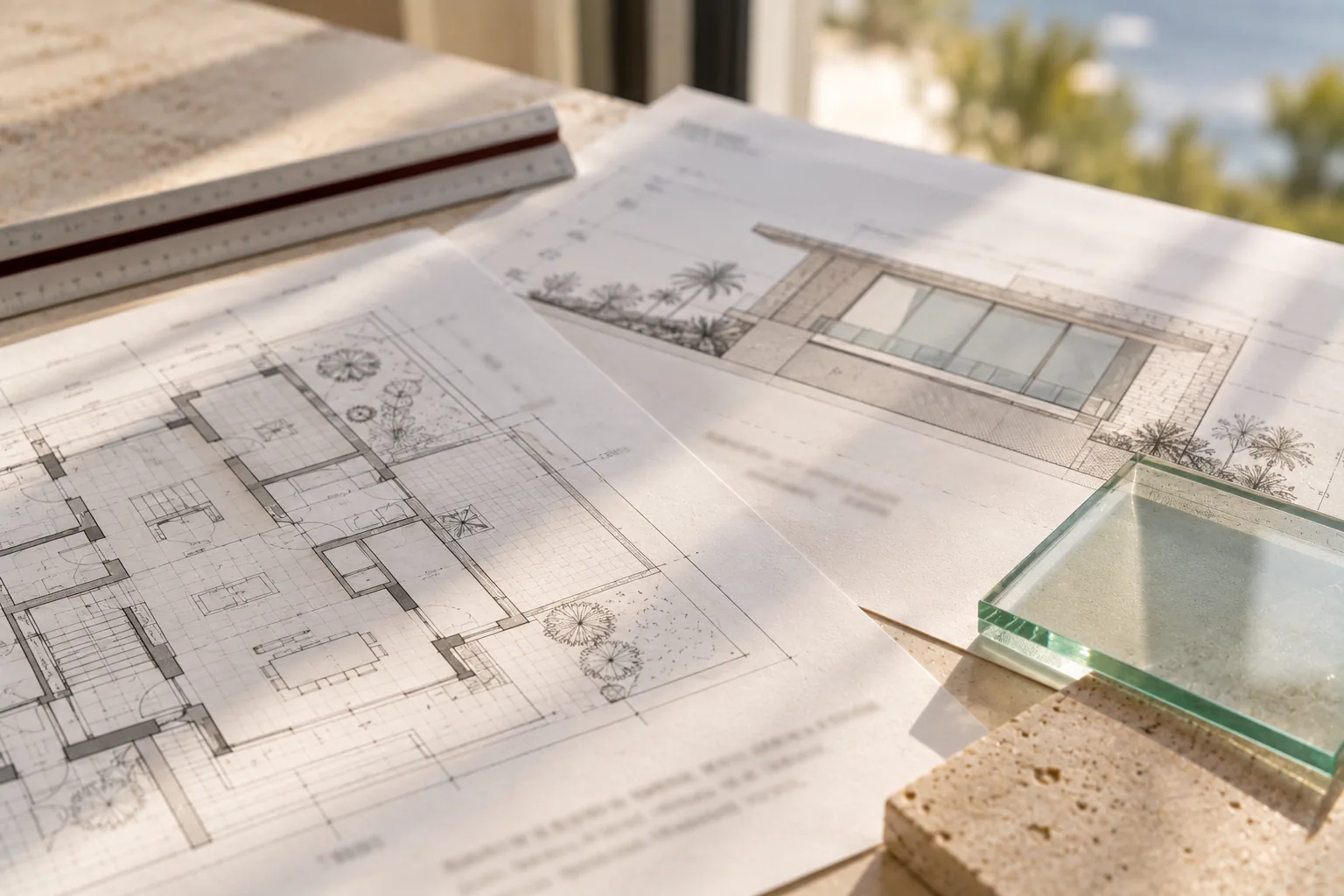
A curved stair is rarely a true arc. It changes radius as it rises, the tread nosings do not sit on one circle, and a drawing that says "radius 8 feet" is usually describing an intention rather than the thing that got built. So the curve is taken from the stair itself — a physical template, or a survey of points along the actual run — after the structure is finished and before anything is ordered. Everything downstream is only as good as that.
03
Radius and thickness argue with each other
The tighter the curve, the harder it is to bend thick glass, and railing glass is thick. Every fabricator has a minimum radius for each thickness and make-up, and it is a property of their furnace and moulds rather than a universal number — ask for it in writing before the stair geometry is final. A radius that sits below the limit does not get quoted tighter; it gets refused, or it comes back as a different make-up than the one you specified.
04
Bent laminated, or bent tempered
Both exist and they fail differently. Bent tempered breaks into small blunt pieces and leaves the opening unguarded. Bent laminated holds the pieces on its interlayer and keeps standing, which is why guards that people lean on are usually laminated — and on a stair, people lean. Laminating a curve adds its own difficulty: both plies have to come out of the furnace matching each other closely enough to bond without distortion.
Flat glass reflects a room more or less honestly. A curved panel sweeps the reflection as you walk past it, and the bending process leaves its own faint waviness in the surface. In a hall with a tall window or a chandelier this reads as movement in the glass. Most people like it once they know it is coming and are unsettled by it when they do not — which is an argument for seeing a bent sample under the actual light before approving the order.
06
Lead time, and the cost of getting it wrong
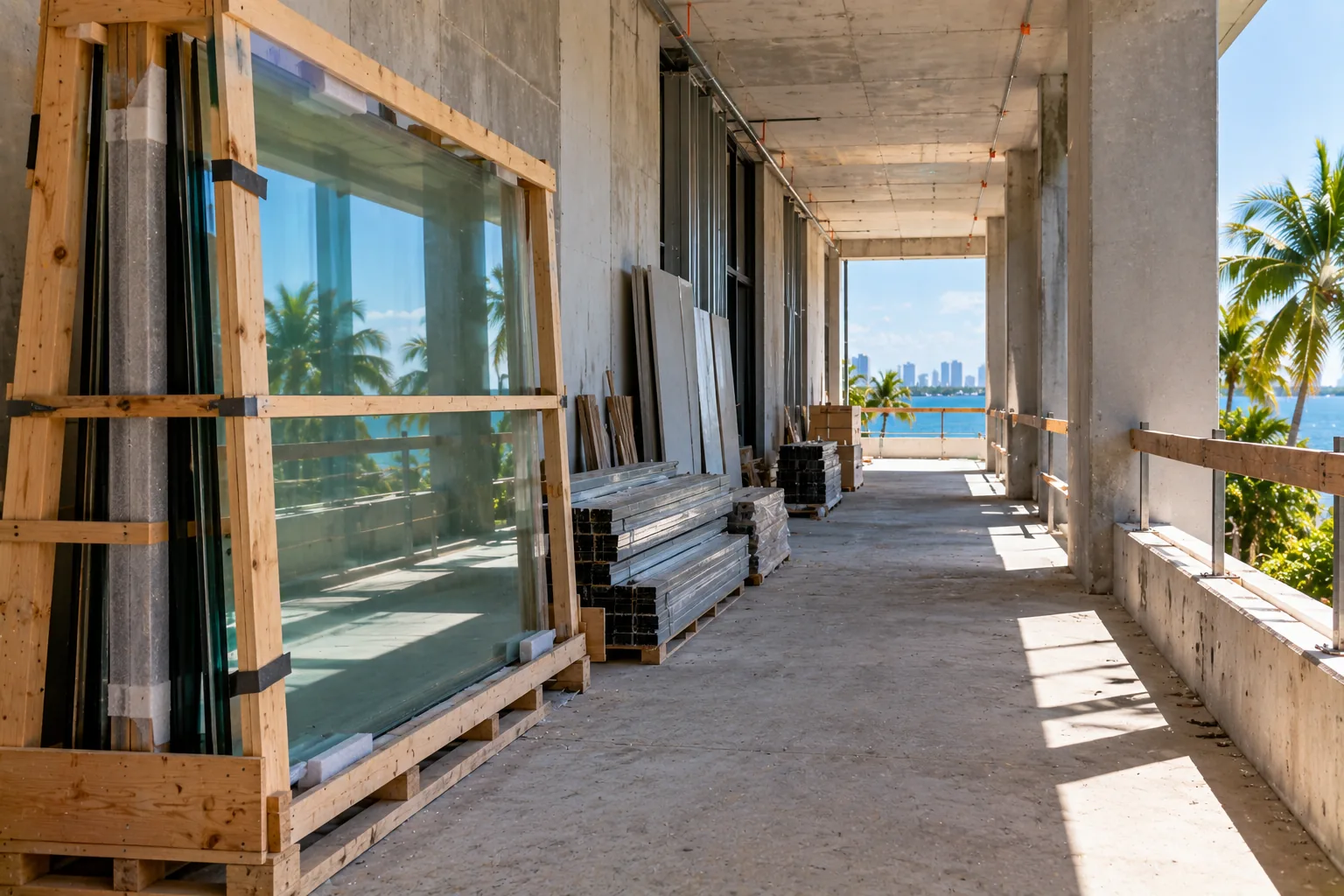
Bent glass is made to order on a mould, and the mould is part of the job. That makes the wait longer than for flat panels, and it makes a remake expensive in a way a flat panel is not: a flat panel can often be re-cut or used elsewhere, a curved one that does not fit its position fits nowhere. Build the schedule around one measure taken late and right, rather than two taken early.
07
The faceted alternative
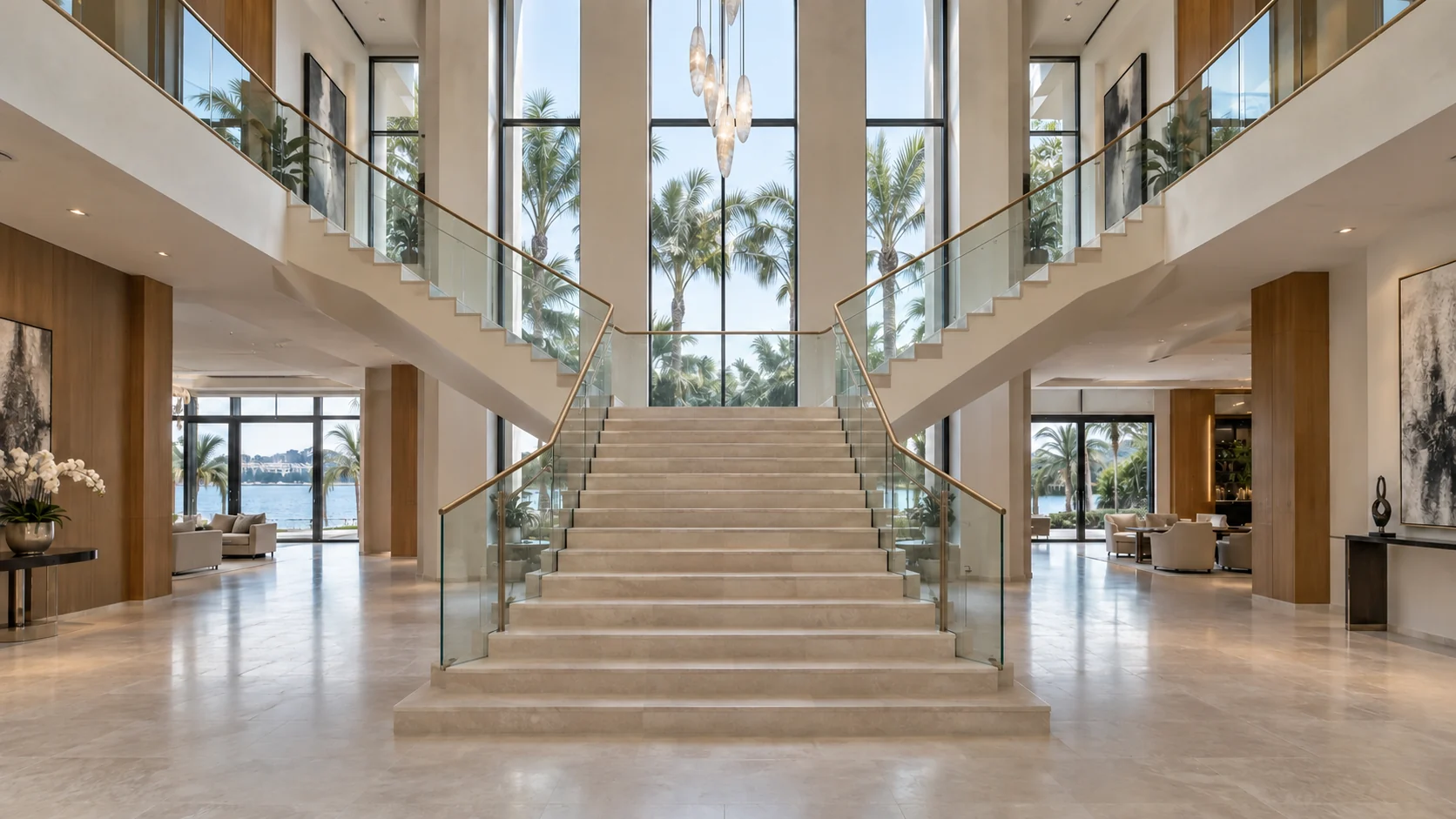
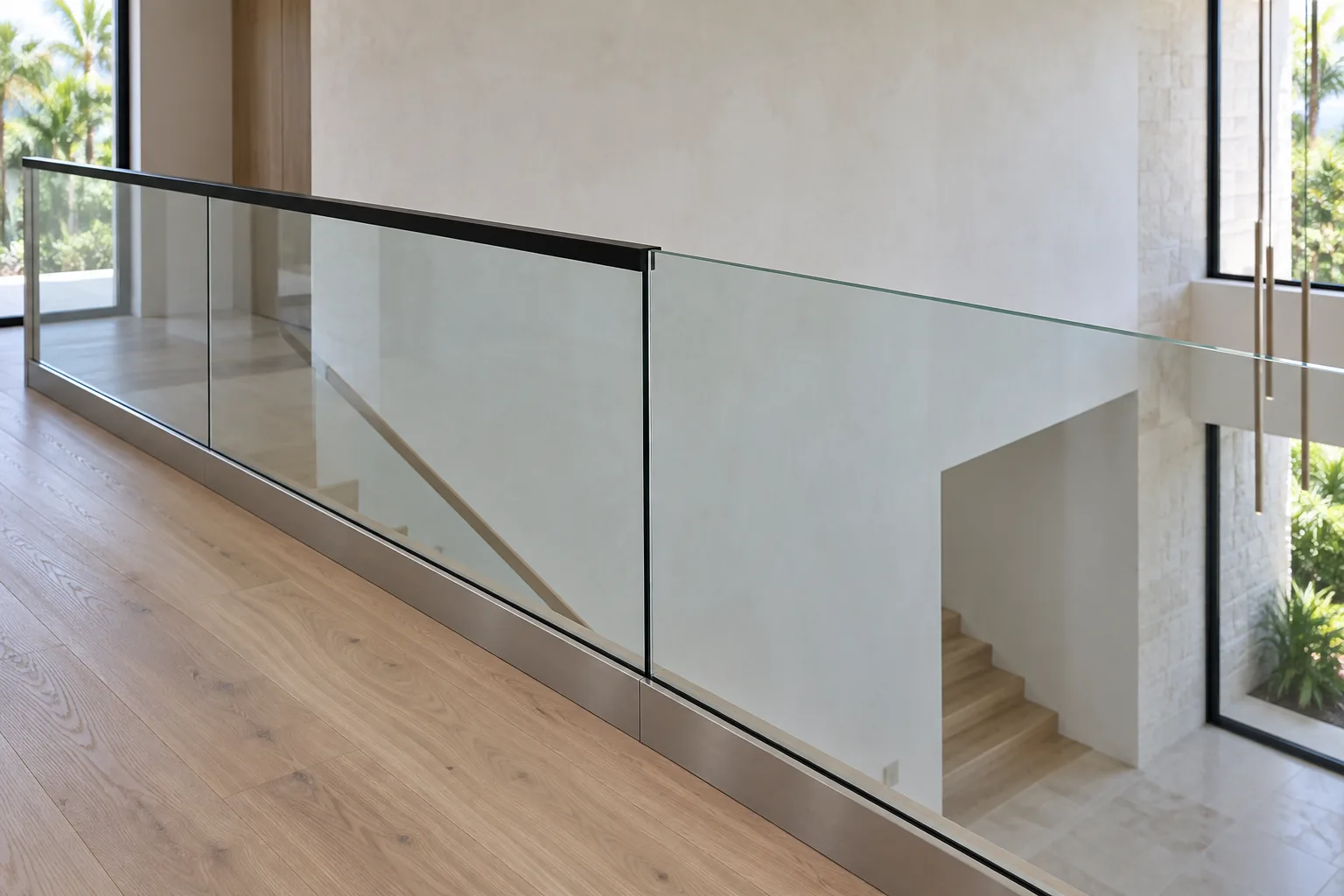
A curve can also be approximated with straight panels set at small angles to each other, with the joints falling where the posts or clamps already are. From a few steps away a gentle curve reads as a curve; up close you see the facets, and on a tight radius you see them from anywhere. It prices and schedules like straight glass, which on a long sweeping run is sometimes the difference between doing it and not.
08
What we need to price a curved run
Photographs of the whole flight from top, bottom and side. The stair drawing if one exists, with the understanding that the built geometry is what we will measure. Whether the structure is finished or still to be built. Where the run starts and stops, and what it meets at each end. From that we can say whether the curve is one radius or several, and whether bent glass or facets is the honest answer for it.
Which system suits a project depends on the surface it fixes to and how the space is used. Send photographs or a plan and we will go through the options against your own site rather than in general.