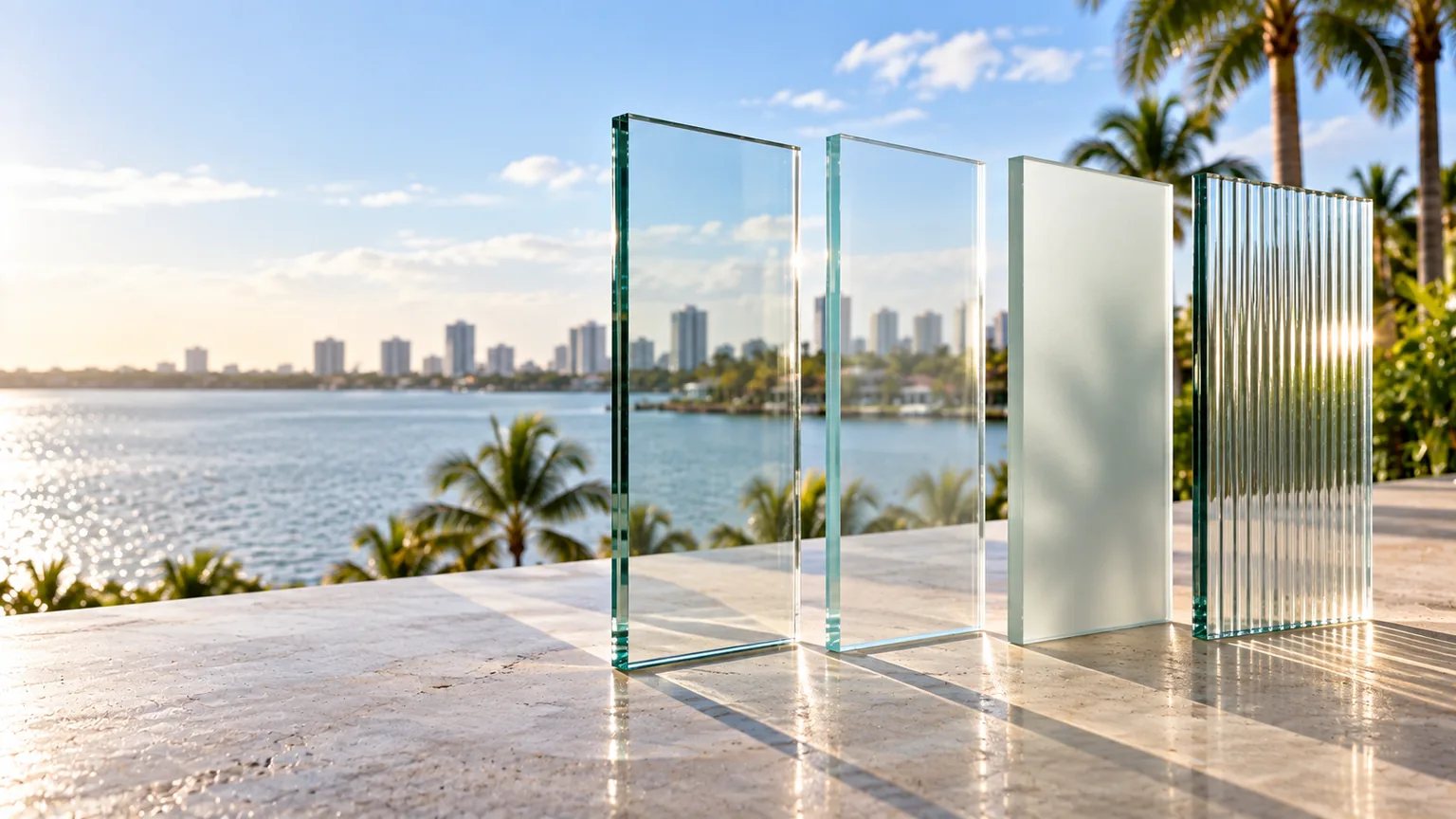
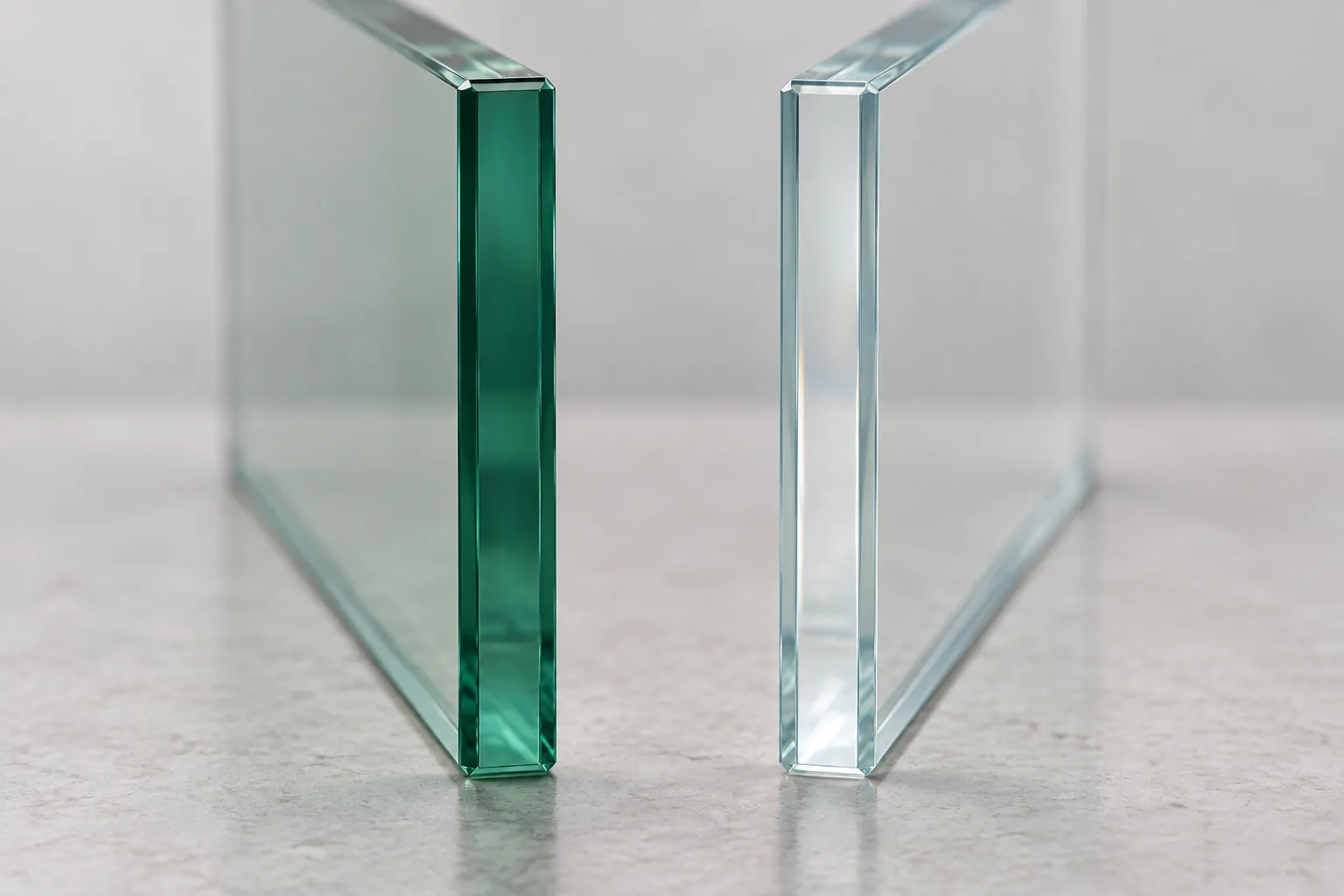
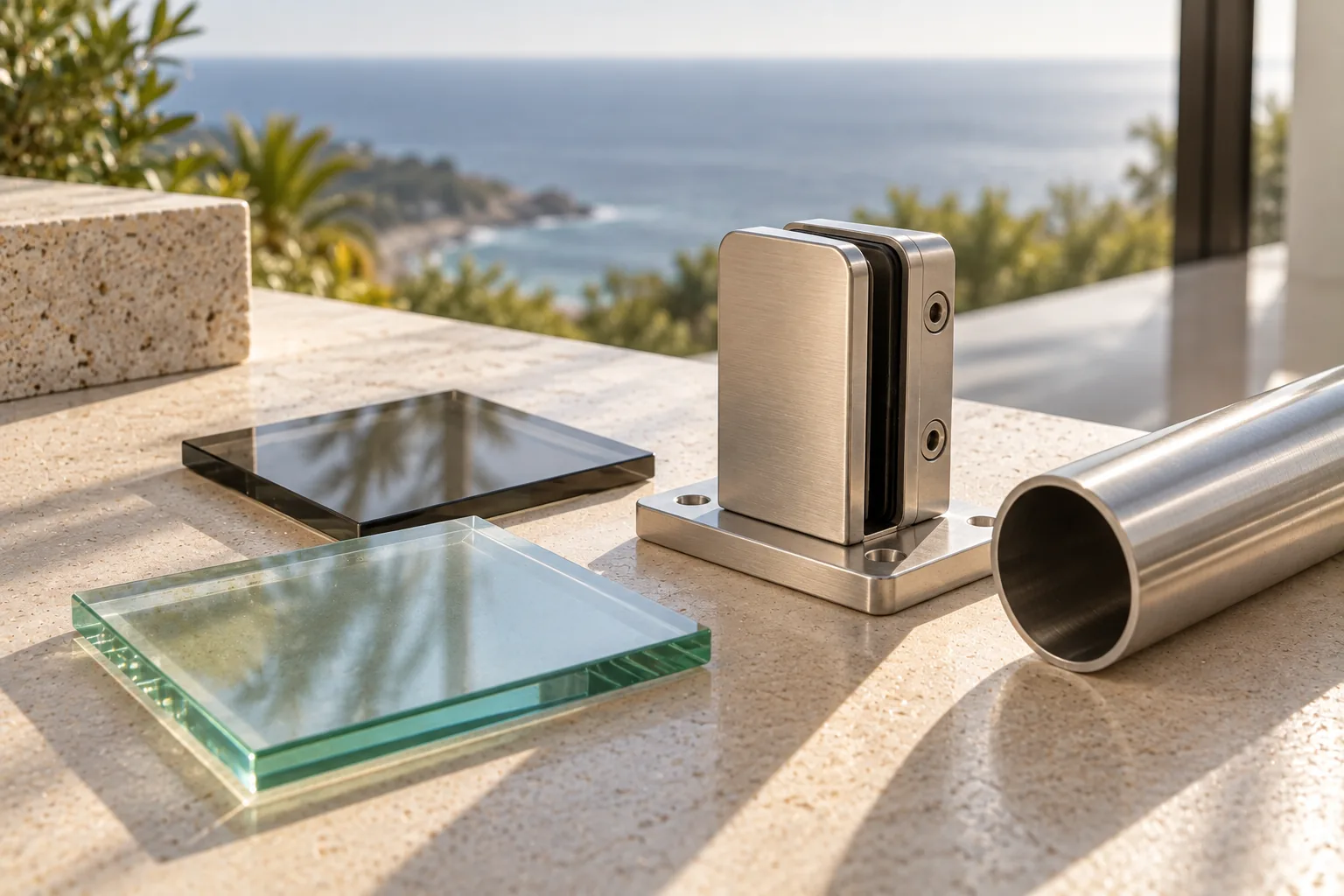
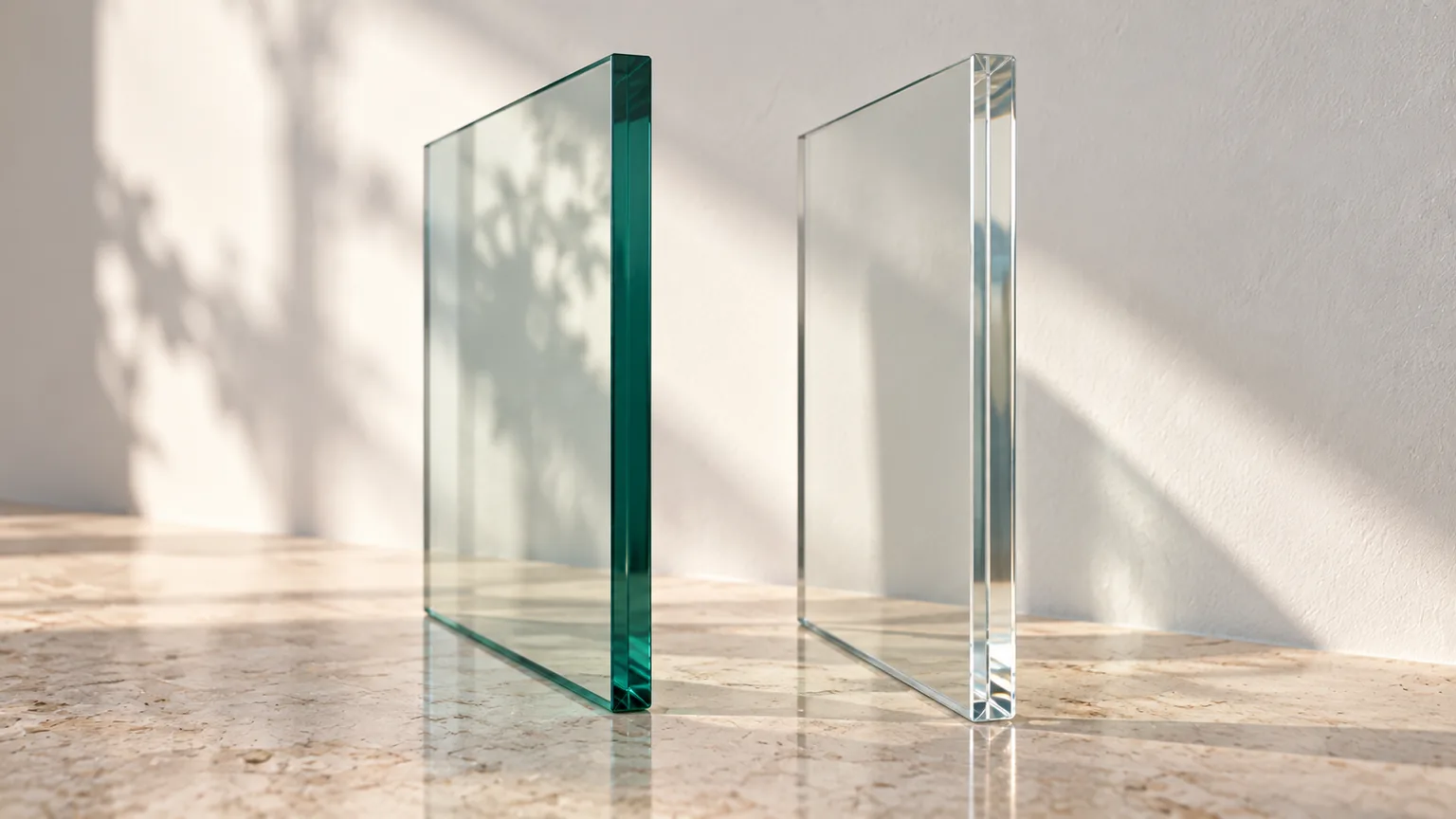
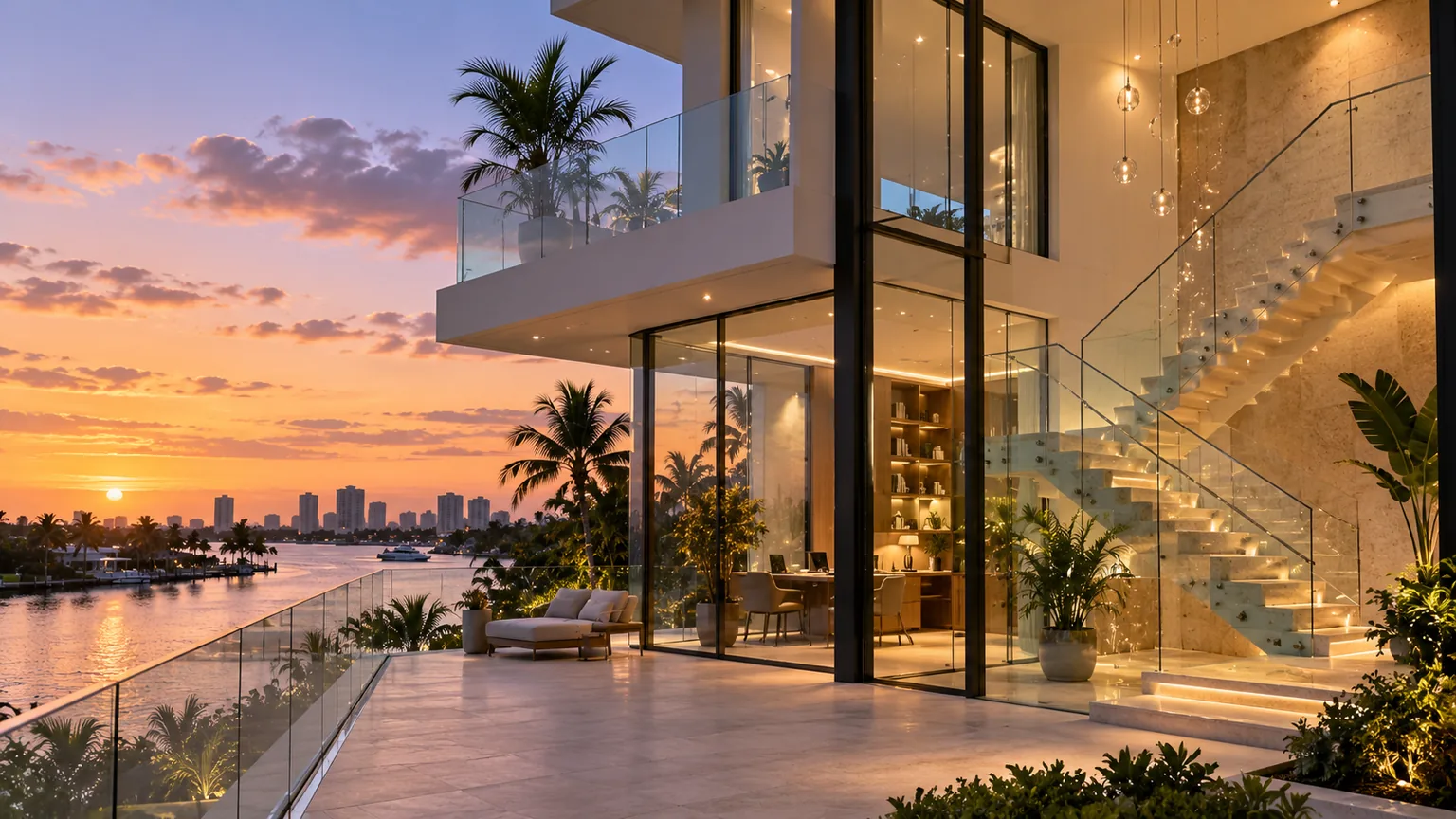
Standard clear glass can show a green tone, especially at the edge. Low-iron glass — you will see it quoted under names such as Starphire or Starfire — reduces that tone for a more neutral appearance. The difference is most visible on thick panels and long runs, so compare samples at the thickness you intend to use.
02
Frosted and textured
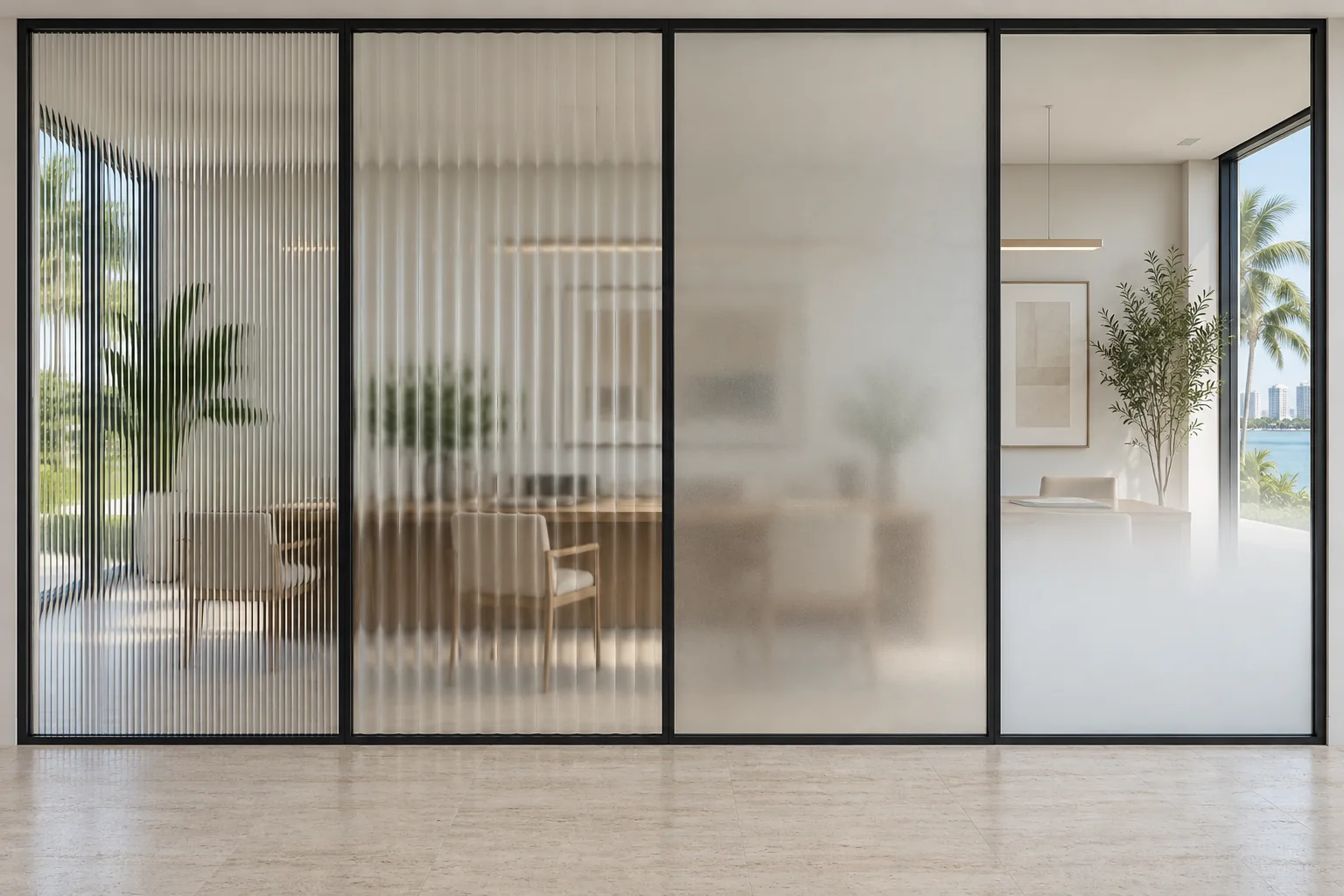
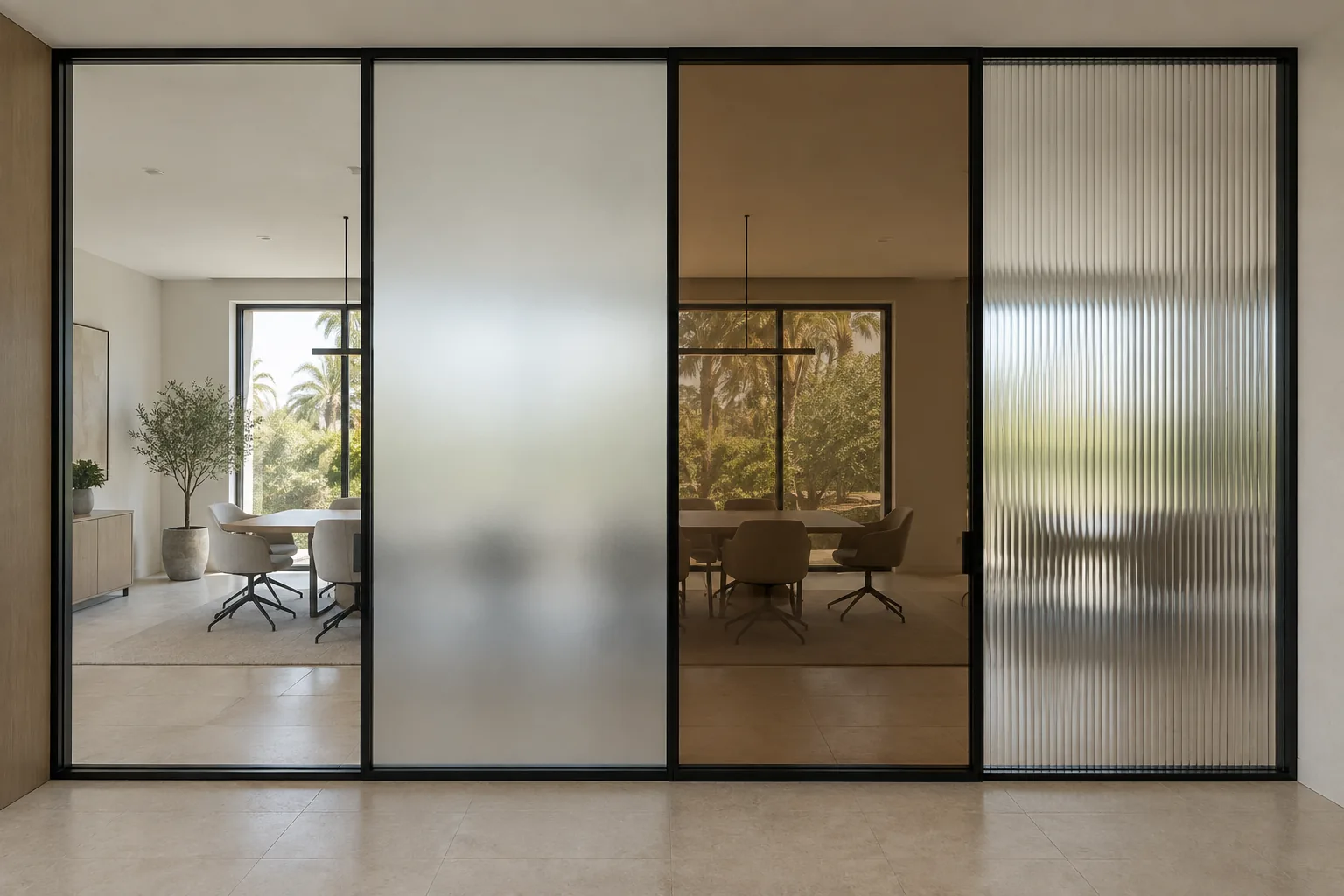
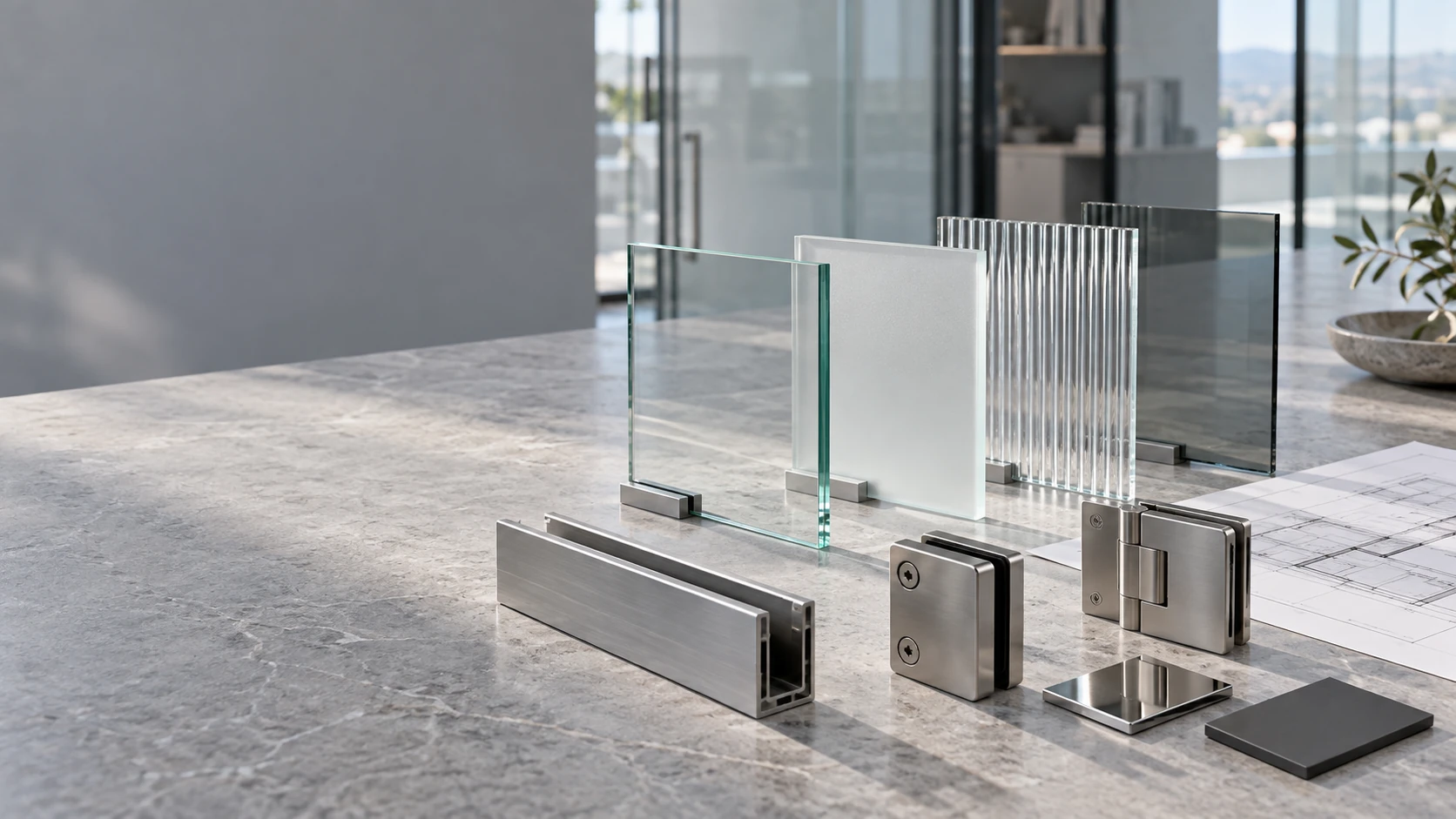
Frosted finishes diffuse the view. Reeded and other textured glass introduce a pattern. The level of visual privacy changes with lighting and distance.
03
Tinted glass
Bronze and grey tones can change the mood of a space. Tint alone should not be treated as a promise of privacy in all lighting conditions.
04
Specify the whole product
A visual finish does not determine structural suitability. The glass construction and the full assembly must suit the application.
05
Clear, or genuinely clear
Ordinary float glass is faintly green along its edge, and in a white bathroom or against pale stone that edge is what you look at. Low-iron glass removes most of it — worth knowing where it changes the result and where it is money spent on something nobody sees.
Which system suits a project depends on the surface it fixes to and how the space is used. Send photographs or a plan and we will go through the options against your own site rather than in general.