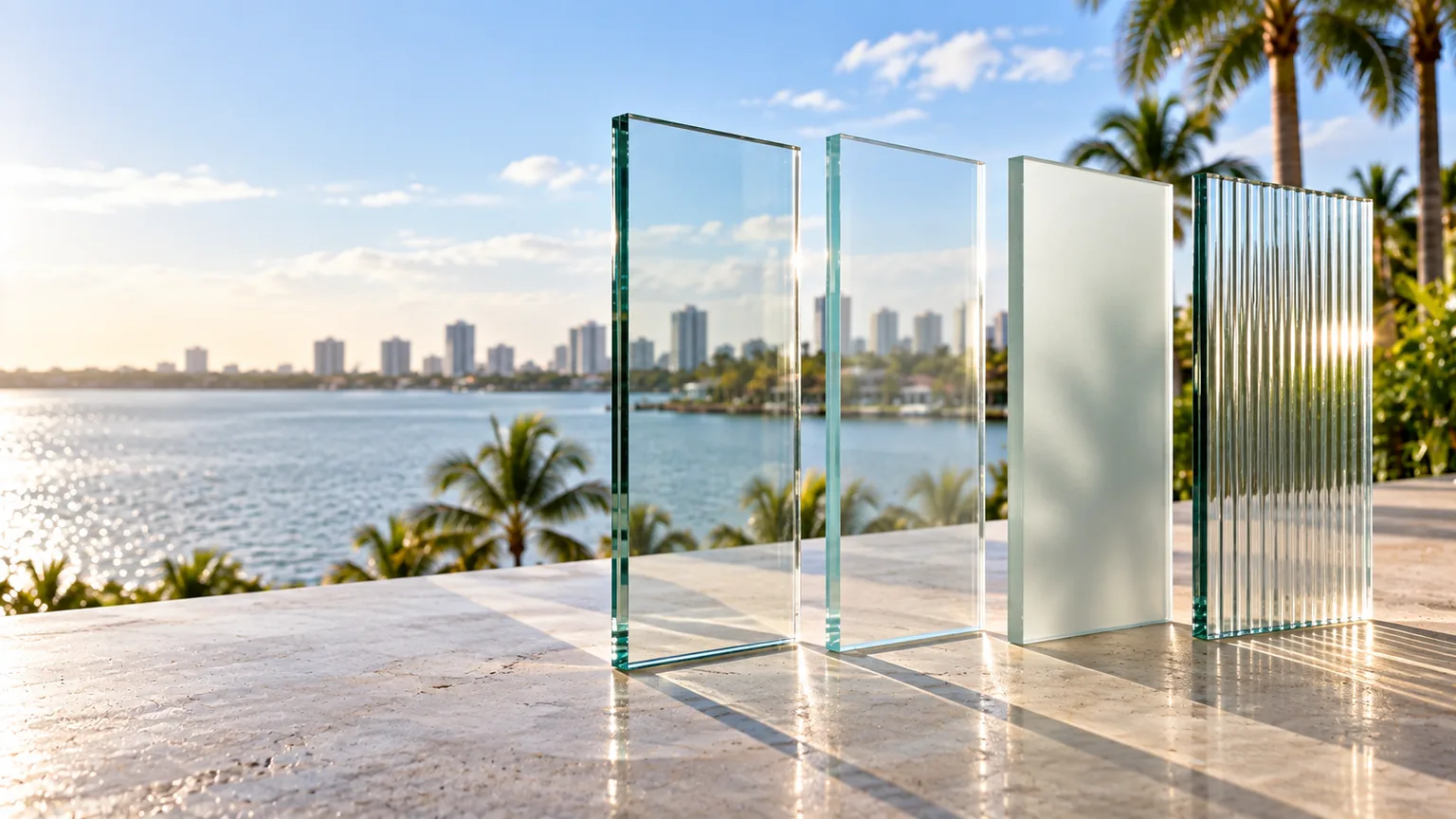
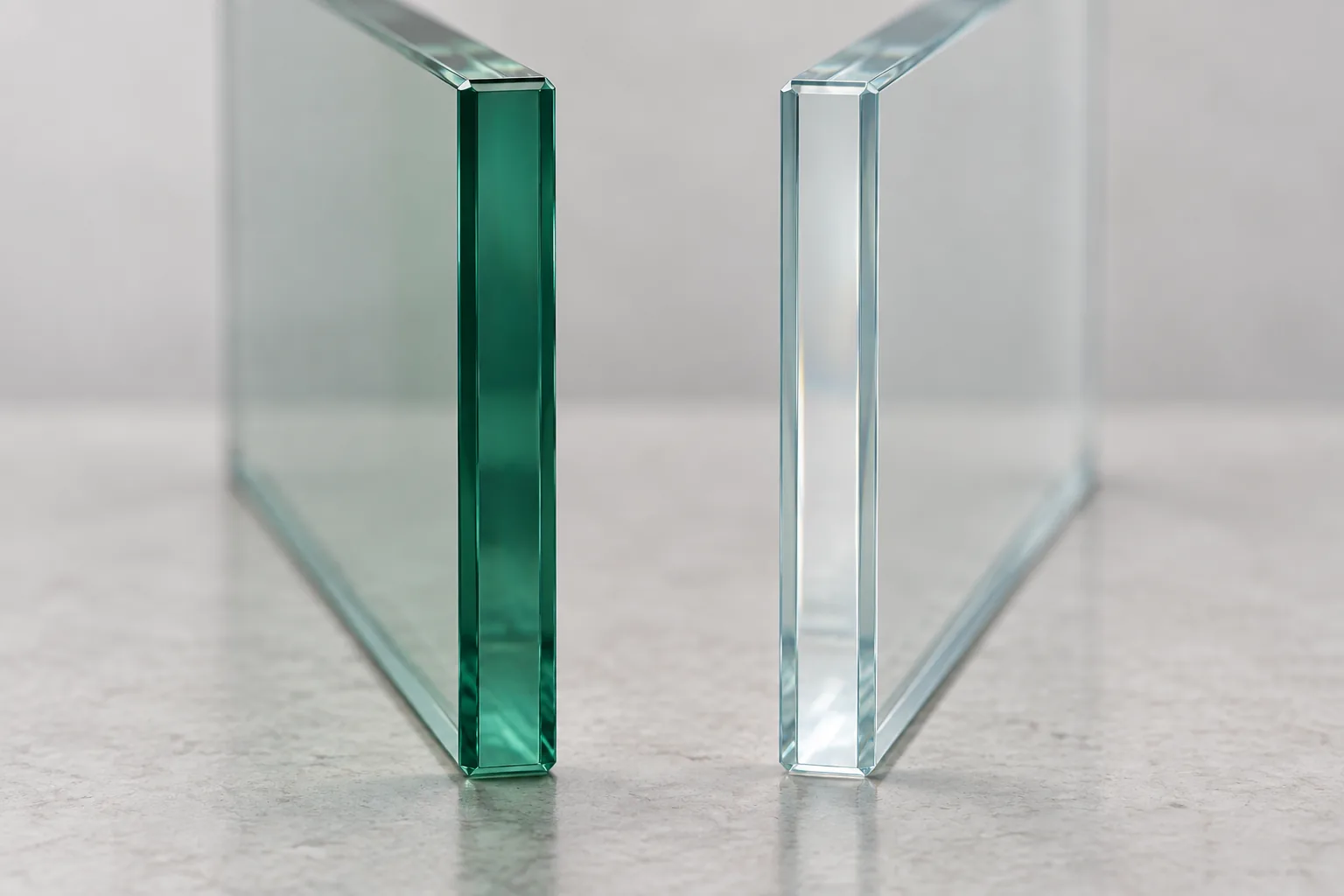
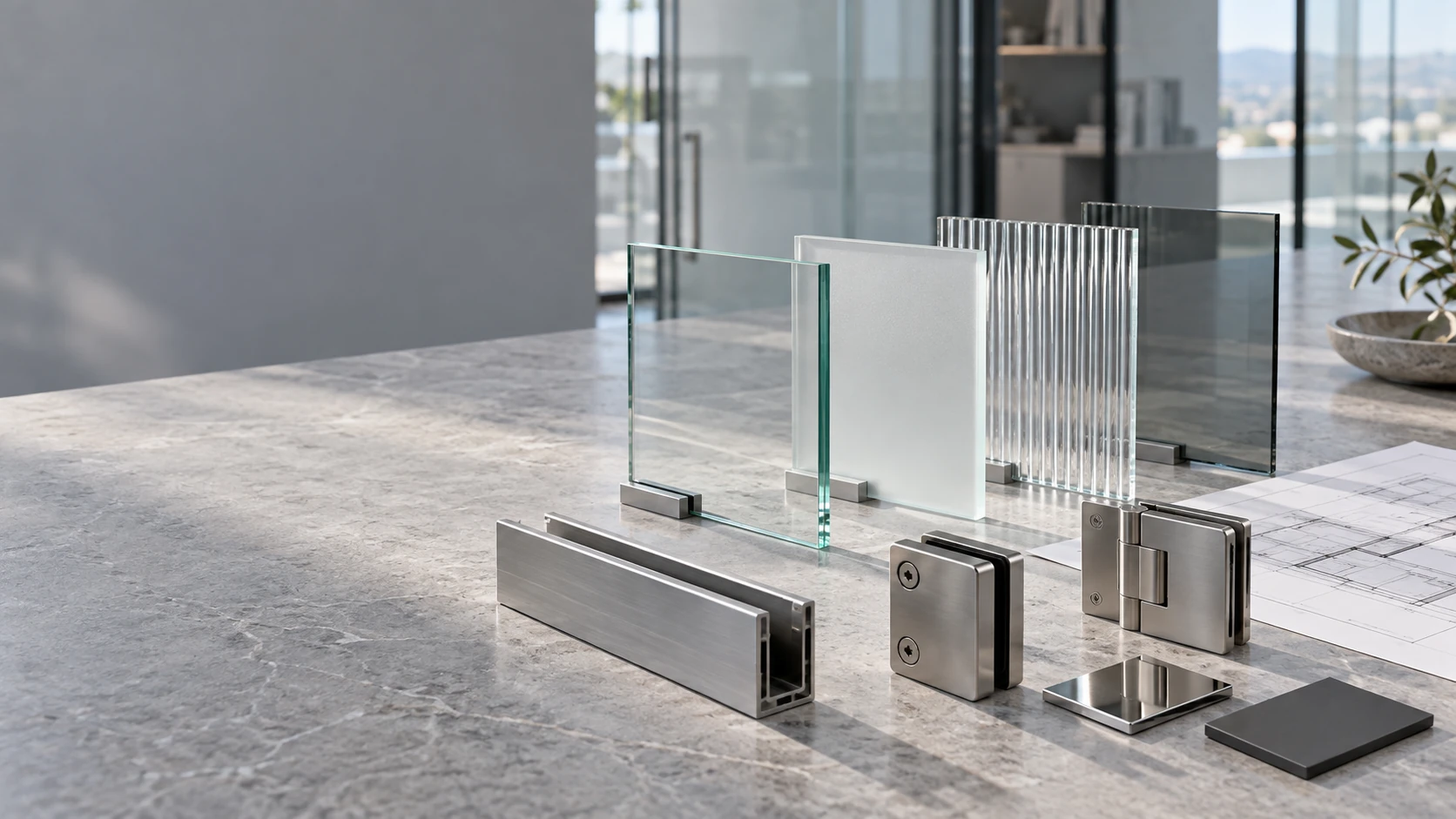
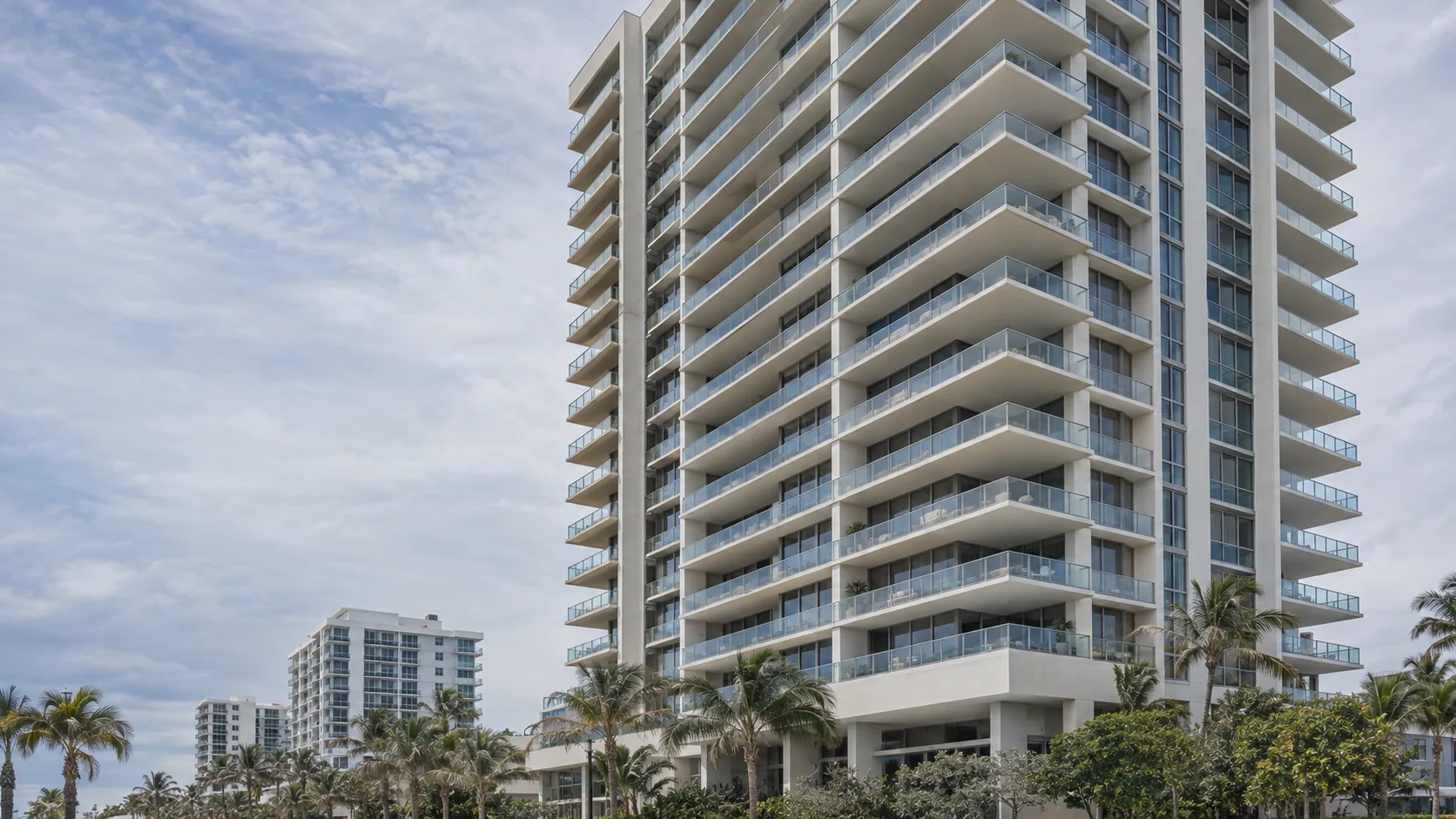
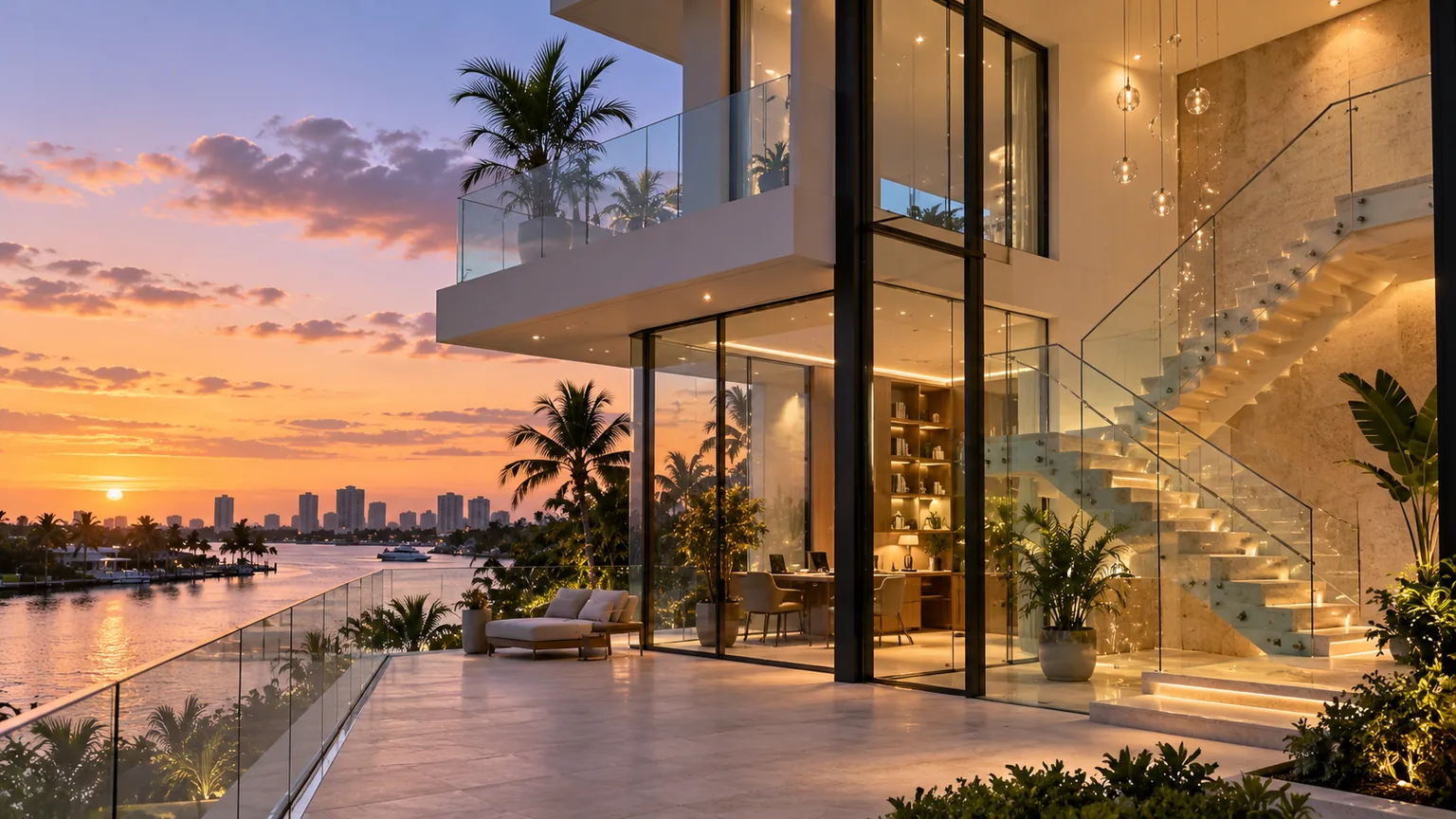
Ordinary float glass is faintly green, and the colour lives in the iron in the raw batch. Low-iron glass removes most of it. Whether that is worth paying for depends entirely on where the edge of the panel will be and what is behind it.
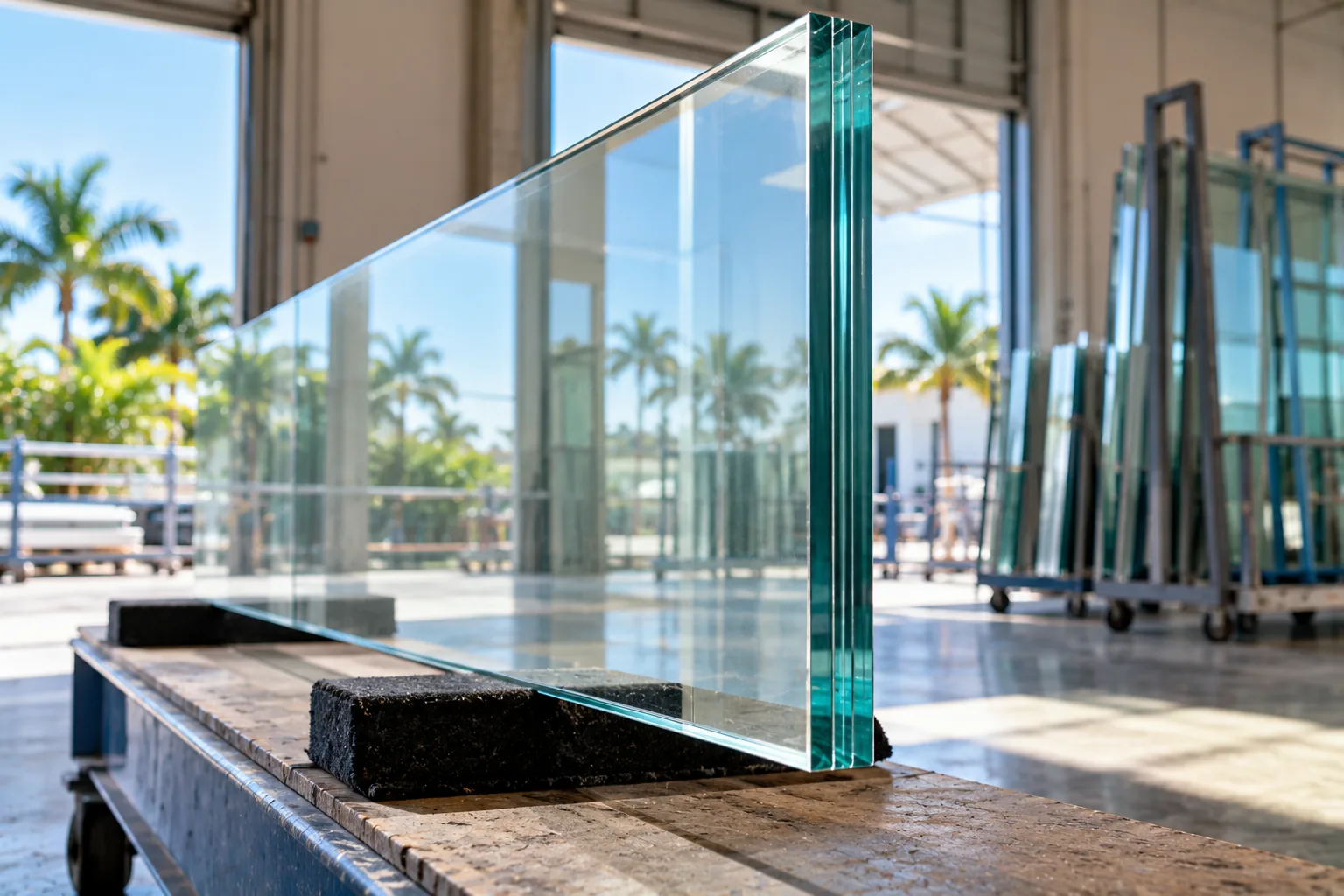
Iron oxide occurs naturally in the sand that float glass is made from, and it absorbs light at the red end of the spectrum. Looking through a pane face-on you barely notice; looking along it, through several inches of glass, you are looking through enough iron to see colour. Low-iron glass is made from a batch with most of that iron taken out — the same material, a cleaner recipe.
02
You see it at the edge, not through the face
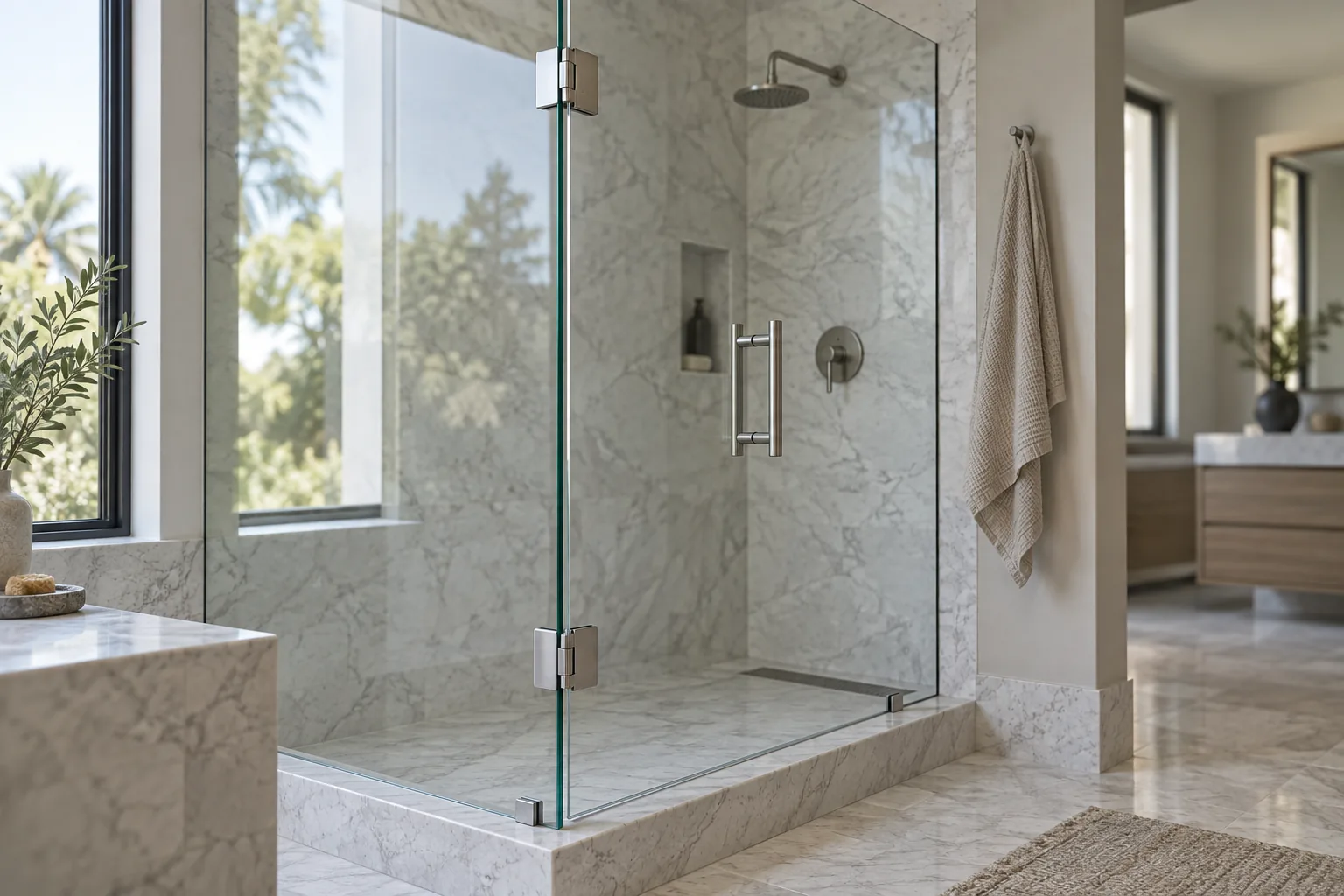
The green shows where you look through the thickness: the exposed polished edge of a railing panel, the vertical joint between two panels, the edge of a shower door against a white wall. It also shows in what the glass sits against. A white marble bathroom, a pale limestone terrace or a white-painted gallery will show the edge colour plainly. A dark stone floor and a walnut handrail will not.
03
Thickness multiplies it
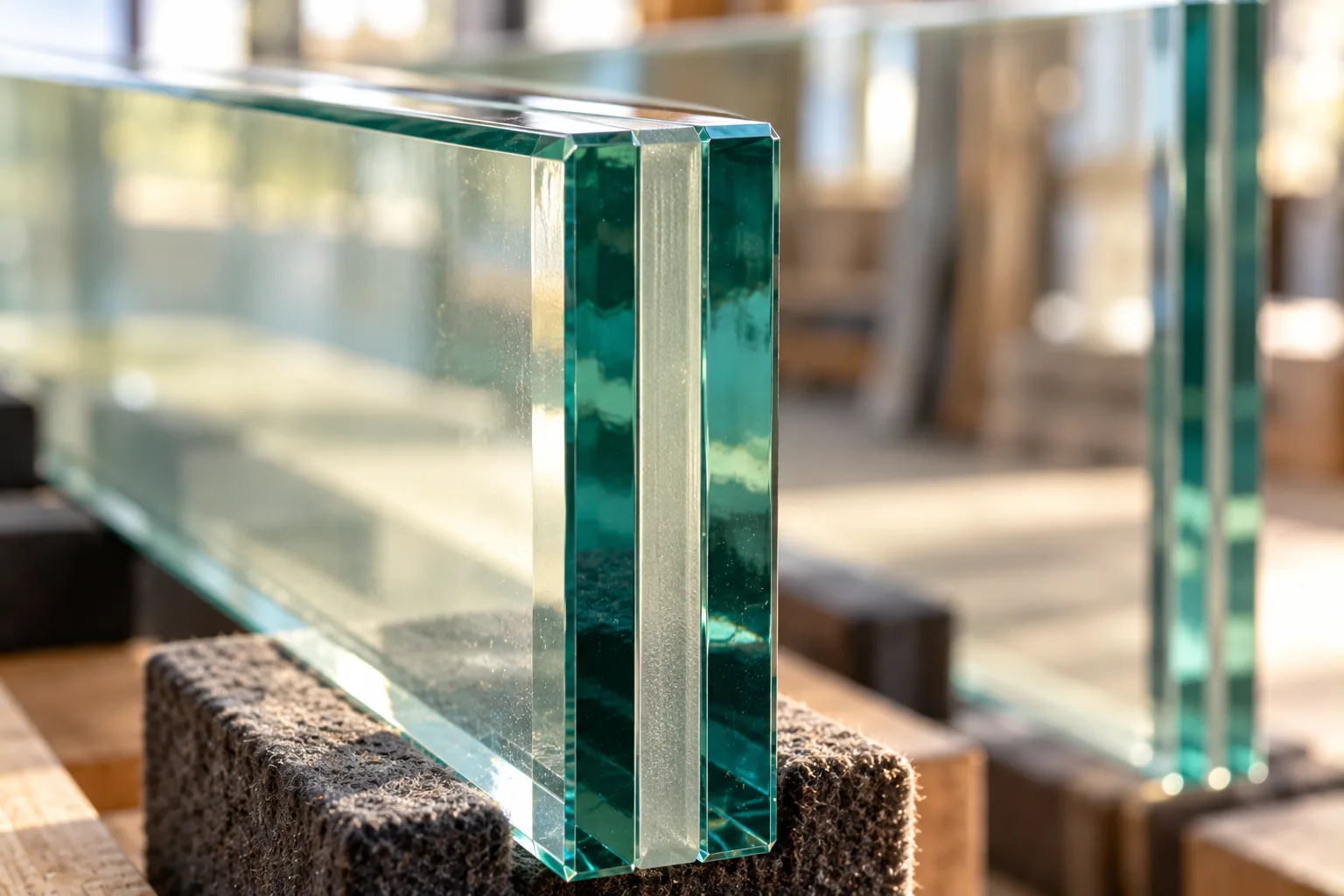
The effect is not fixed — it is a function of how much glass the light passes through. A quarter-inch shower panel shows a hint of colour at the edge. A thick laminated guard, which is two plies plus an interlayer, shows far more of it, and a stack of panels at the corner of a terrace shows it most of all. The heavier the glass the job needs, the more low-iron changes the result.
04
Starphire, Optiwhite, UltraClear: one idea, several names
Low-iron glass is a category, not a brand, and the names that appear on drawings are the products of different manufacturers. Starphire, Optiwhite and UltraClear all describe the same thing: float glass made from a low-iron batch. Specify it by what you want — "low-iron" — and let the fabricator name the product they can actually get, because availability in a given thickness and make-up decides this more often than preference does.
05
Low-iron, laminated and tempered together
These are separate decisions and they combine. A guard can be low-iron and laminated and heat-treated at the same time — the low-iron part describes the batch the glass was made from, the laminated part describes how two plies are bonded, and the heat treatment describes how it breaks. Specifying low-iron does not change what the code asks of the panel, and it does not substitute for the laminated make-up where the guard needs one.
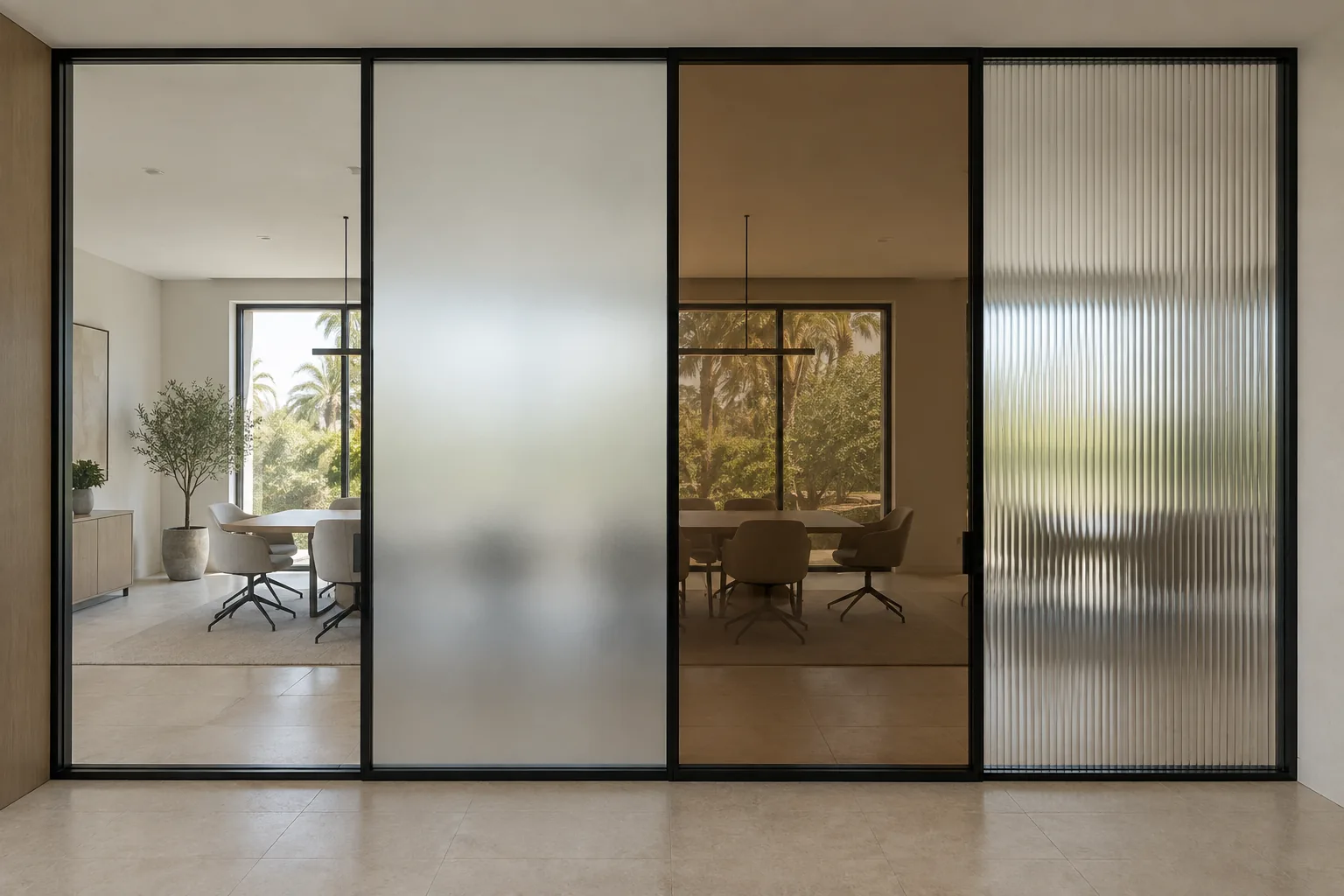
In a dark room, against dark stone, or where the edges are hidden inside a base channel and a top rail, low-iron buys very little and still costs more. The same is true where the glass is frosted, reeded or tinted: the texture or colour is doing the work and the batch underneath it is not what you are looking at. Spending the difference on a better hardware grade is often the better trade.
07
Decide with the edge in your own light
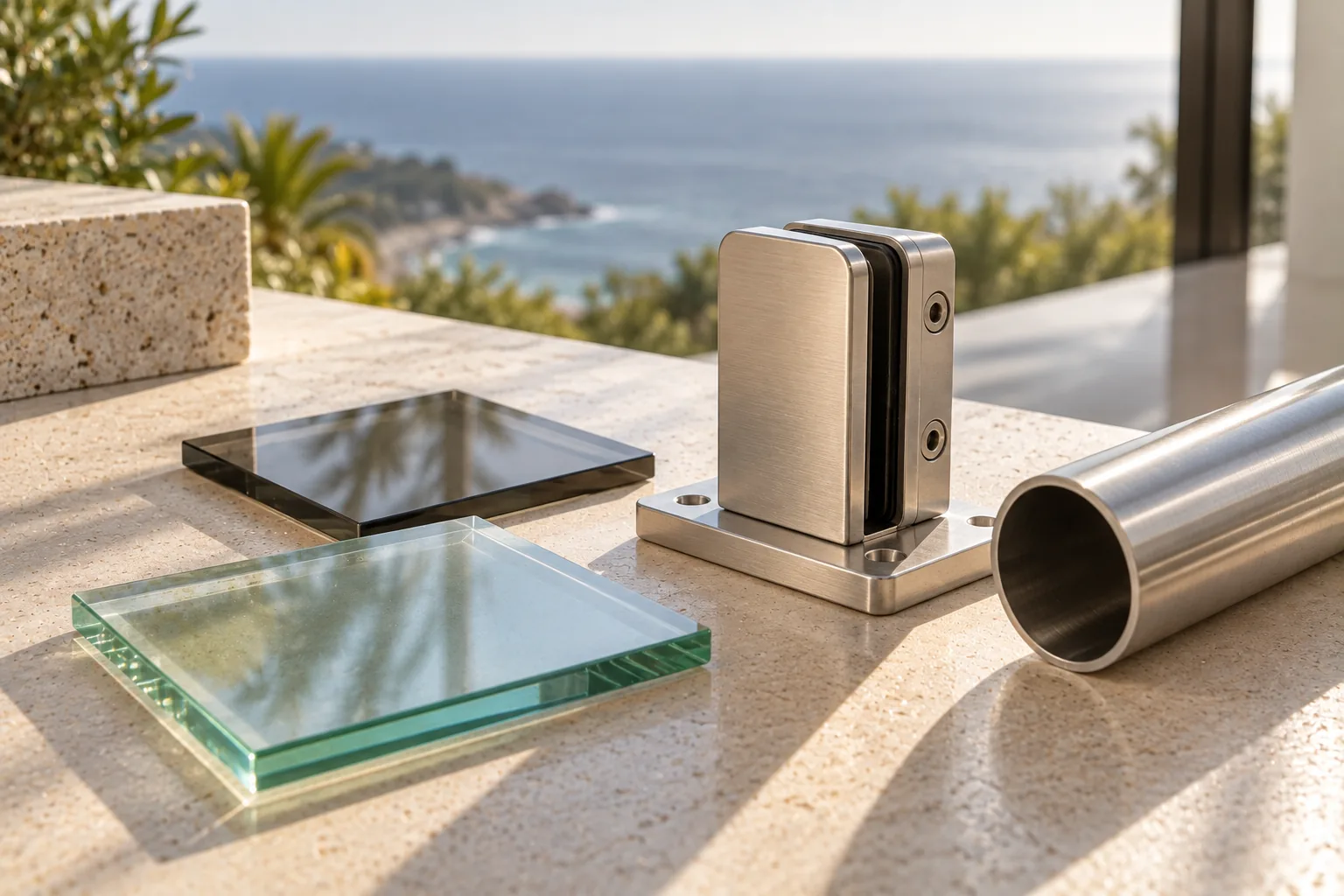
Photographs will not settle this. Two samples of the same thickness, stood edge-on against the actual wall or floor in the actual daylight, settle it in about ten seconds — and if the answer is that you cannot see the difference, that is a real answer and it saves money. Ask for the samples at the thickness the project will use, not at whatever thickness is on the shelf.
Which system suits a project depends on the surface it fixes to and how the space is used. Send photographs or a plan and we will go through the options against your own site rather than in general.