

QUESTIONS · POOL FENCES
Pool fences,
answered plainly.
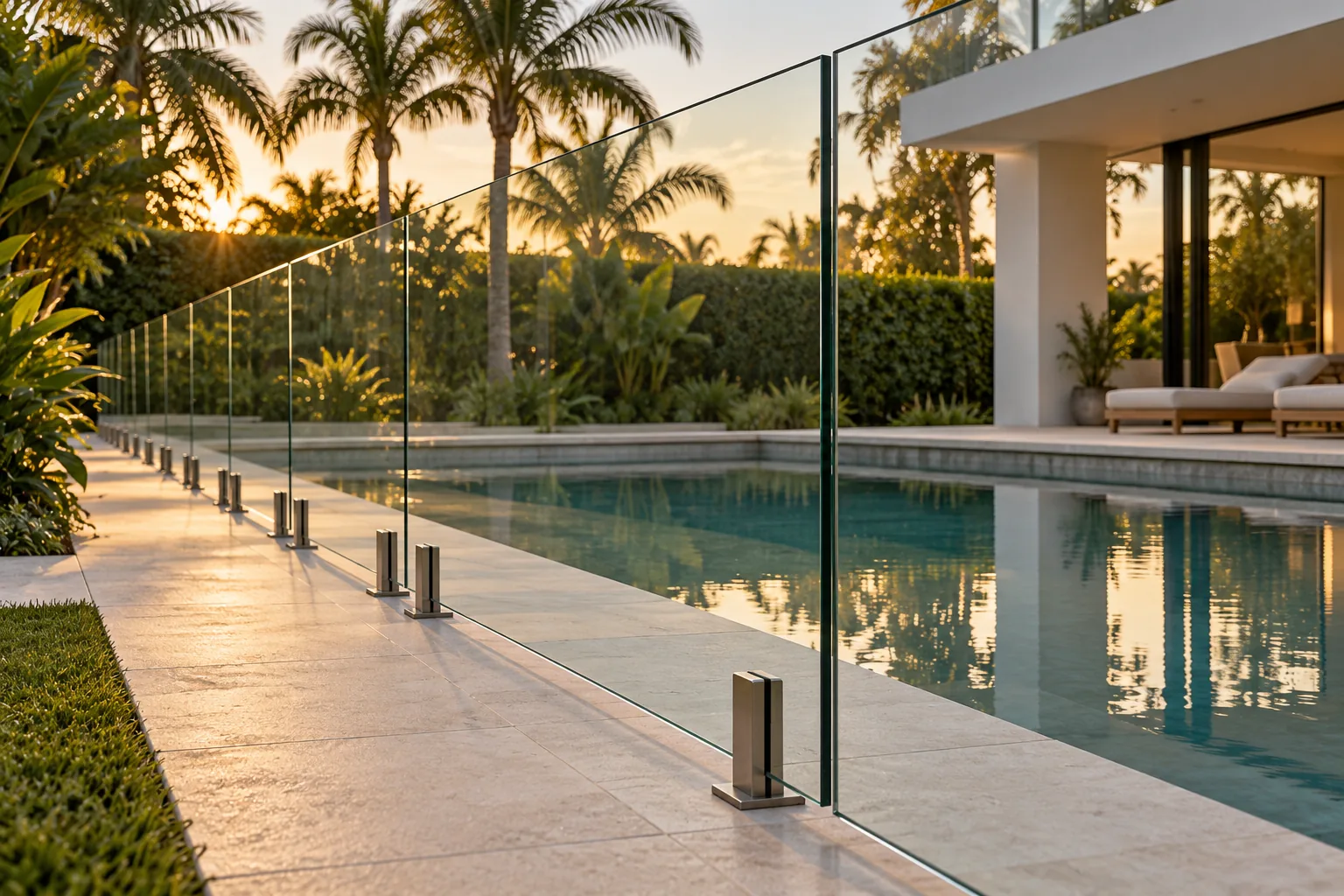
A glass pool fence is part of a safety system, and in Florida the statute, the local amendments, and the inspector all have a say. These are the questions that come first.
Broward · Miami-Dade · Palm Beach
How tall does a pool barrier have to be?
Florida’s residential pool barrier statute generally describes a barrier at least four feet high around the pool area, arranged to limit access by young children. Your local amendments and the permit review control what your specific property requires, so the four-foot figure is where the conversation starts, not where it ends.
Pool barriers in FloridaDoes the gate have its own rules?
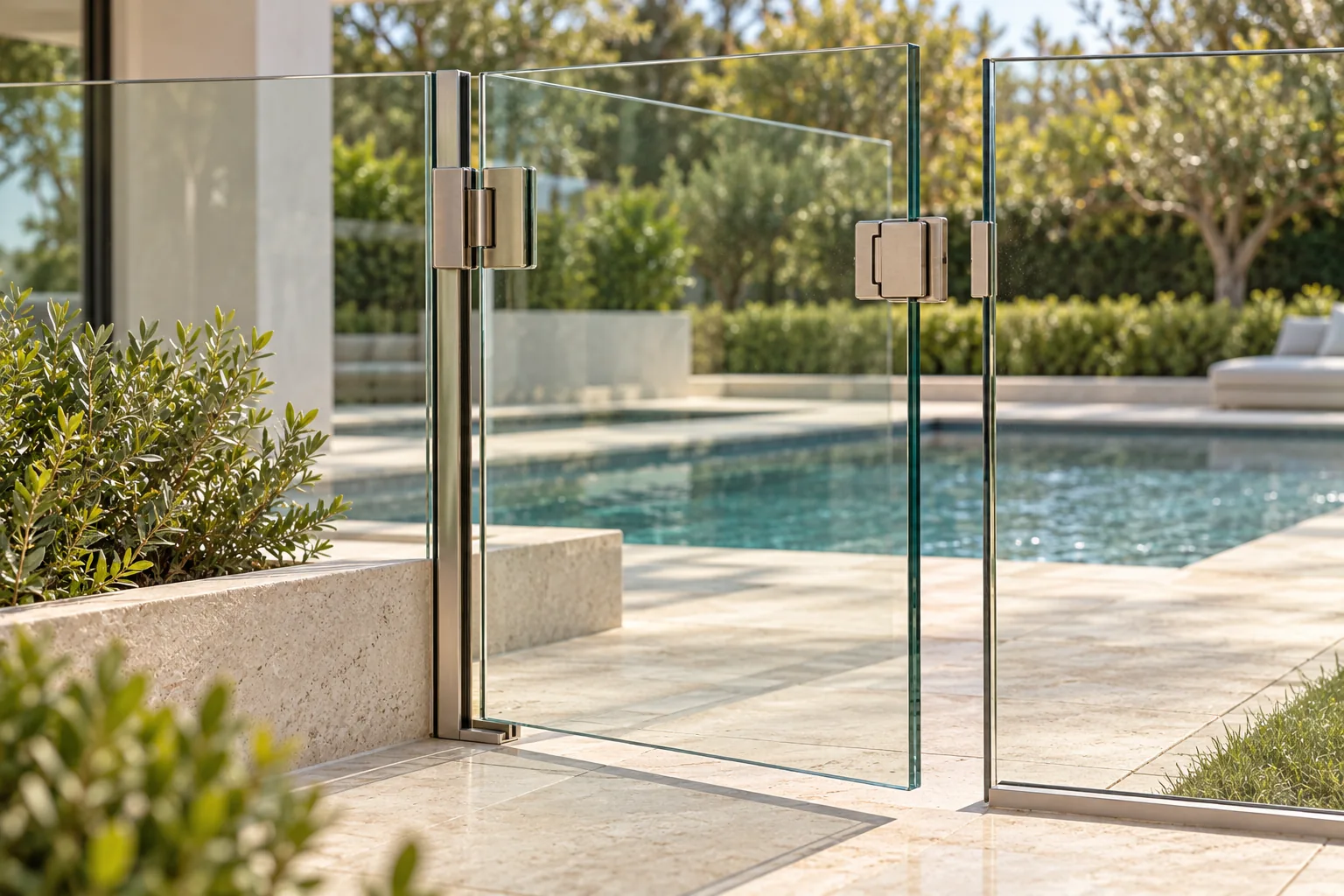
Yes, and they are usually where a barrier fails inspection. Pool gates are typically required to swing outward from the pool area, close by themselves, and latch securely, with the release positioned out of a young child’s reach from the pool side. Gate width, hinge clearances, latch type, and the deck around it all affect the detail.
Where exactly should the fence run?
That is a site decision, not a drawing decision. Setbacks, deck drainage, coping, retaining walls, screen enclosures, outdoor showers, and the route from the house all move the line. A clean visual run is worth having, but the safety boundary and everyday access come first.
Can furniture or landscaping cause a problem?
It can. A barrier is only as good as what is next to it. Planters, furniture, low walls, steps, and adjacent structures can create a route over, under, or through the line. It is worth walking the yard from a child’s point of view before hardware is ordered.
Does a glass fence hold up outdoors here?
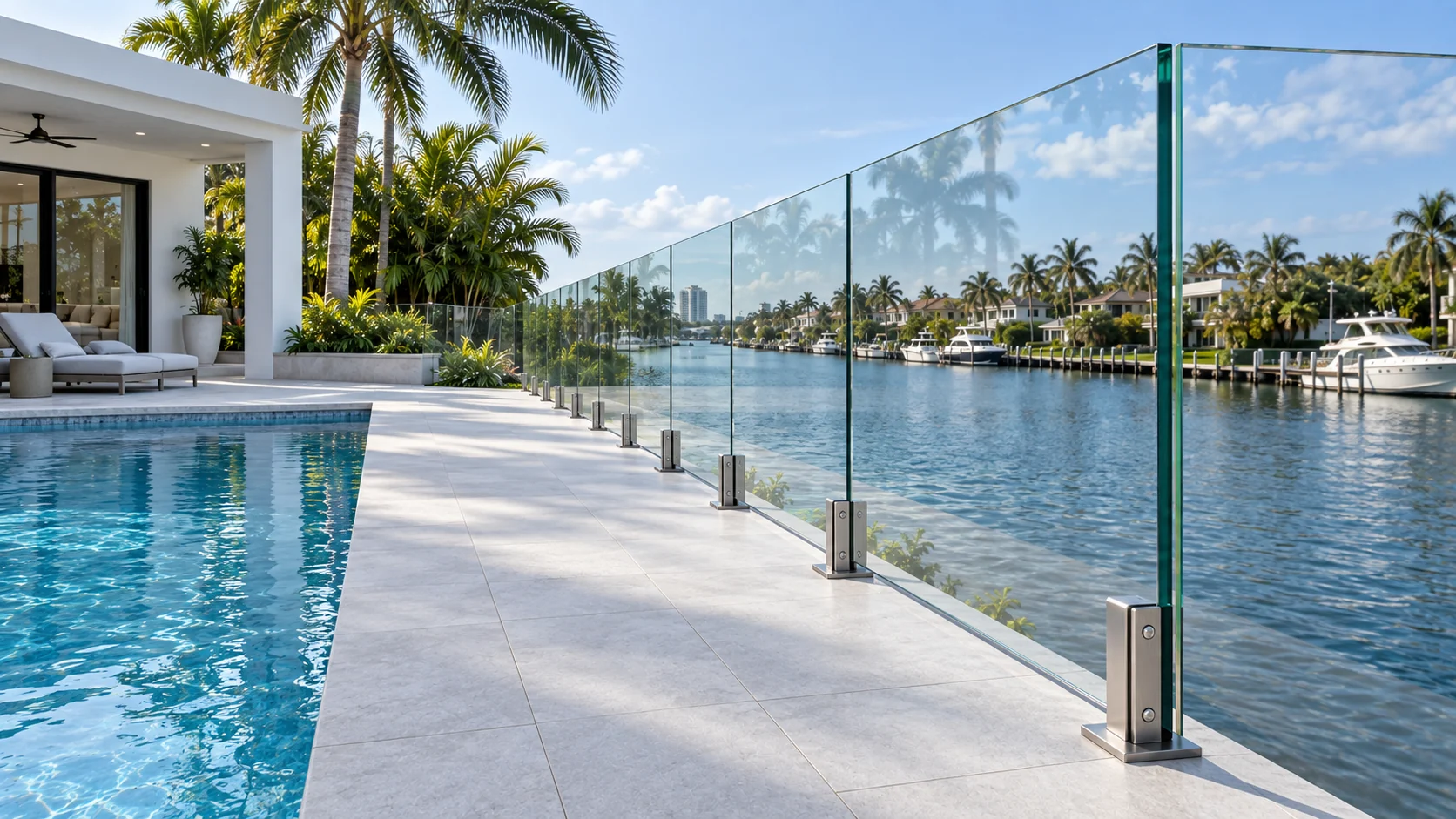
The glass does. The parts that need attention are the edges of the panels and the hardware — salt air, standing water, and sun act on both. That is why exposed coastal work is usually specified with type 316 stainless hardware and with attention to how the glass edge is protected, rather than with whatever is cheapest.
Is it safer than a mesh fence?
They solve the problem differently. Mesh is removable and inexpensive; glass is permanent, keeps the view, and cannot be taken down and left down. Neither is a substitute for supervision, alarms, and the rest of the layered approach the statute is built around. We can lay out the trade-offs honestly for your yard.
What should I send to get a quote?
Photographs of the full pool perimeter, the doors from the house, any gates and steps, raised decks, the screen enclosure, and anything within reach of the proposed line. Add a wide shot from each access point and rough dimensions. That way the review starts with the whole barrier rather than one panel.
Send your photographsDo I need a permit for a pool fence?
Usually, and requirements vary by jurisdiction. We can tell you what a submission typically needs and prepare the information for it, but the building department makes the determination and the approvals should be assigned in writing in the project scope.
Permits and approvalsKEEP EXPLORING
Bring the details together.
YOUR NEXT STEP
Still have a question?
If yours is not answered here, ask it. The answer usually depends on your site — the surface, the span, the finishes around it — and we would rather look than guess.
(754) 704-2777