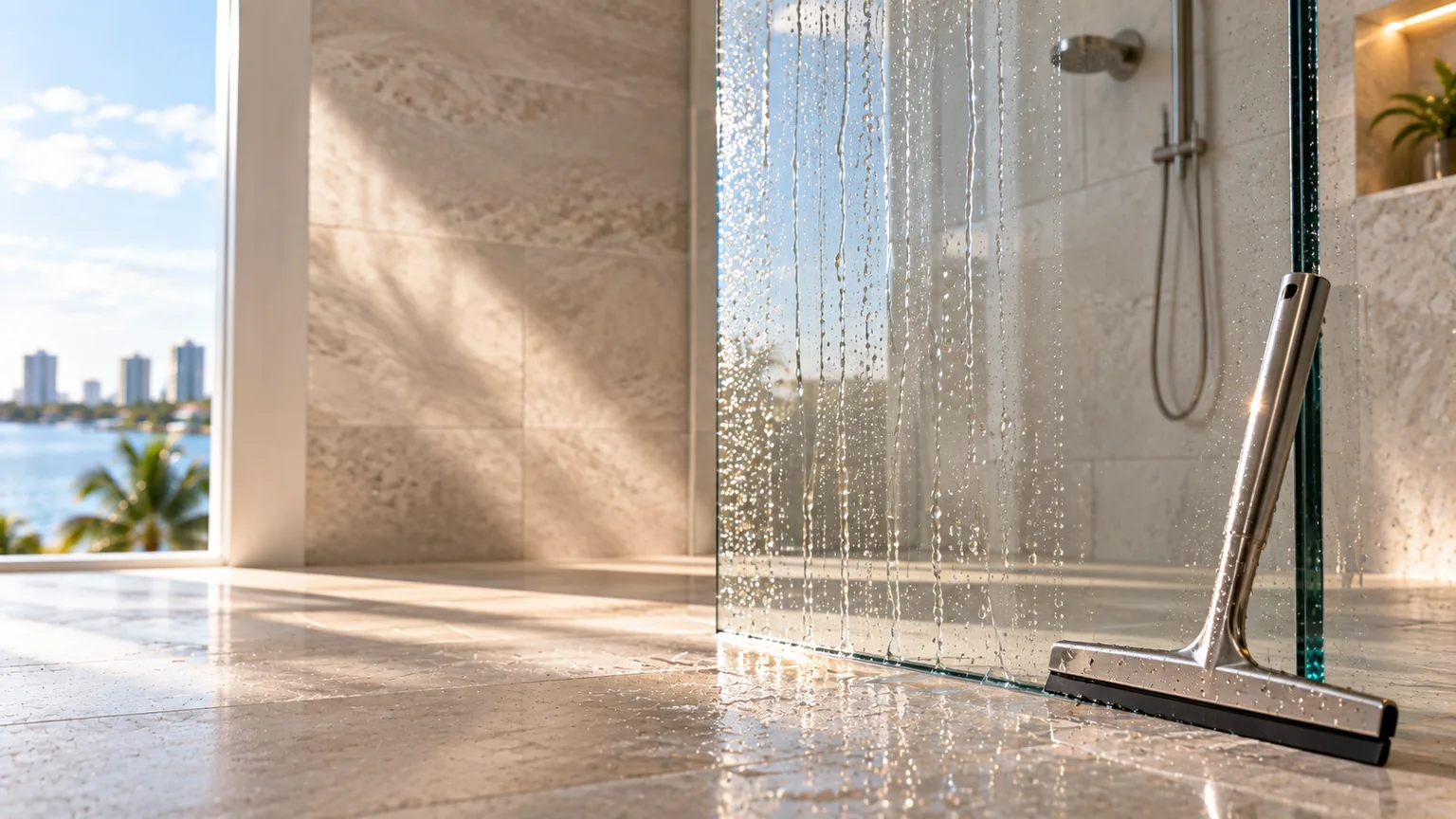
A shower enclosure is the piece of glass people touch every day, in the wettest room in the house. Most of what makes one good or irritating is decided before anything is ordered.
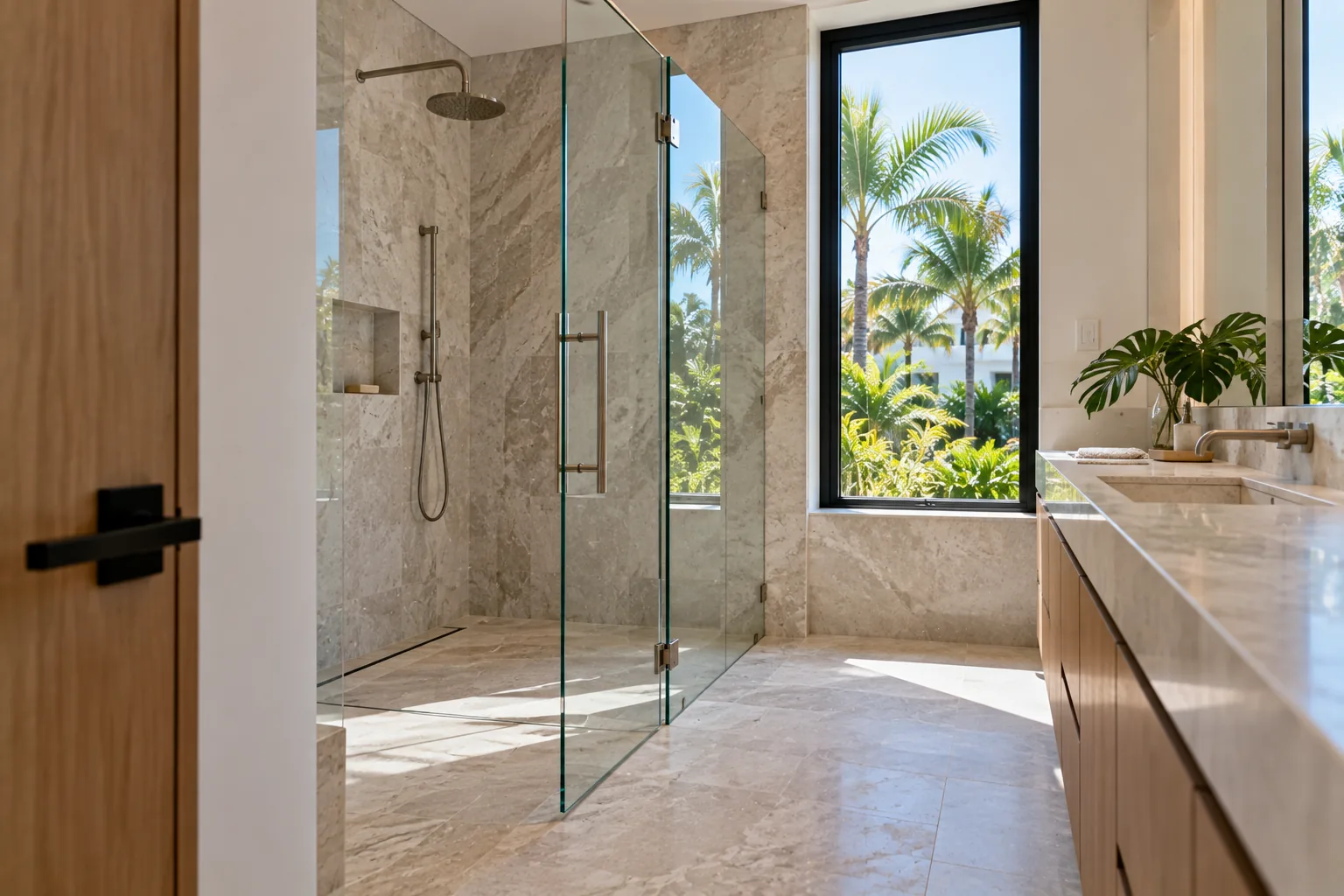
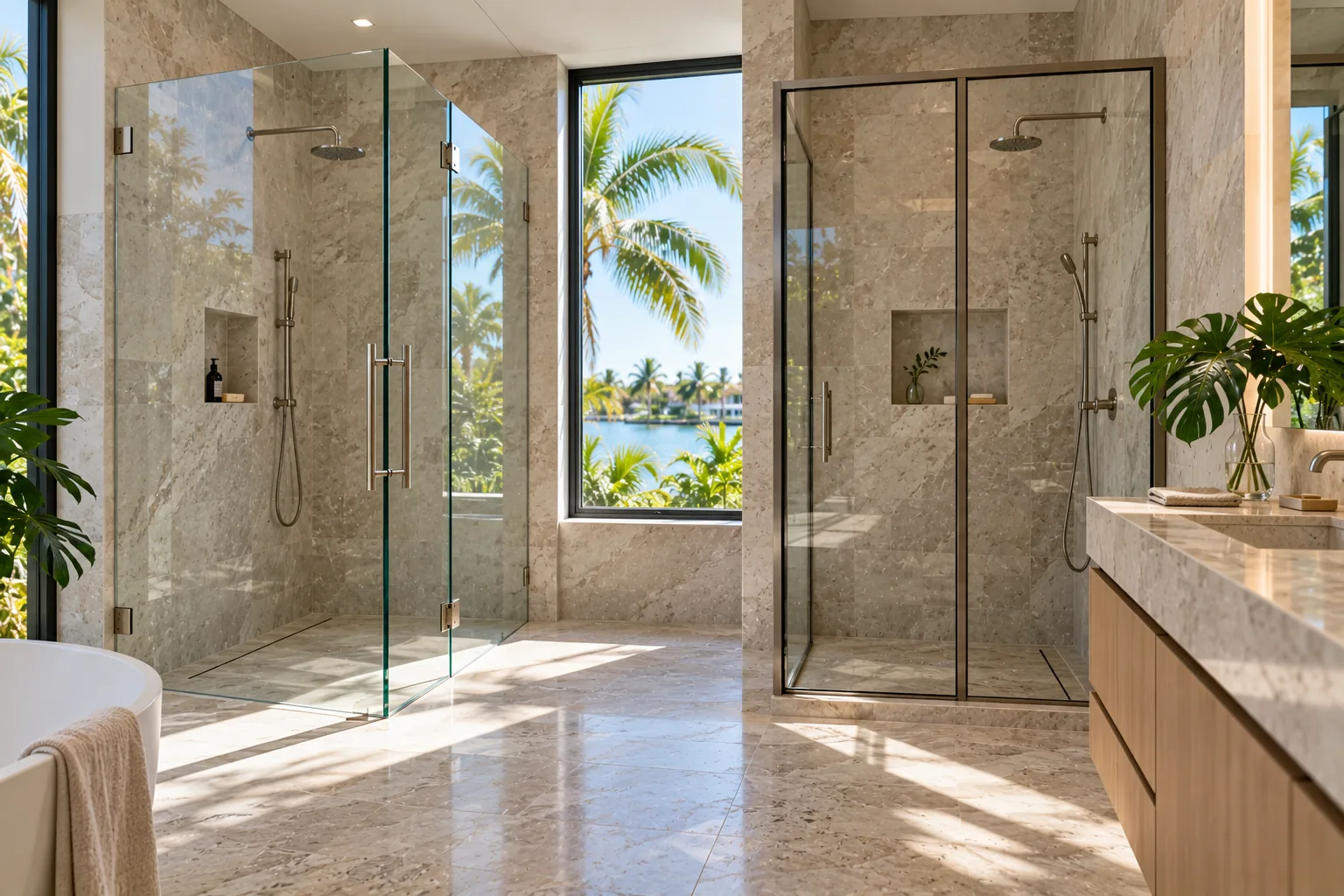
A hinged door needs clearance to swing, and in a small bathroom that clearance may not exist. Sliding panels need a track and a wall to slide along. A fixed panel with no door at all works only if the layout keeps water where it belongs. The room decides this, not the catalogue.
02
Frameless is a look, not a category
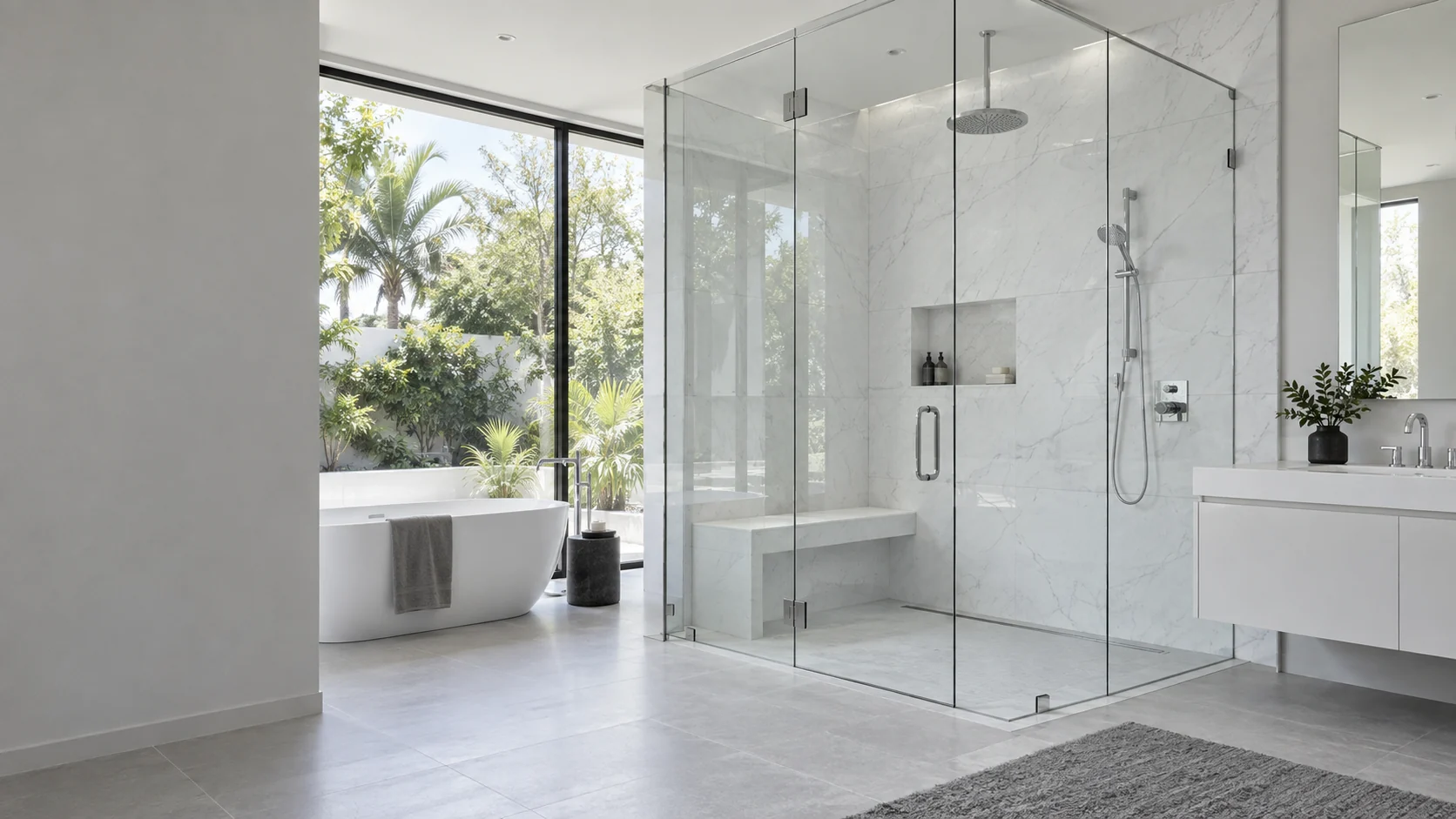
Frameless means the glass carries itself on hinges and clamps rather than sitting in a frame. It looks cleaner and it is easier to keep clean — there is no channel collecting water. It also demands more of the walls: a frameless door hangs on what is behind the tile.
03
Nothing in a bathroom is square
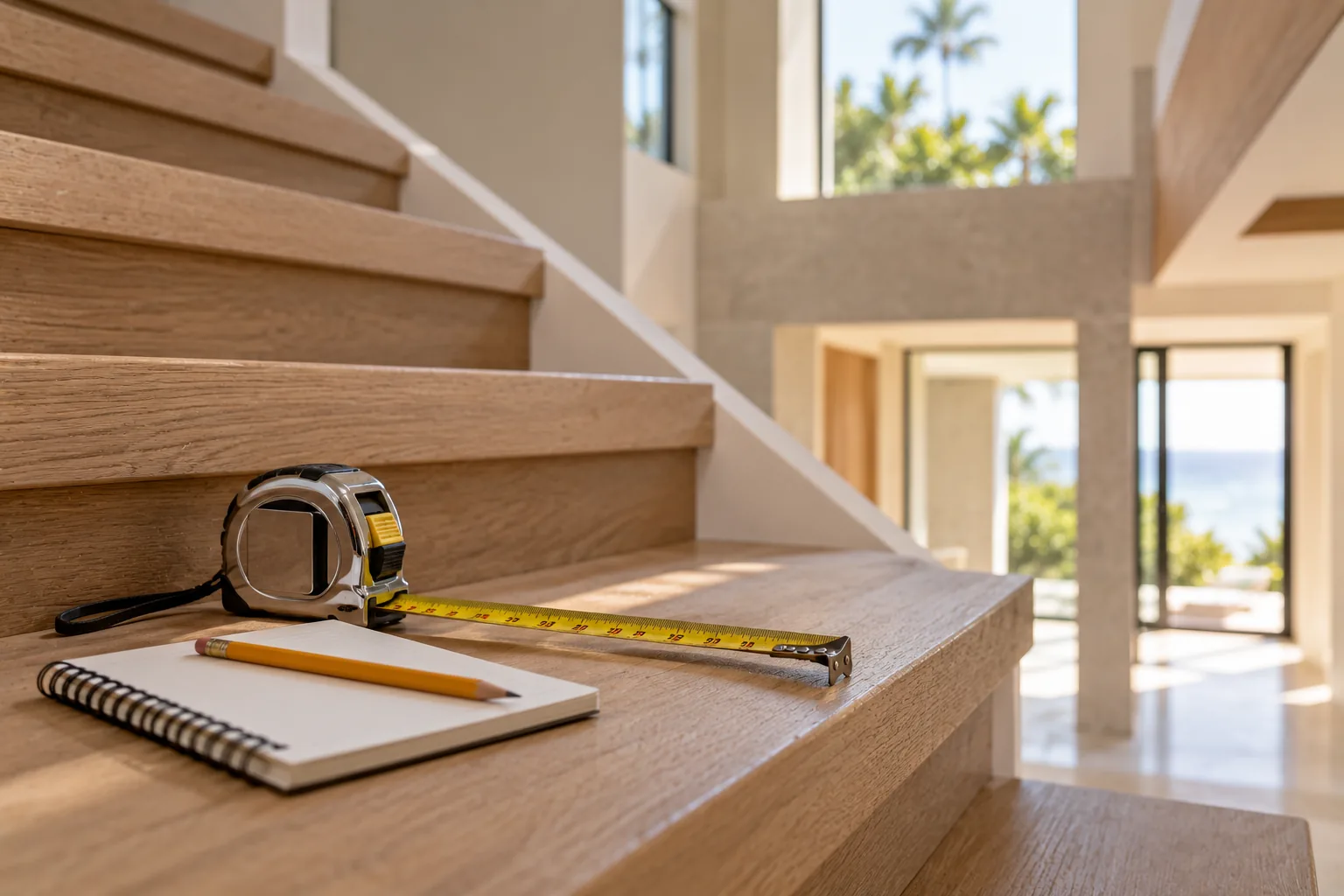
Walls lean, floors slope to the drain, and tile is rarely perfectly plumb. Enclosures are measured after the tile is finished for exactly this reason, and the measurements decide where small adjustments are hidden. Ordering from construction drawings is how you end up with a visible gap.
04
Water spotting is a finish decision
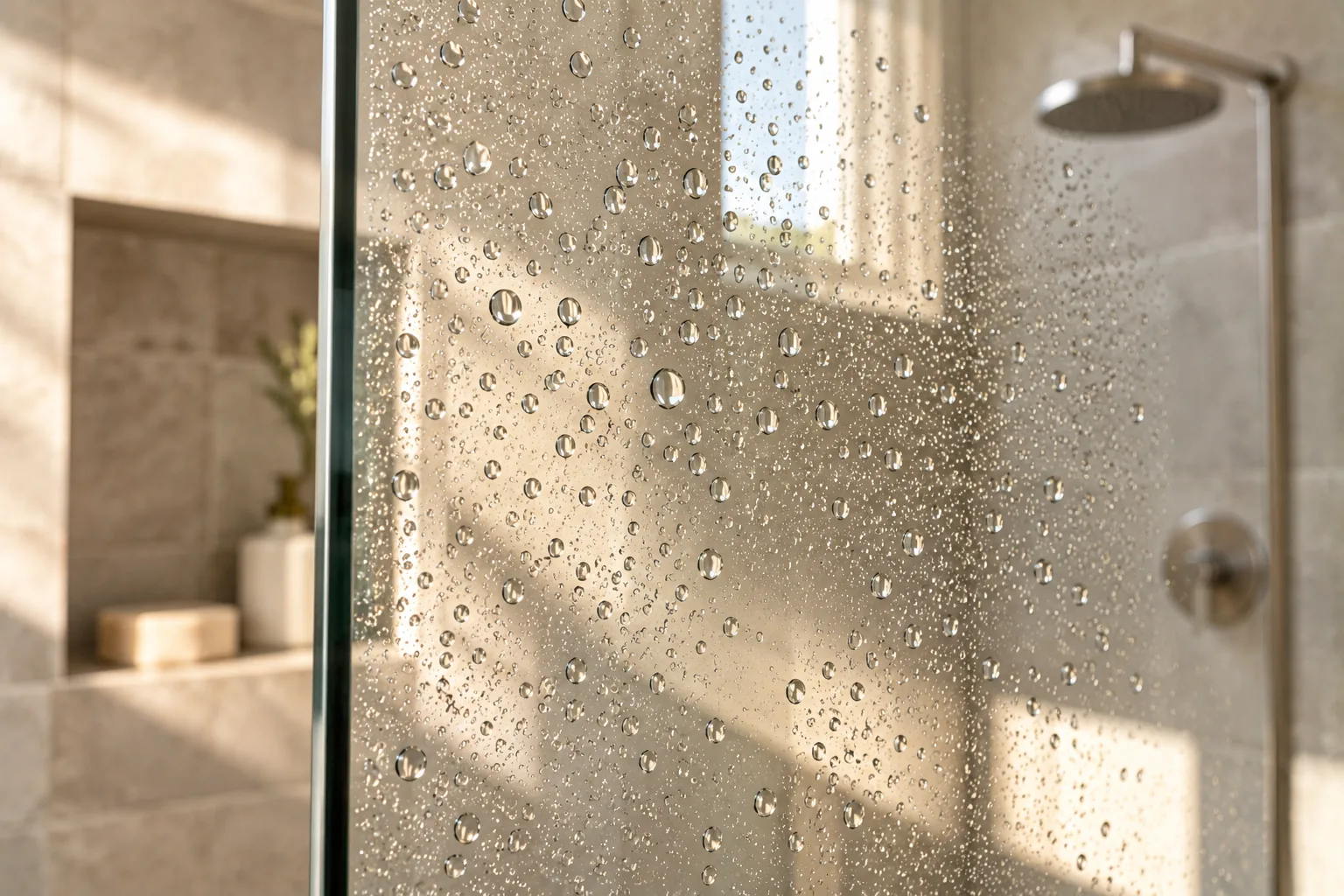
Hard water leaves mineral deposits that etch untreated glass over time. A protective coating applied at the factory makes them wipe off instead of building up. It is much cheaper to specify at the start than to restore glass that has already been marked.
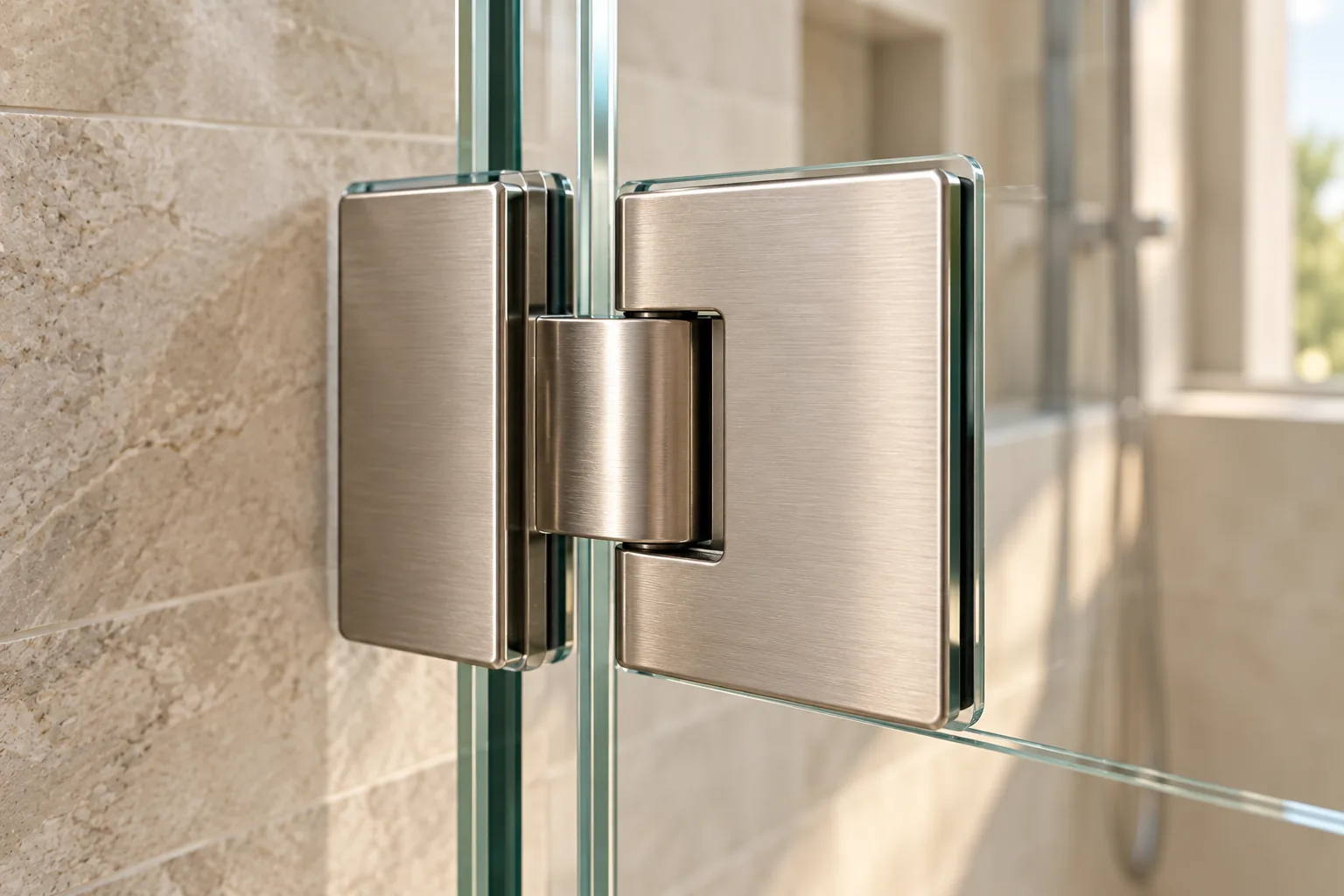
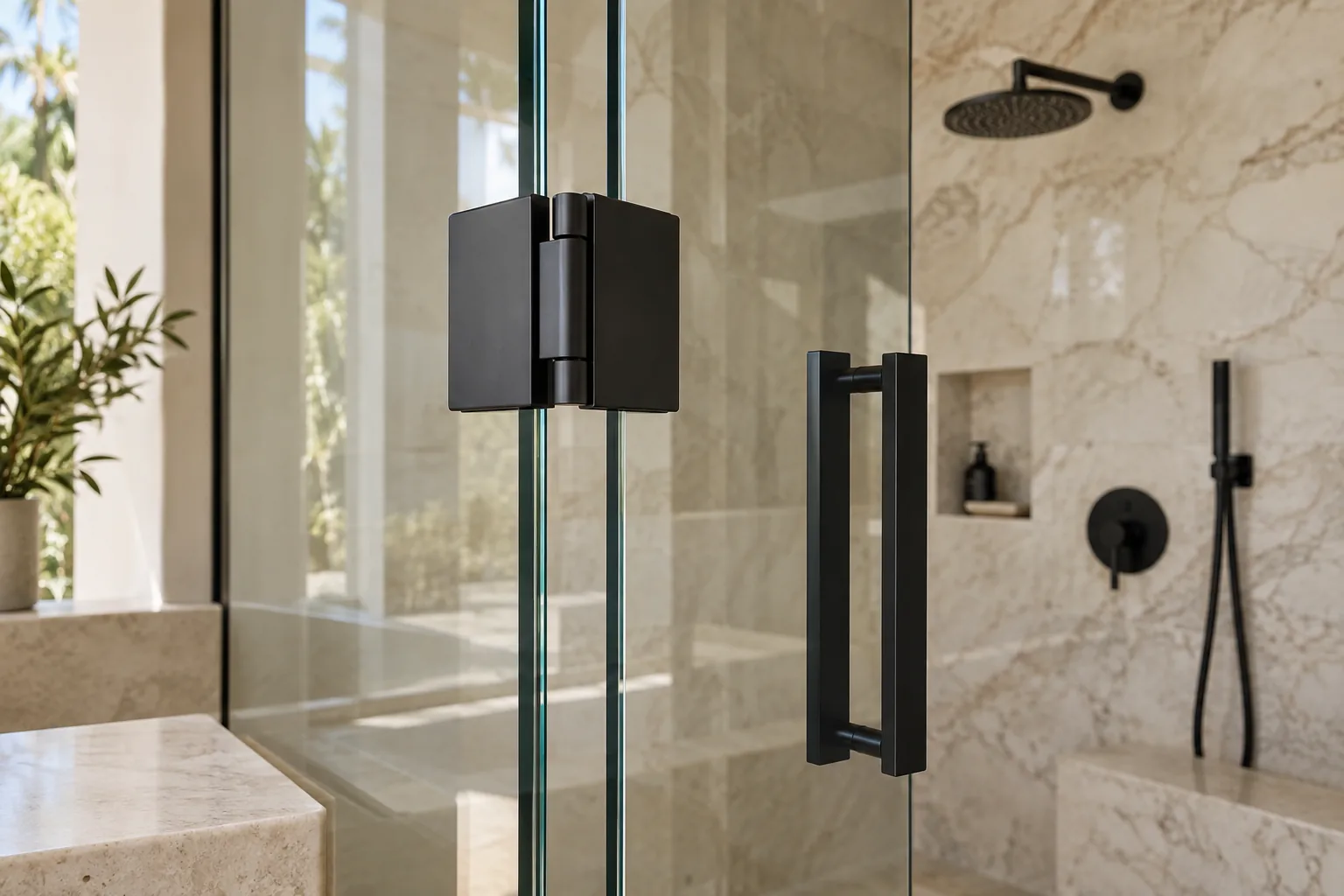
A shower door swings thousands of times a year in constant humidity. Hinge quality shows up years later as sag or corrosion, and the finish should match the rest of the bathroom fittings rather than approximately match. Worth spending on.
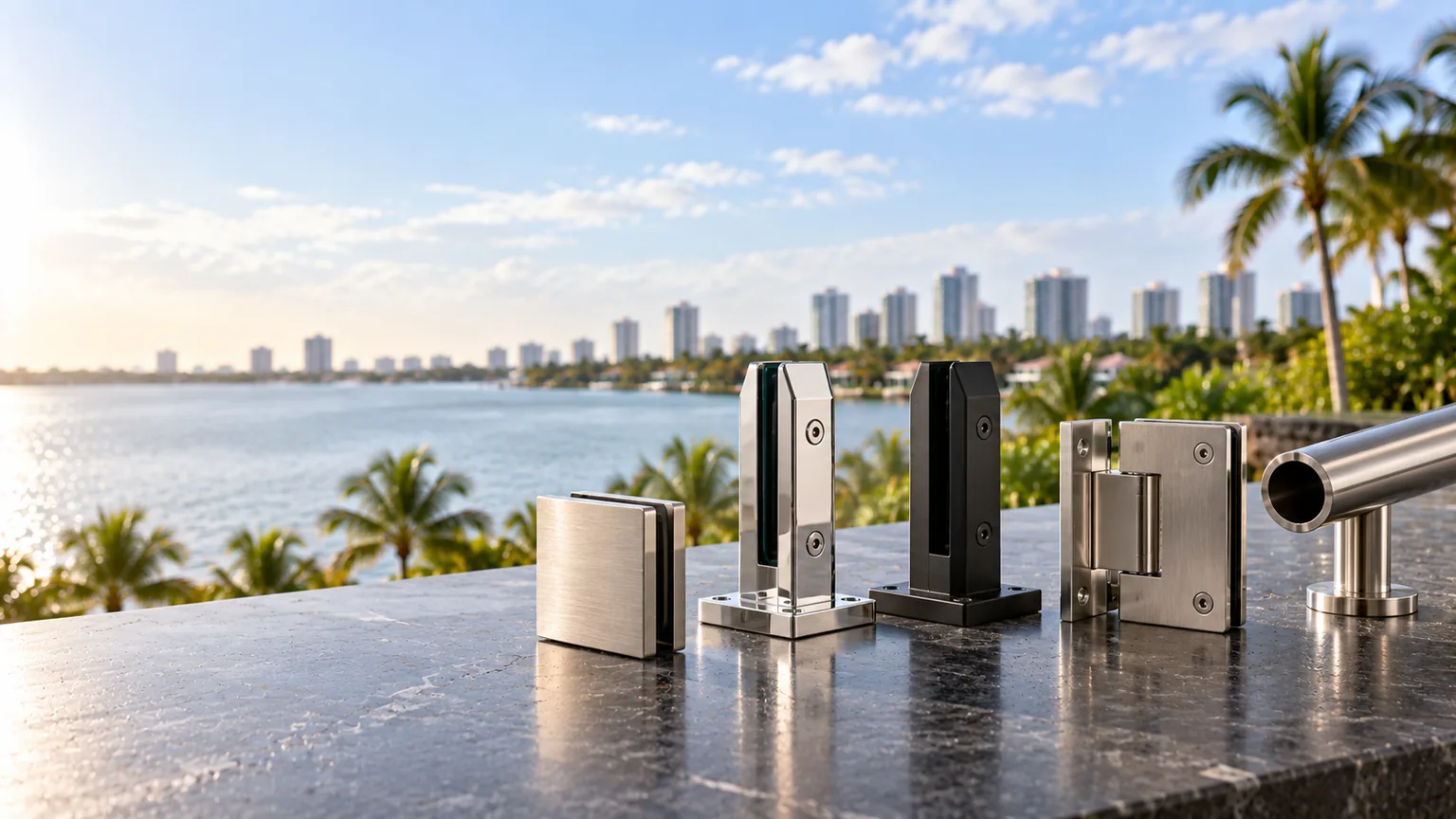
Which system suits a project depends on the surface it fixes to and how the space is used. Send photographs or a plan and we will go through the options against your own site rather than in general.