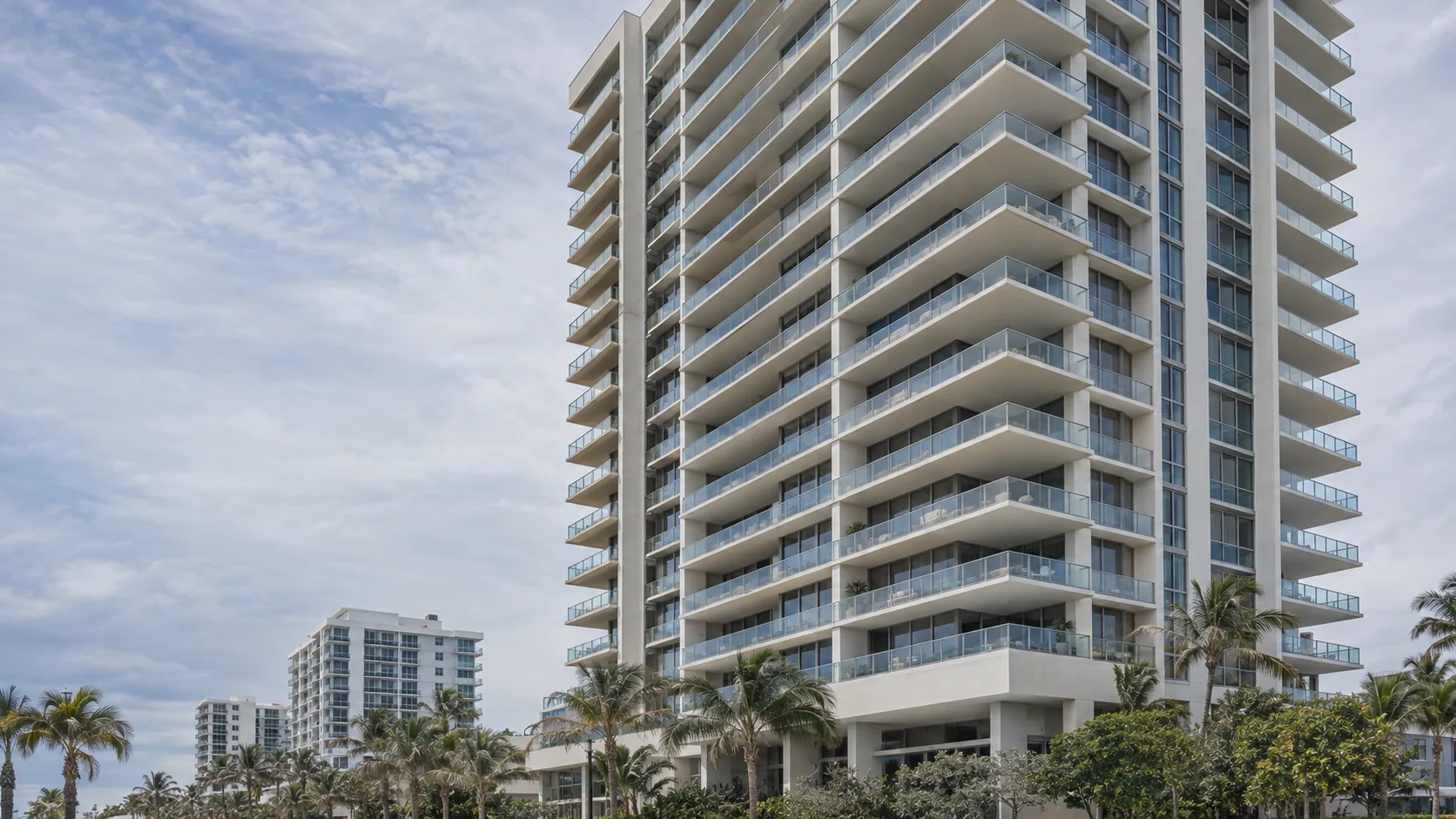
A solid parapet and a glass guard do the same job for the building code and completely different jobs for the person standing behind them. The decision is easier once it stops being about cost.
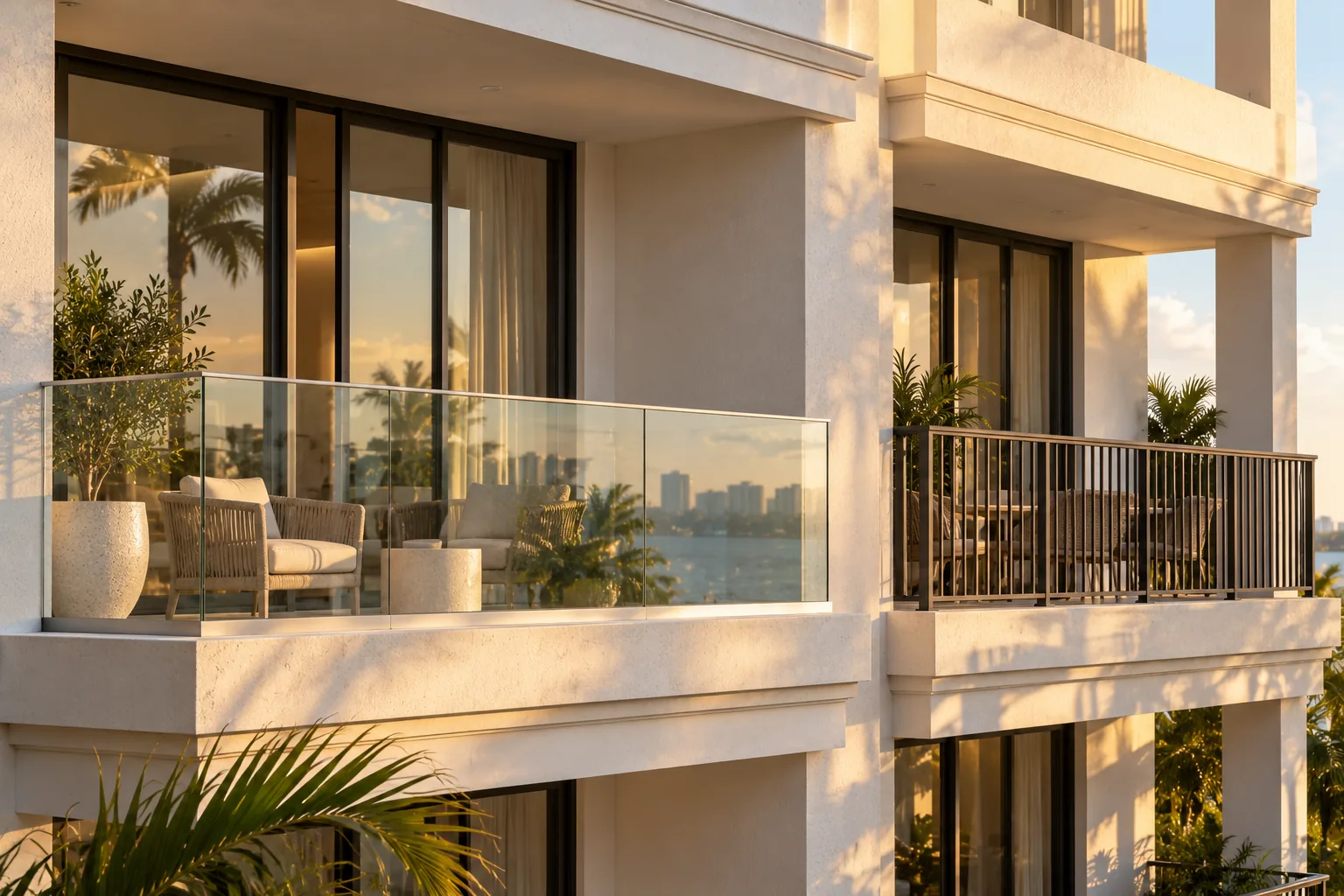
Both keep people from falling, and the code treats both as guards. After that they diverge. A parapet is part of the building — it reads as mass, it blocks what is behind it, and it is finished in whatever the façade is finished in. Glass is a surface you look through, and what you are buying is the absence of the wall. Deciding between them on price alone usually produces a result nobody likes.
02
What a solid parapet takes away
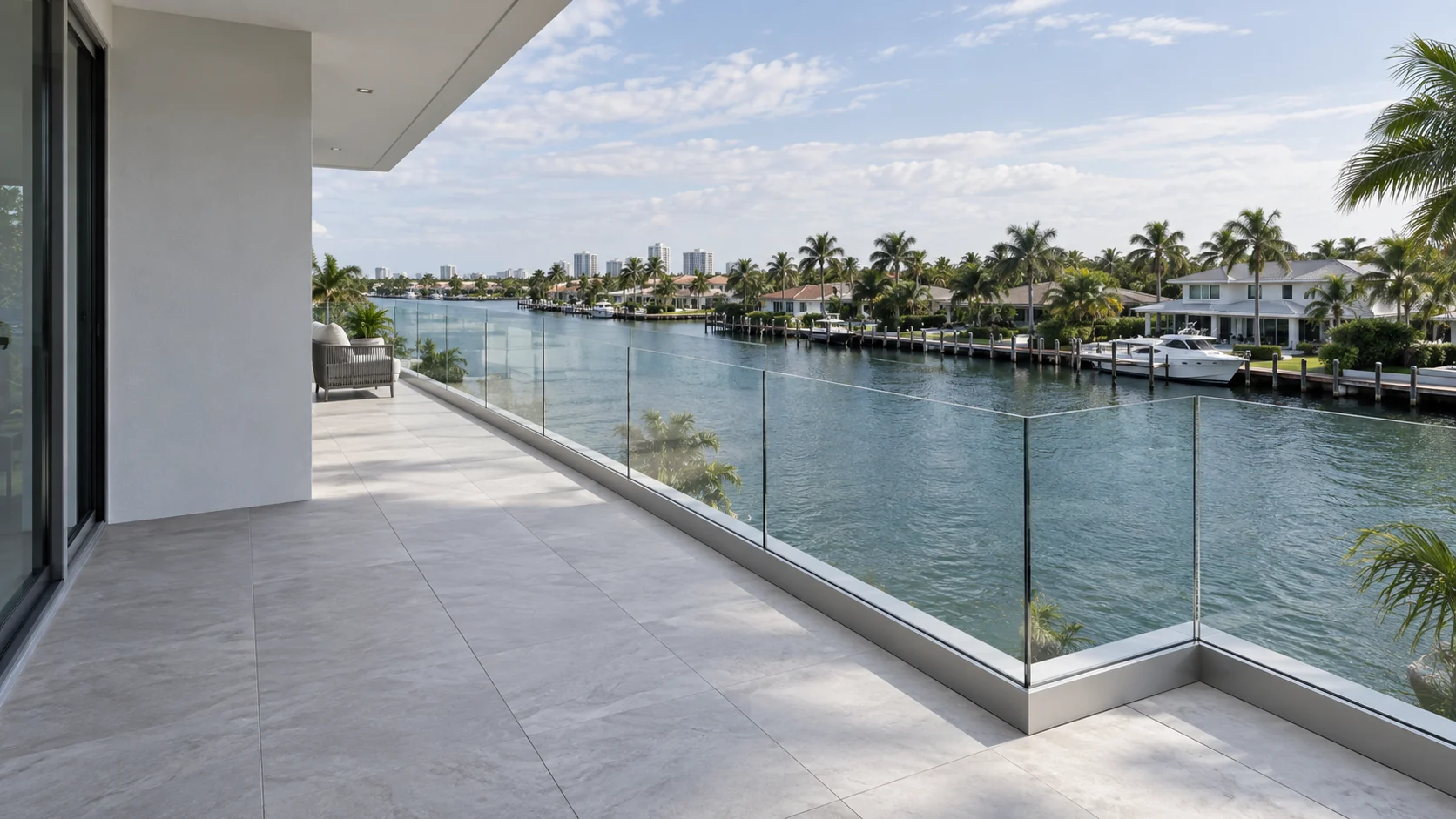
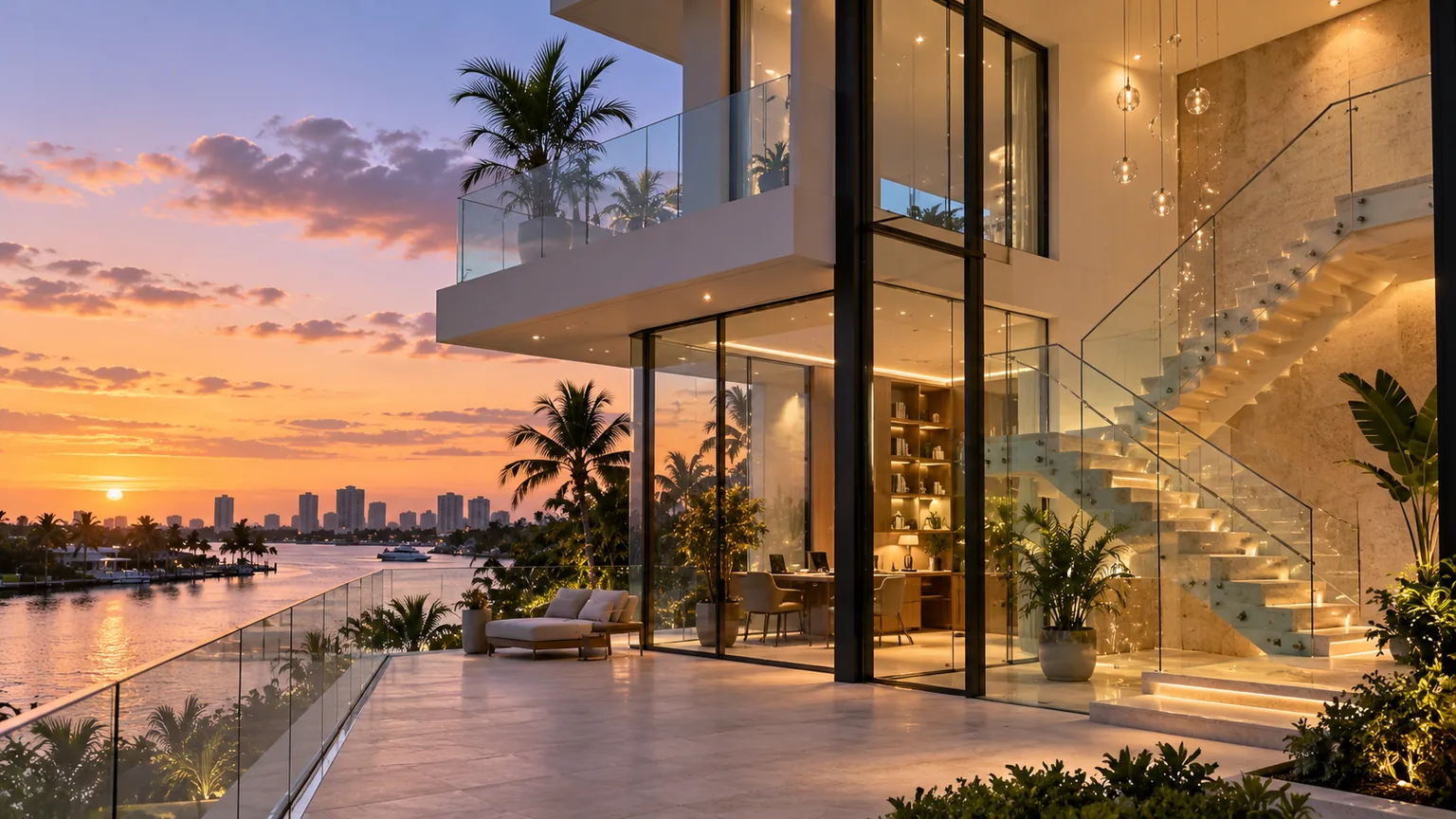
The view from a chair. A guard is roughly forty-two inches tall, which is above eye level for anyone seated, so a solid parapet turns a terrace into a room with a high window: standing you see the water, sitting you see a wall. It also cuts daylight into the space behind it and makes a small balcony feel smaller. On a waterfront property that is most of what the property is for.
03
What glass asks of you in return
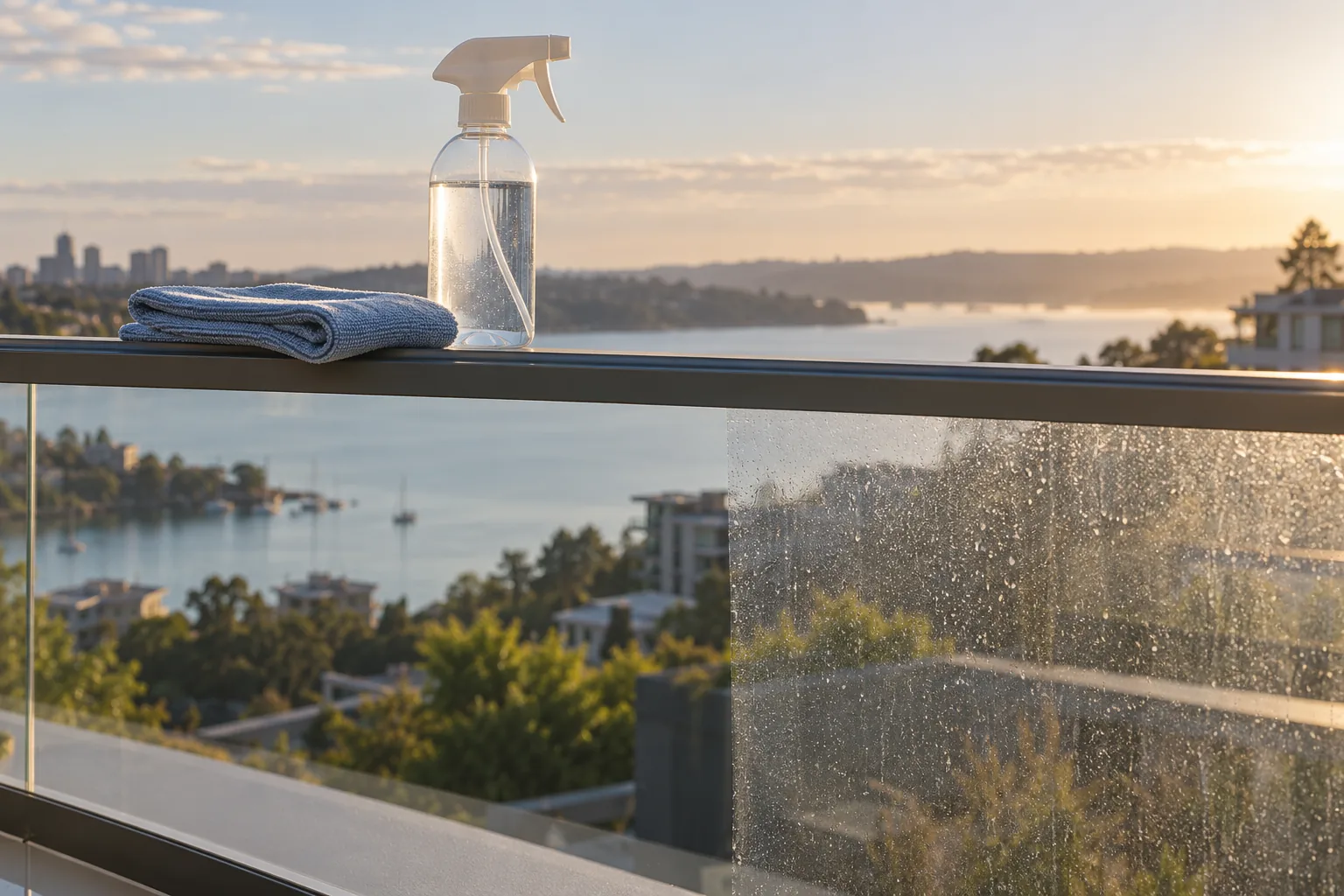
Cleaning, mainly, and more of it than people expect near the water. Salt film, rain spotting and fingerprints all show on a surface whose whole point is being invisible, and a panel that is not cleaned looks worse than a parapet that is not cleaned. Hardware needs rinsing on the same rhythm. None of this is difficult, but it is a habit, and a glass guard is only as good as the habit.
An exposed edge is a wind problem before it is a design one. Both a parapet and a glass guard have to be designed for the pressures at that elevation and exposure, and in Broward and Miami-Dade — Florida’s High-Velocity Hurricane Zone — exterior work is reviewed against those requirements for the specific address. Glass answers it with make-up, thickness and fixings; a parapet answers it with structure. Neither is automatically the easier approval.
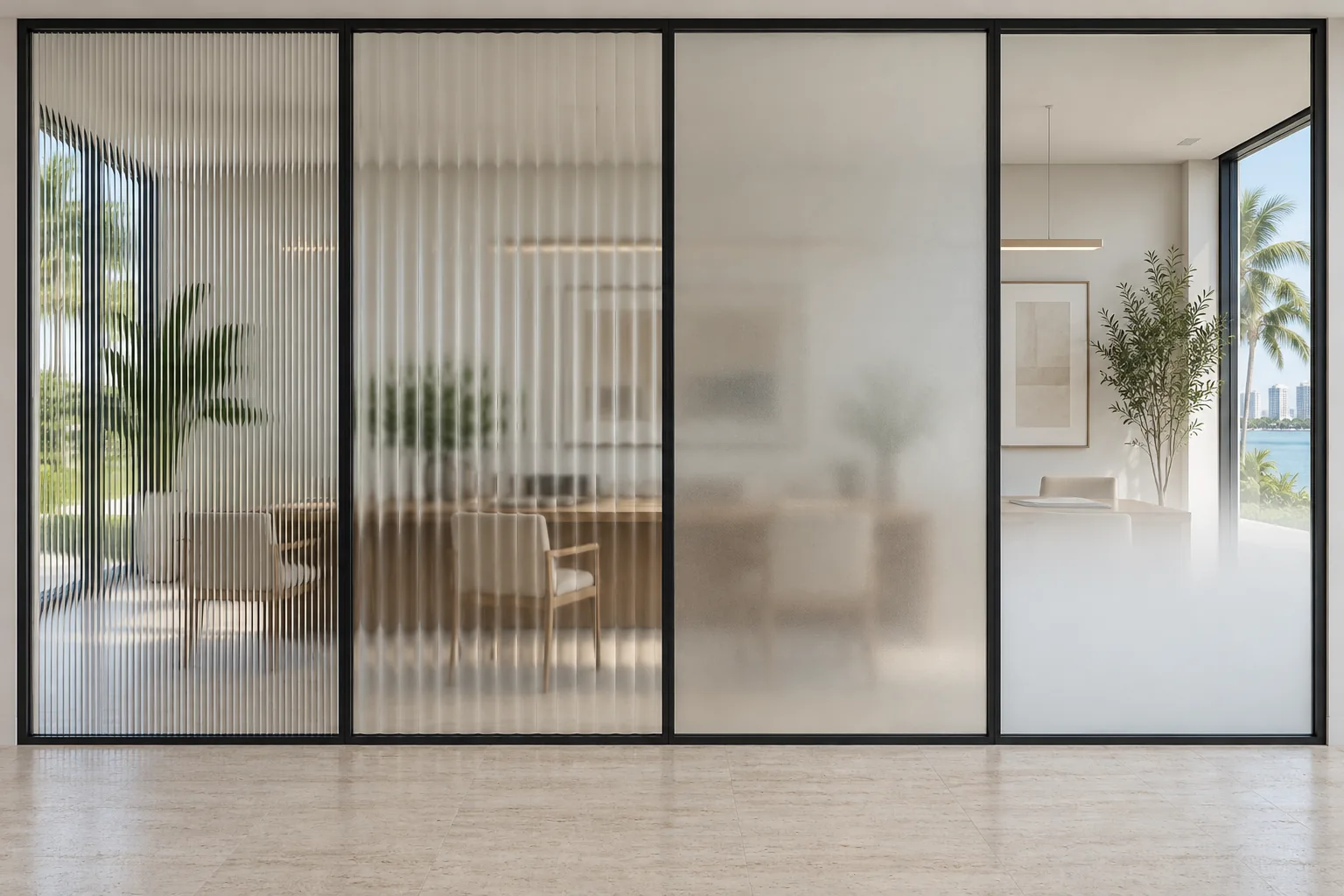
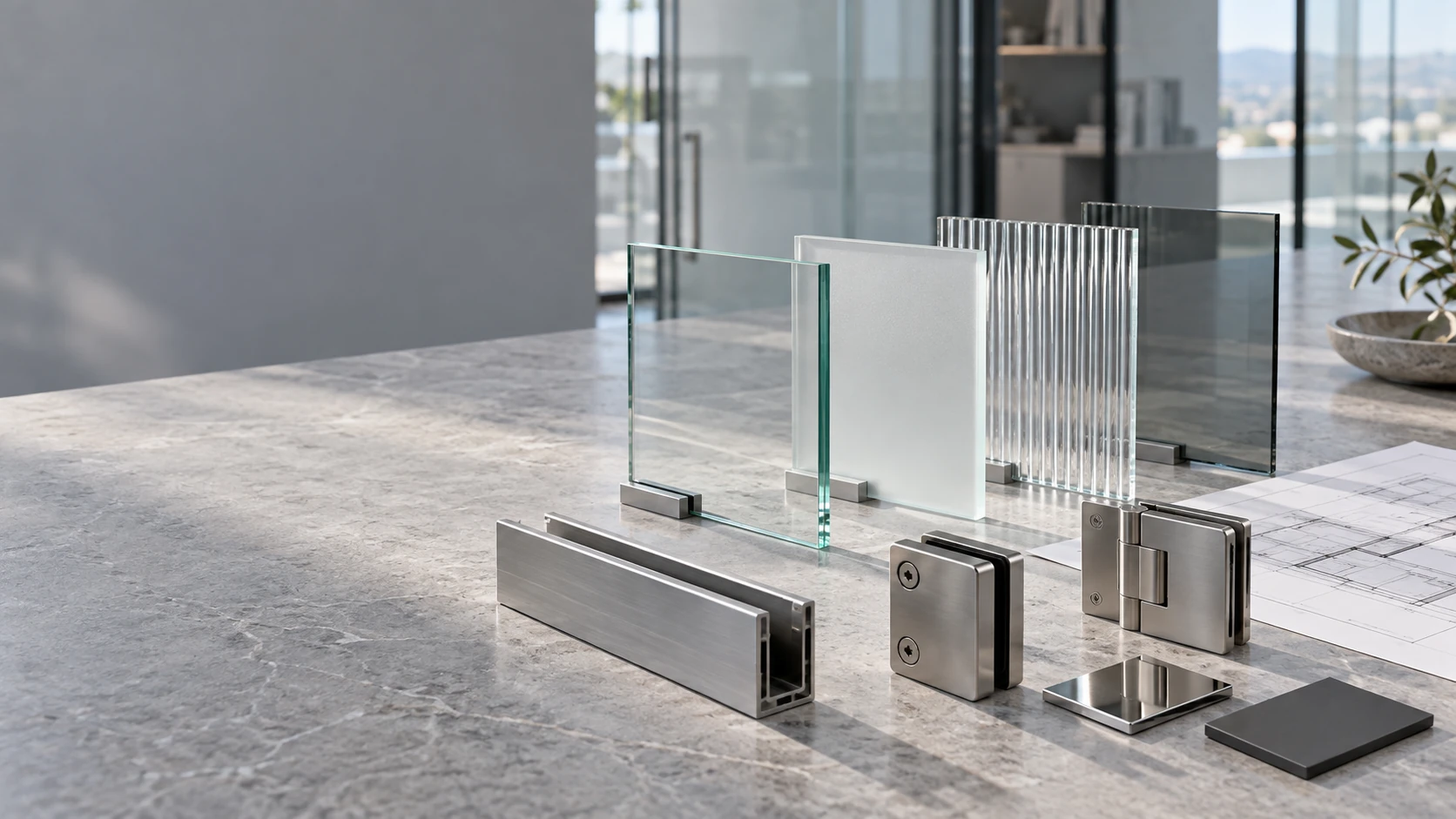
The usual reason people reach for a parapet is being seen from the neighbour’s terrace, and a solid wall is not the only answer to it. Frosted or acid-etched glass passes light and stops detail. Reeded glass breaks up the view and keeps the brightness. A tint reduces how much the terrace reads from outside while leaving the outlook from inside intact. Each of these keeps the daylight that a parapet removes.
A low solid upstand with glass above it is common on waterfront buildings and it solves several problems at once: the upstand takes the splash, the dirt and the furniture scuffs, hides the waterproofing detail and the fixings, and gives the glass a clean line to start from. You keep the view from a seated position and lose the part of the glass that was always going to look dirty.
07
What each one asks of the structure
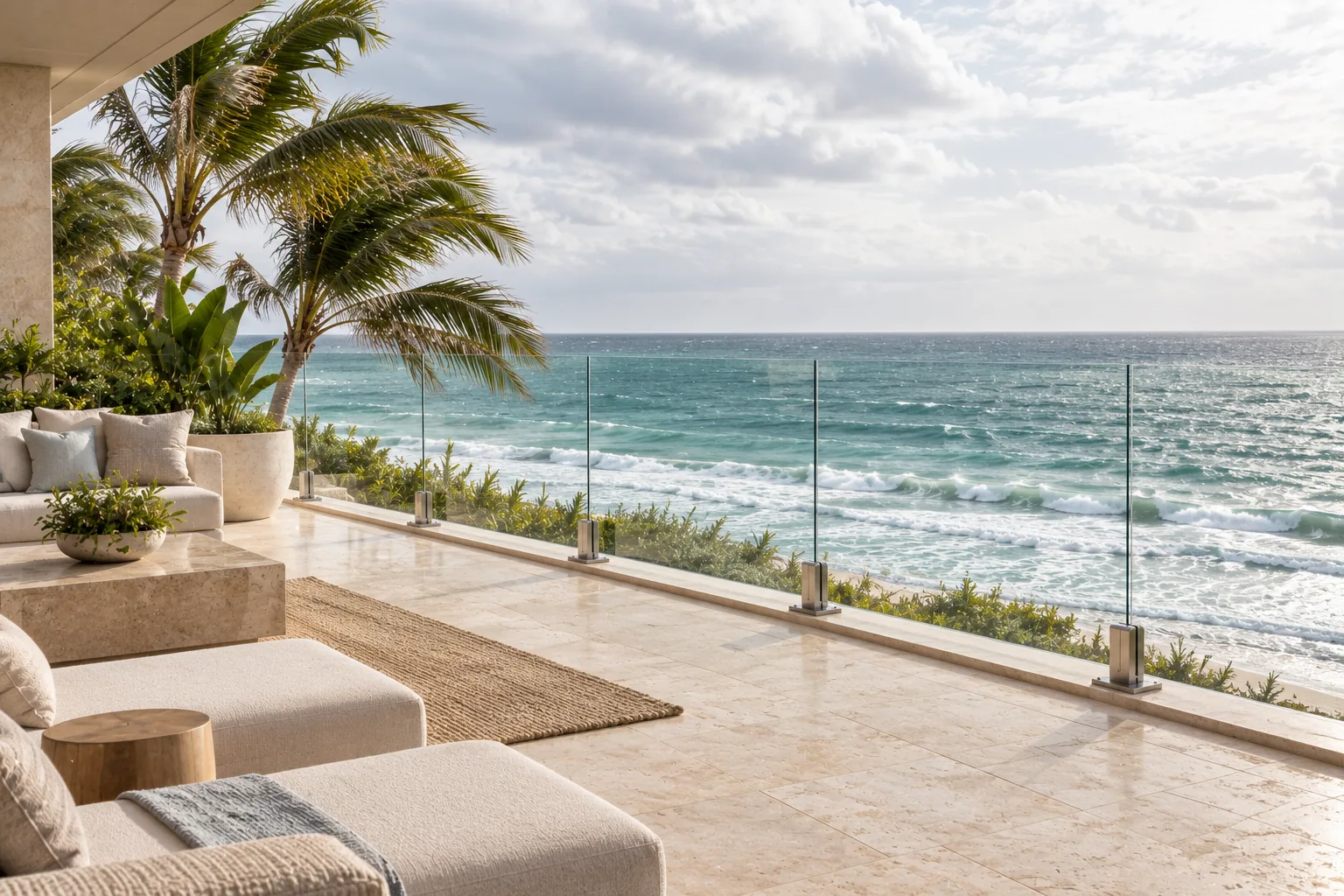
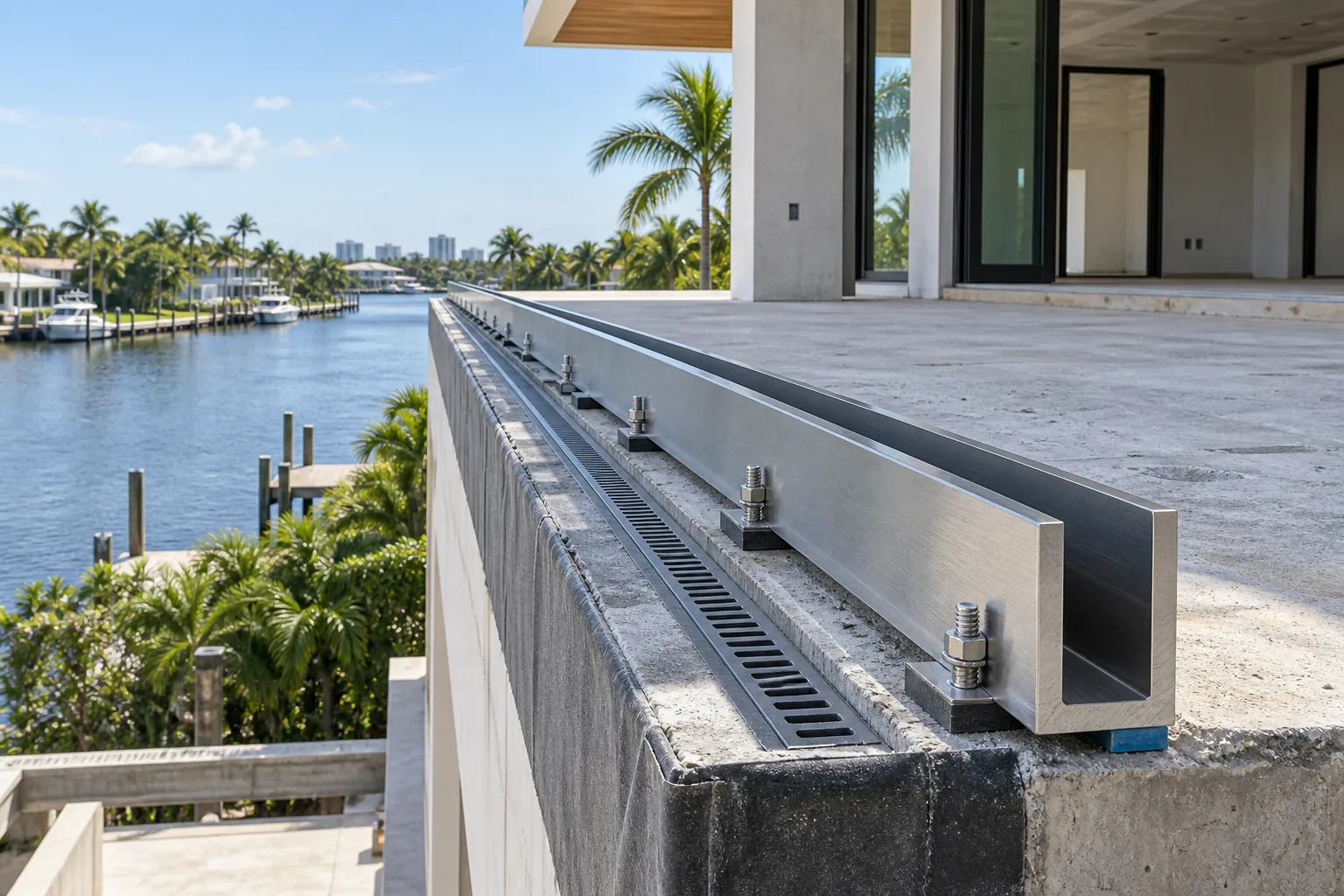
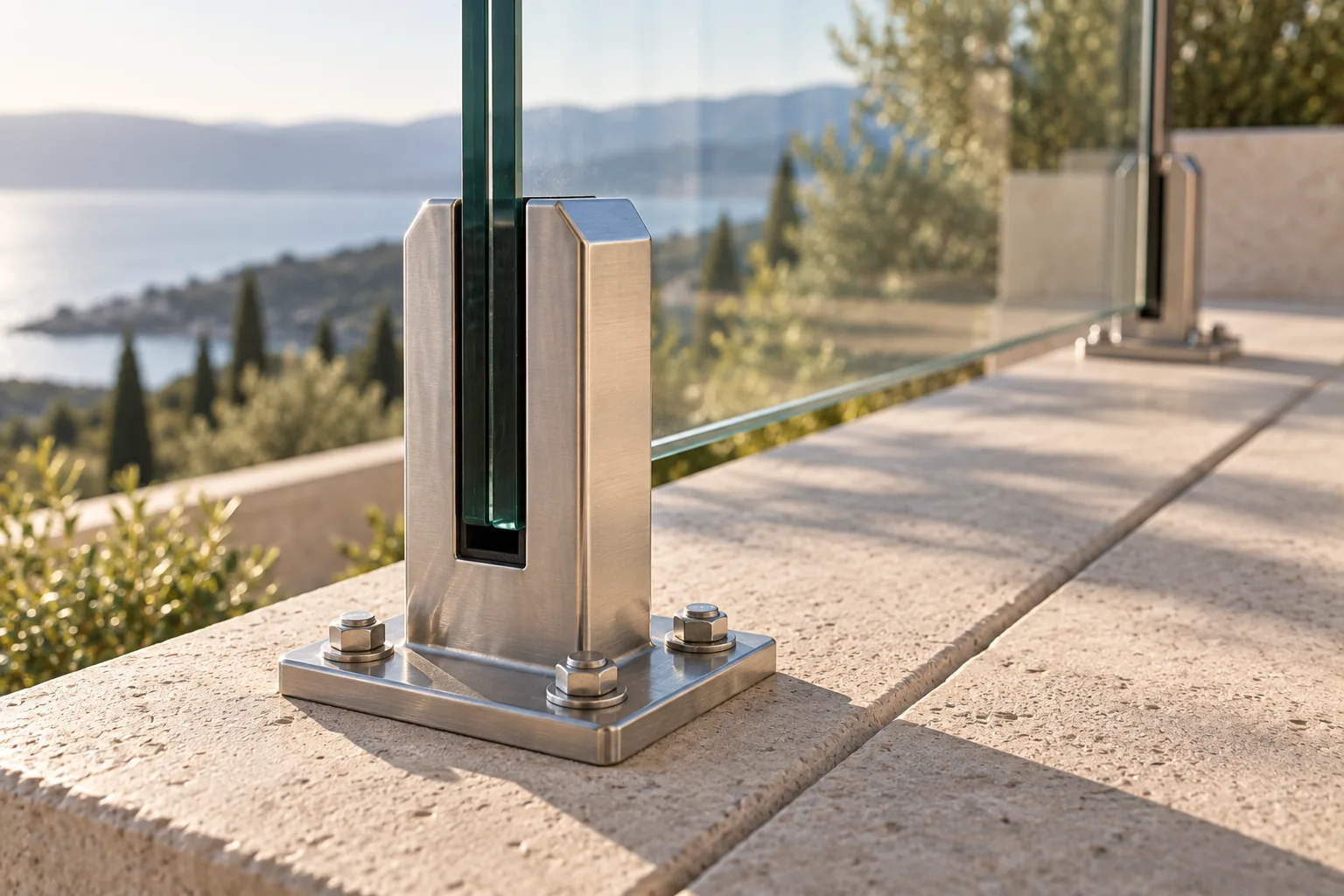
A parapet is usually built with the building and carried by it. A glass guard puts its load into a smaller number of places — a channel bolted along a slab edge, or spigots anchored into it — and that edge has to be sound, thick enough and free of the waterproofing you do not want to drill through. On an existing balcony this is the question that decides what is possible, and it is answered on site, not on a drawing.
Stand where the chairs will go and look. Sit down and look again. Do that at the time of day the terrace is actually used, and with the neighbour’s terrace in view. Most people decide in a minute, and the ones who cannot usually want the hybrid. Send us photographs from both heights and we will tell you what the edge will take.
Which system suits a project depends on the surface it fixes to and how the space is used. Send photographs or a plan and we will go through the options against your own site rather than in general.