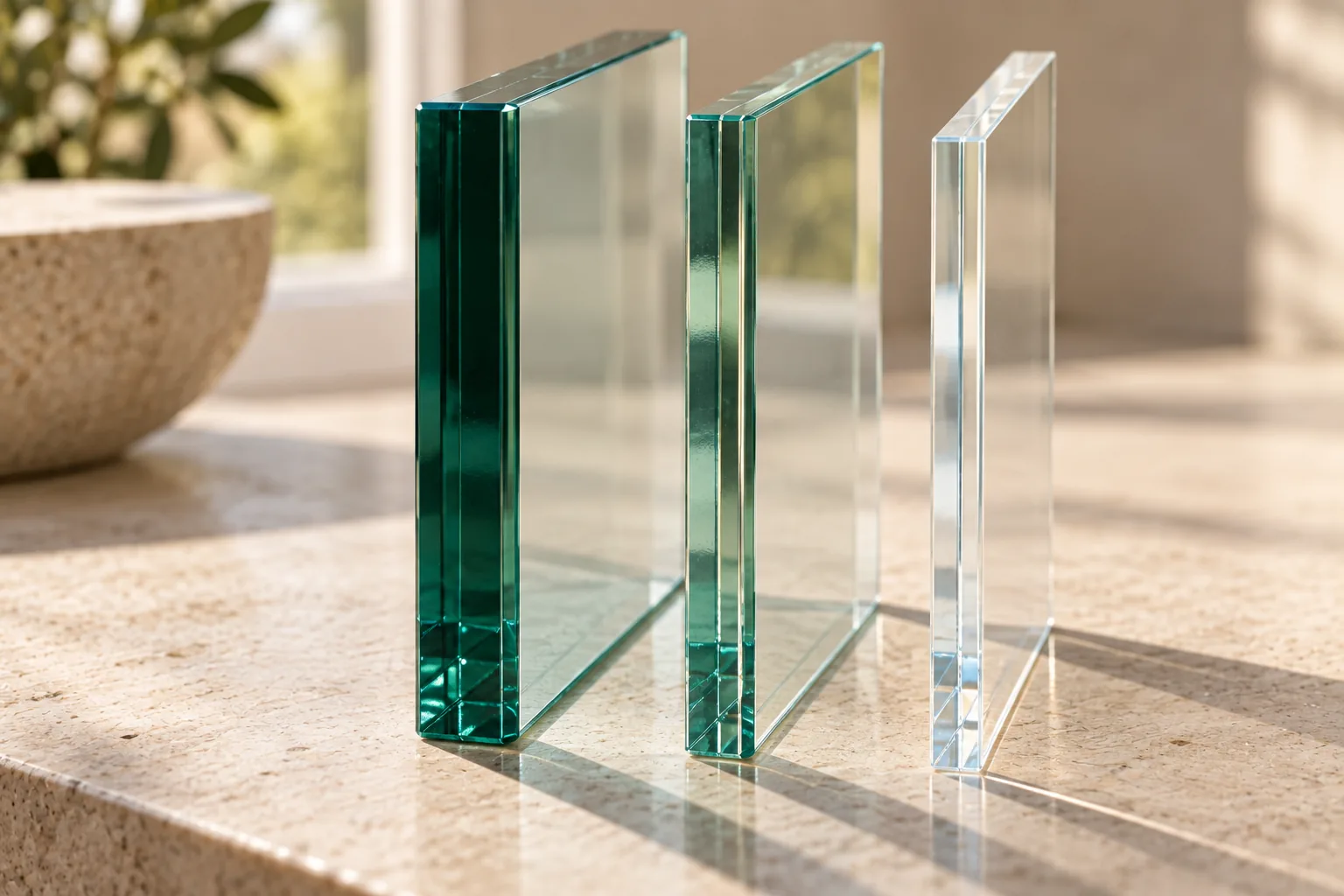
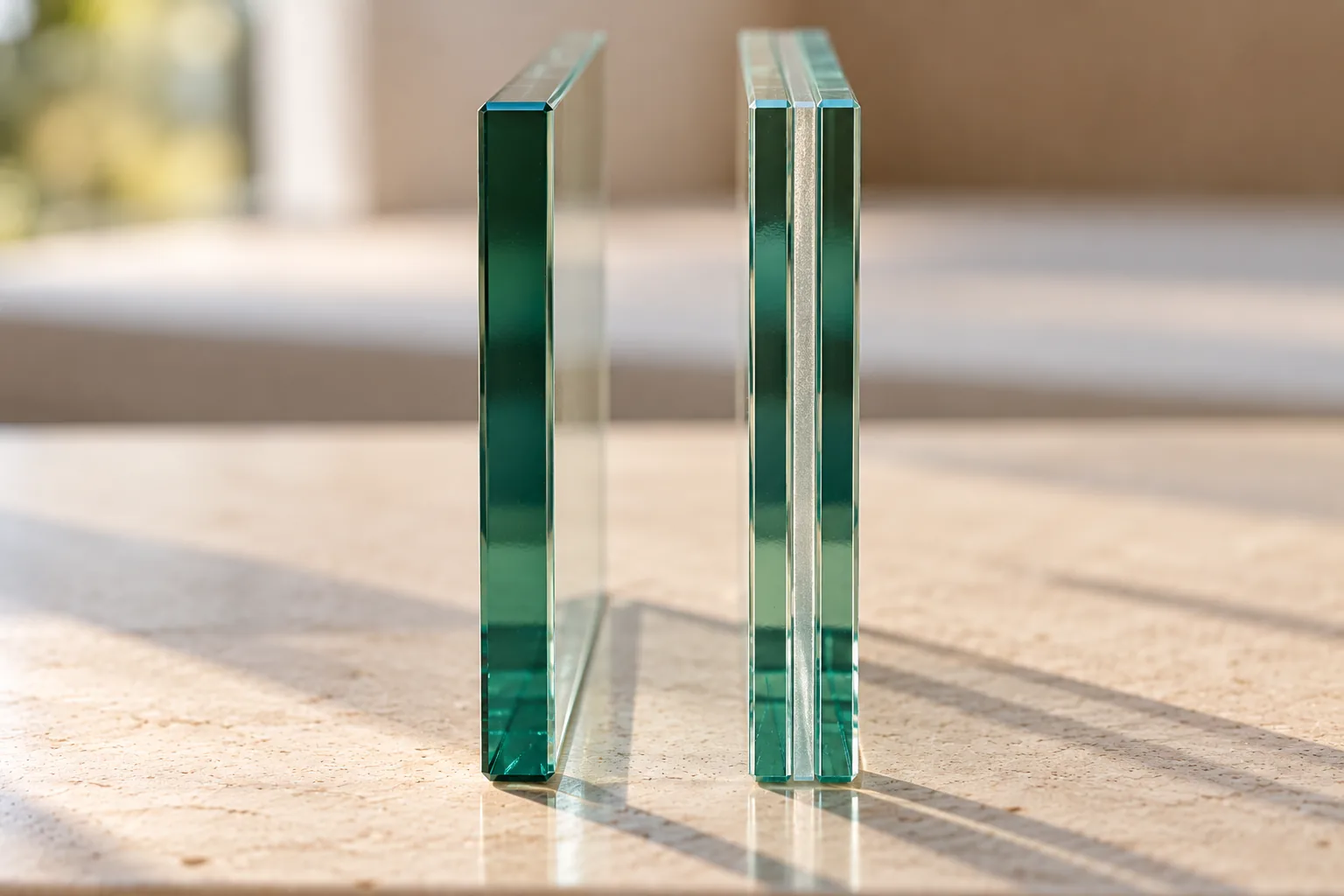
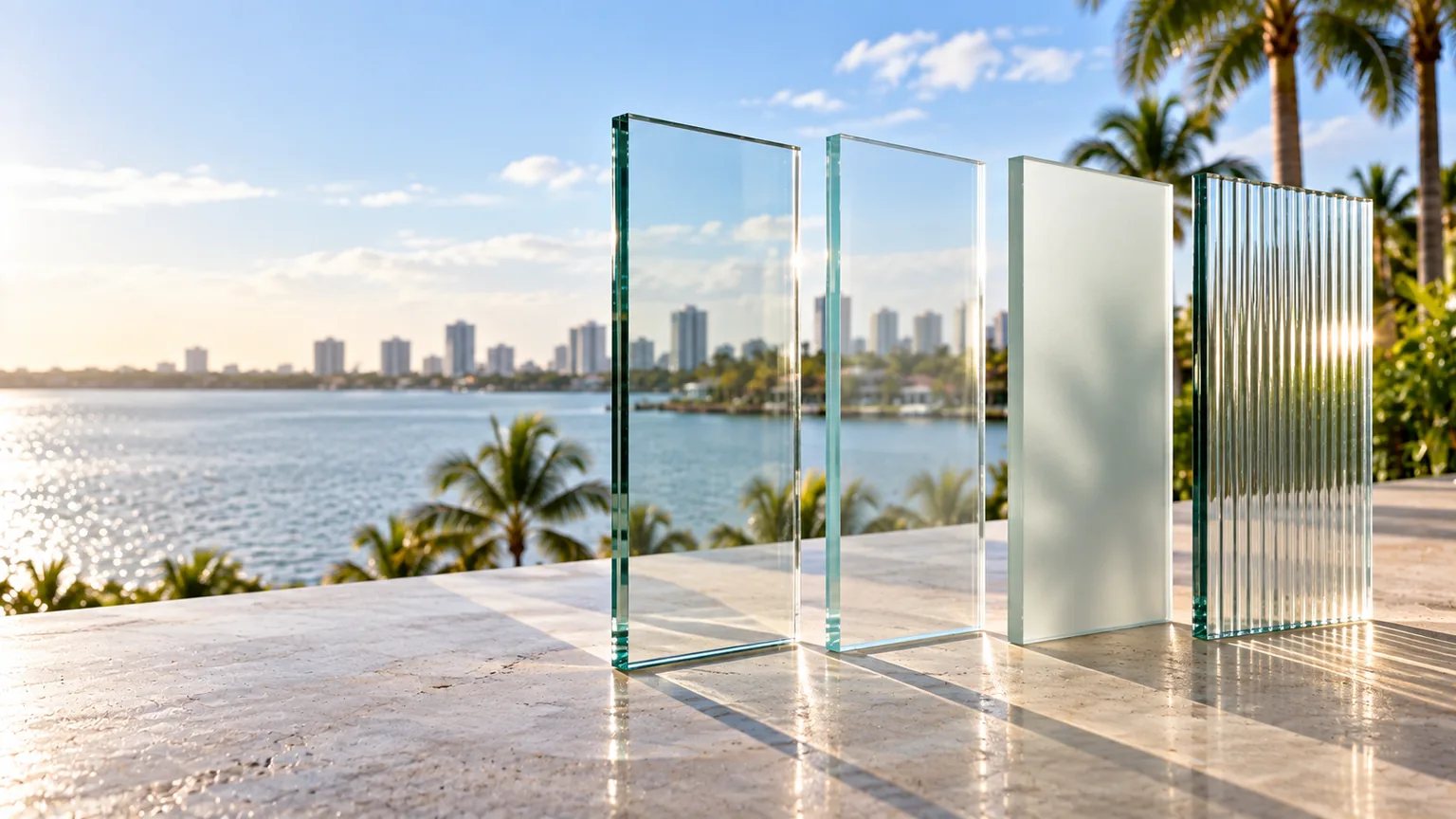
Two panels can look identical and behave completely differently. What separates them is how the glass was treated after it was made, and whether it is one sheet or several bonded together.
Glass in its plain state, cooled slowly after forming. It can be cut and drilled, but it breaks into large, sharp pieces. On its own it has no place in a railing or a shower, and it is mainly relevant as the raw material the other types are made from.
02
Heat-strengthened: stronger, and it stays in bigger pieces
Heated and cooled in a controlled way so it resists stress better than annealed glass. If it does break, it comes apart in relatively large pieces rather than granules — which is exactly what you want when the glass is bonded to something that has to hold those pieces in place.
03
Tempered: breaks into small blunt pieces
Heated and cooled much faster, which puts the surface under compression. It is significantly stronger than annealed glass, and when it does break it crumbles into small pieces with dull edges rather than shards. This is the behaviour behind the word "safety glass" in a shower enclosure.
04
Laminated: two panes that stay together
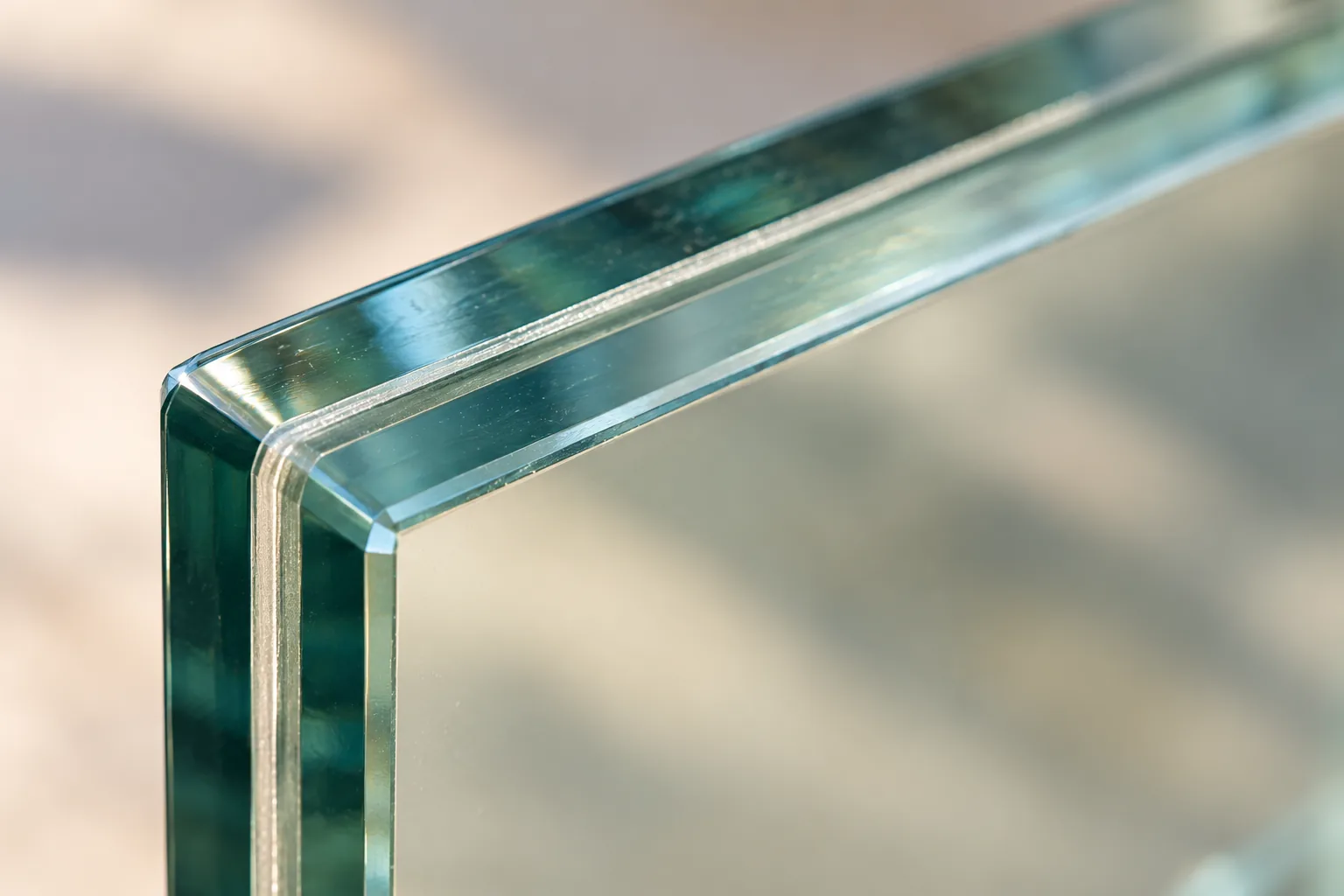
Two or more sheets of glass bonded to a plastic interlayer under heat and pressure. The glass can still break, but the pieces stay stuck to the interlayer instead of leaving the opening. That difference is why laminated construction is the usual answer wherever a panel is doing work rather than just filling a hole.
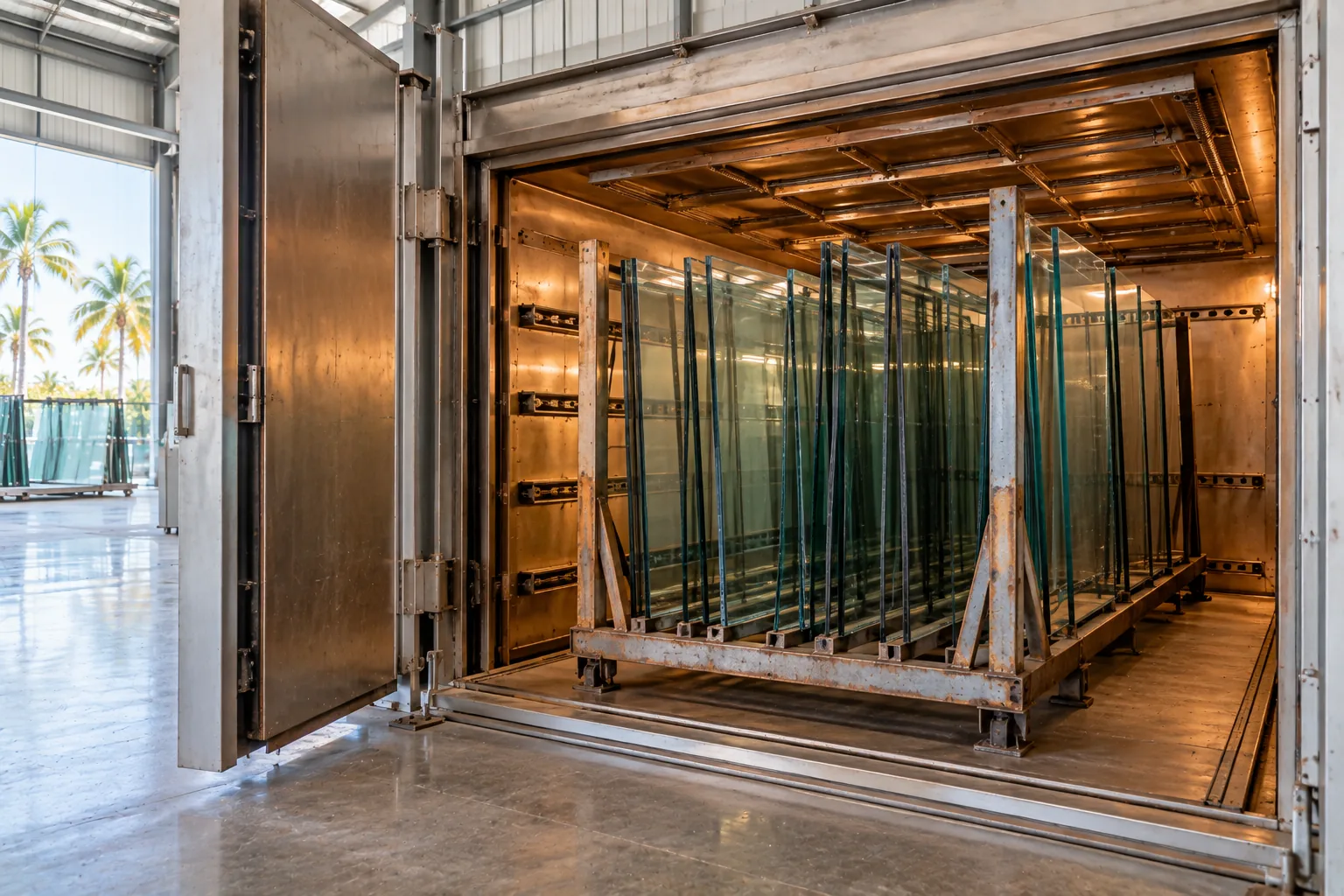
Tempered glass can, very occasionally, break on its own long after installation because of a microscopic inclusion in the raw material. A heat-soak cycle holds the finished glass at temperature to provoke those failures in the factory instead of on a balcony. Worth asking about on large or high panels.
06
Which one belongs in your project
It depends on where the panel sits, what is underneath it, how exposed it is, and what the building requires — not on a rule of thumb. We confirm the construction for each project rather than applying a default, and we will explain the reasoning before anything is ordered.
Which system suits a project depends on the surface it fixes to and how the space is used. Send photographs or a plan and we will go through the options against your own site rather than in general.