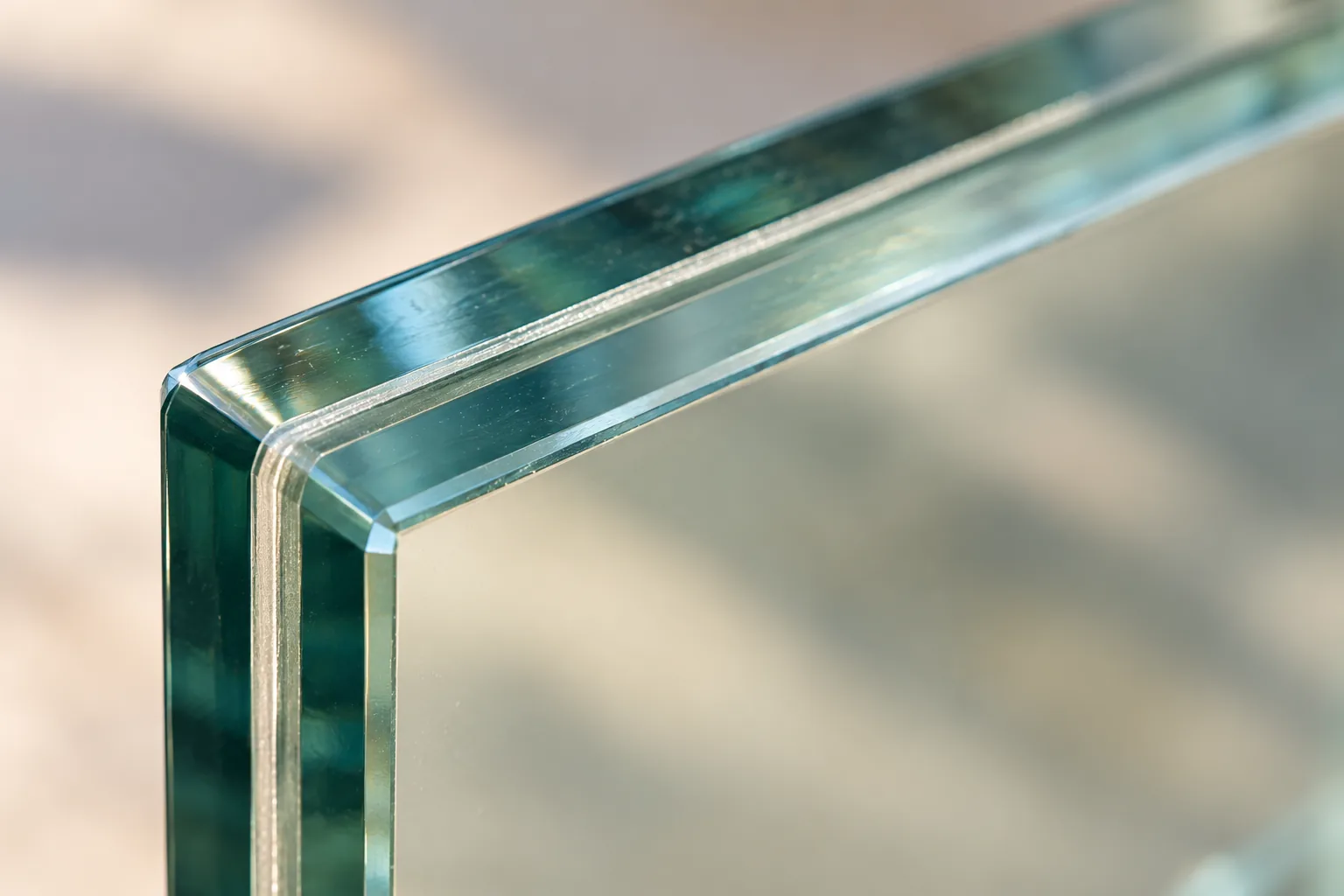
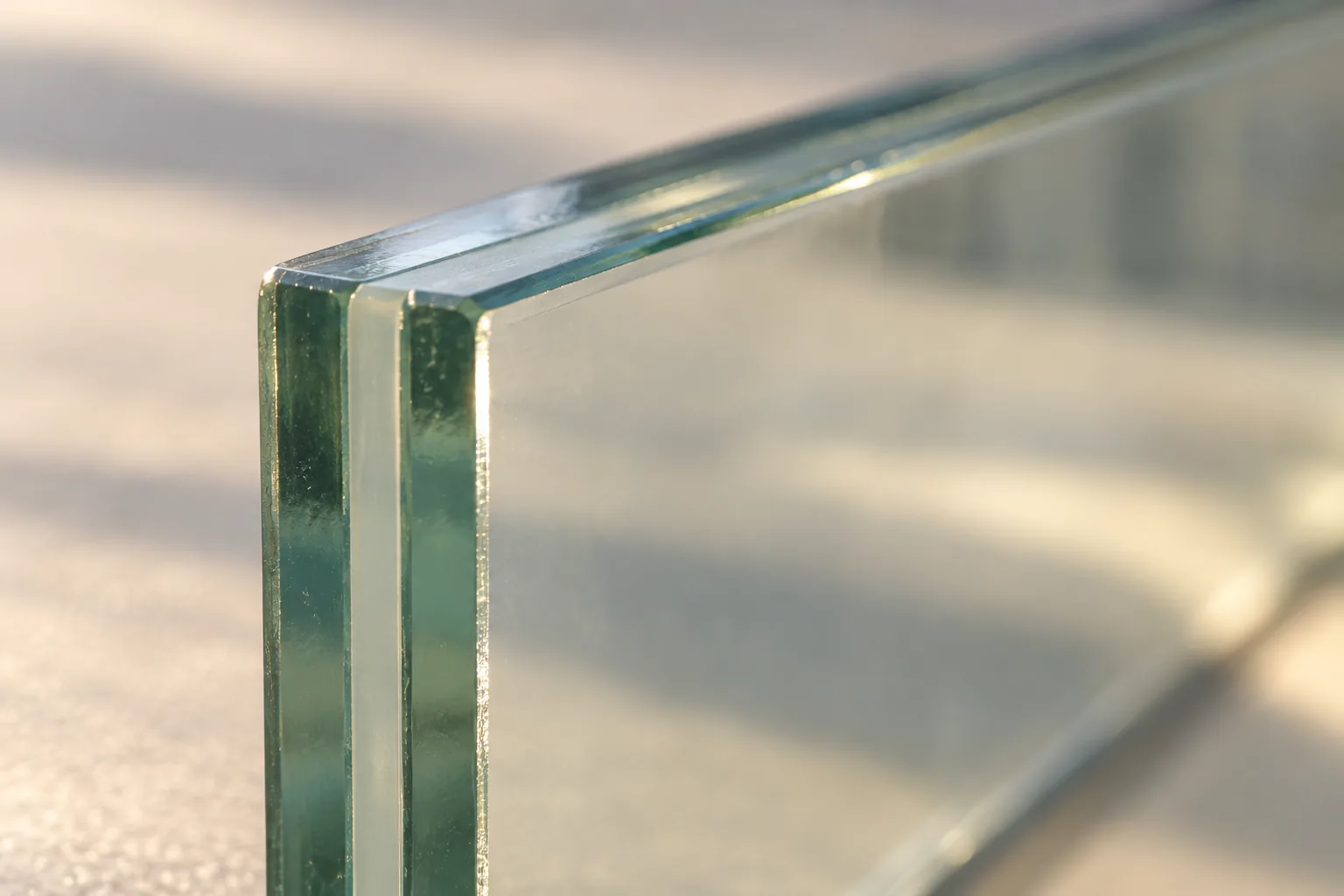
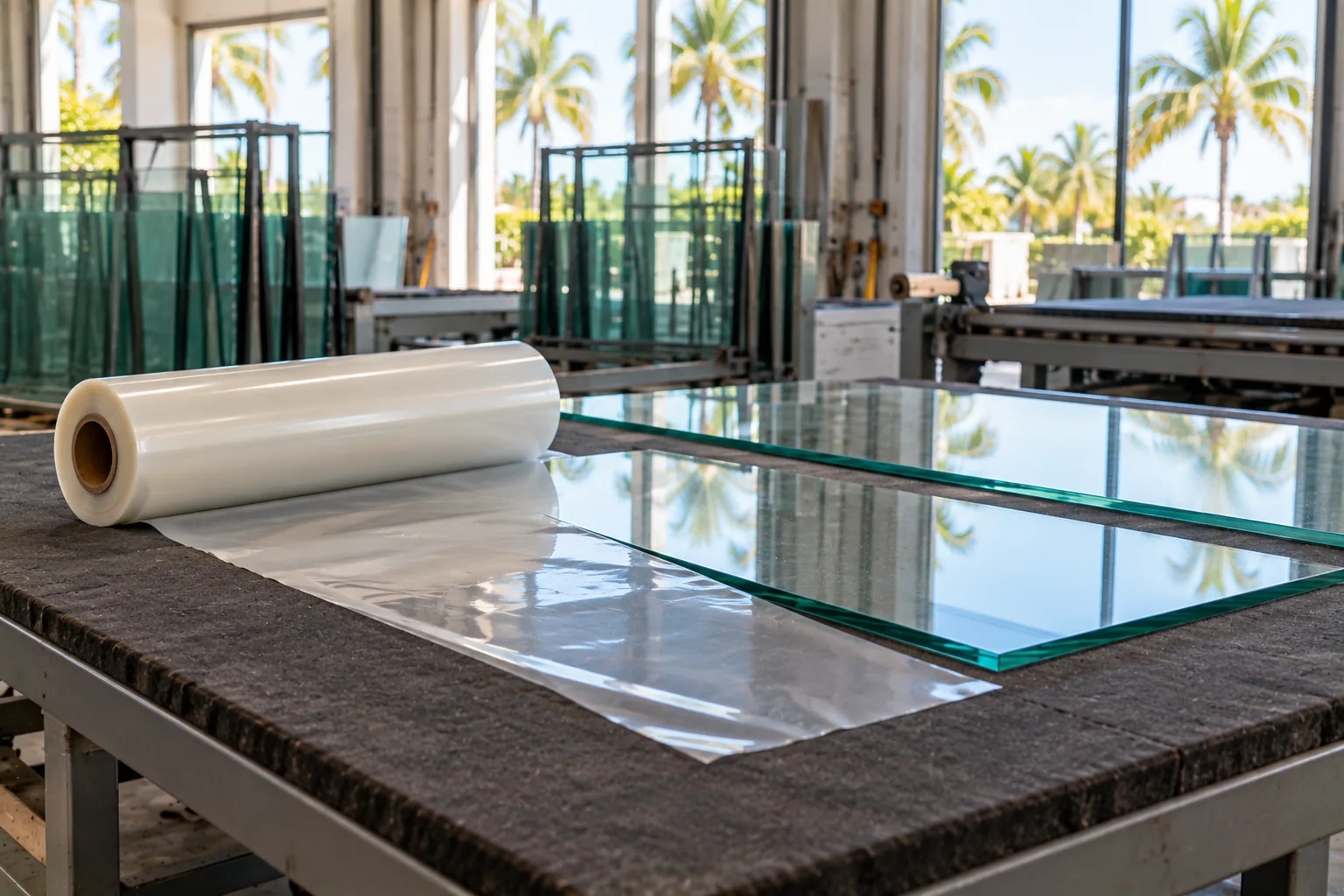
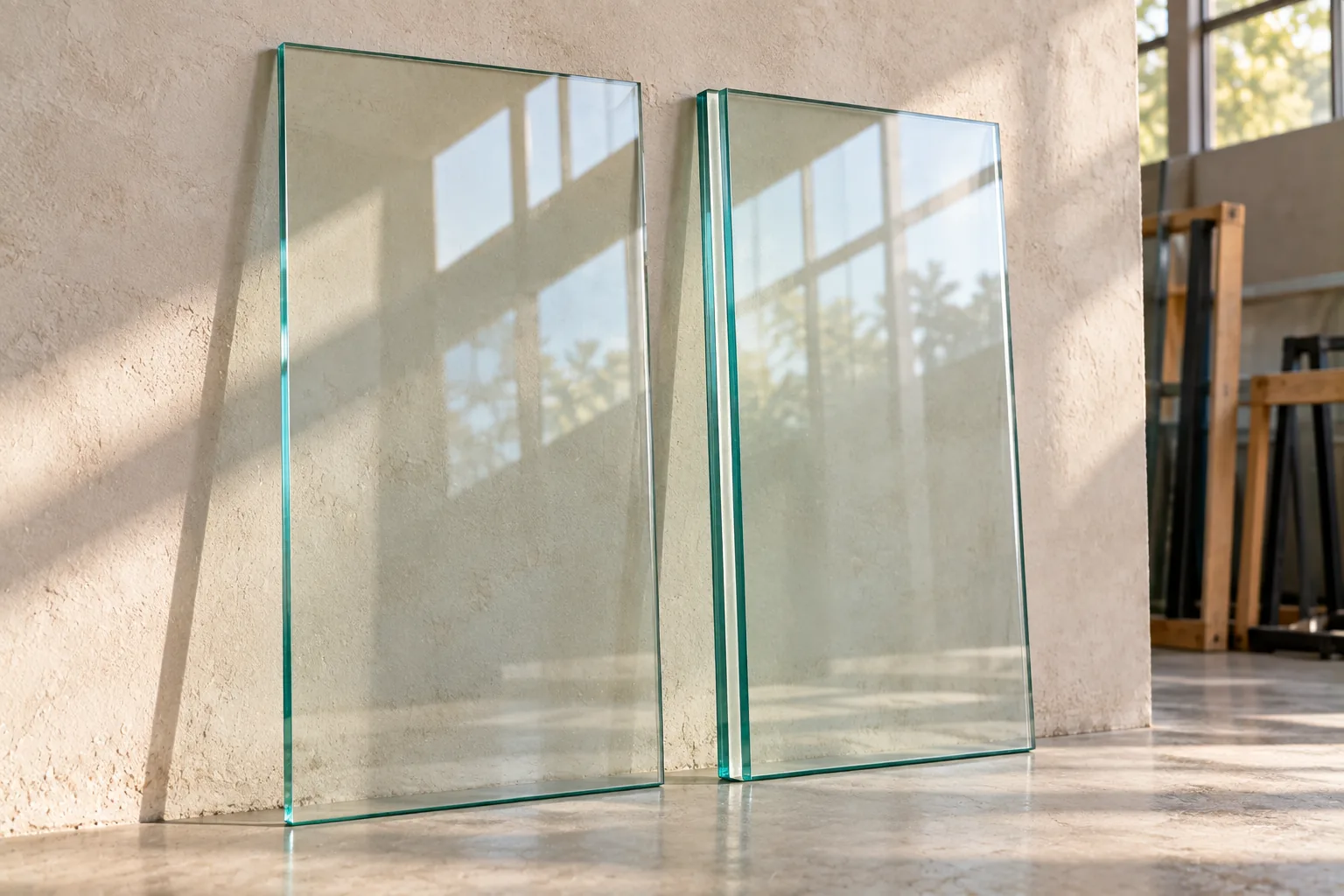
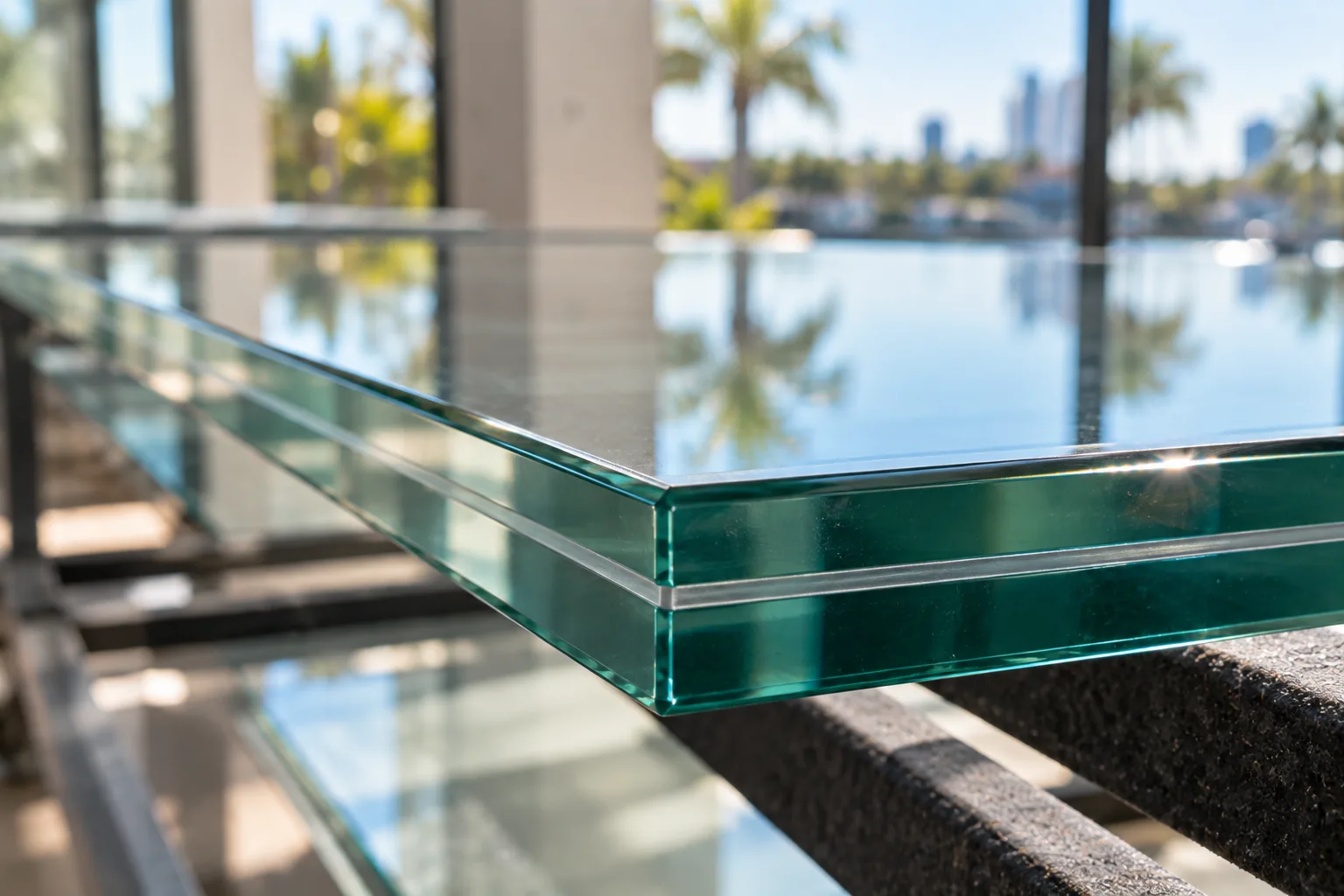
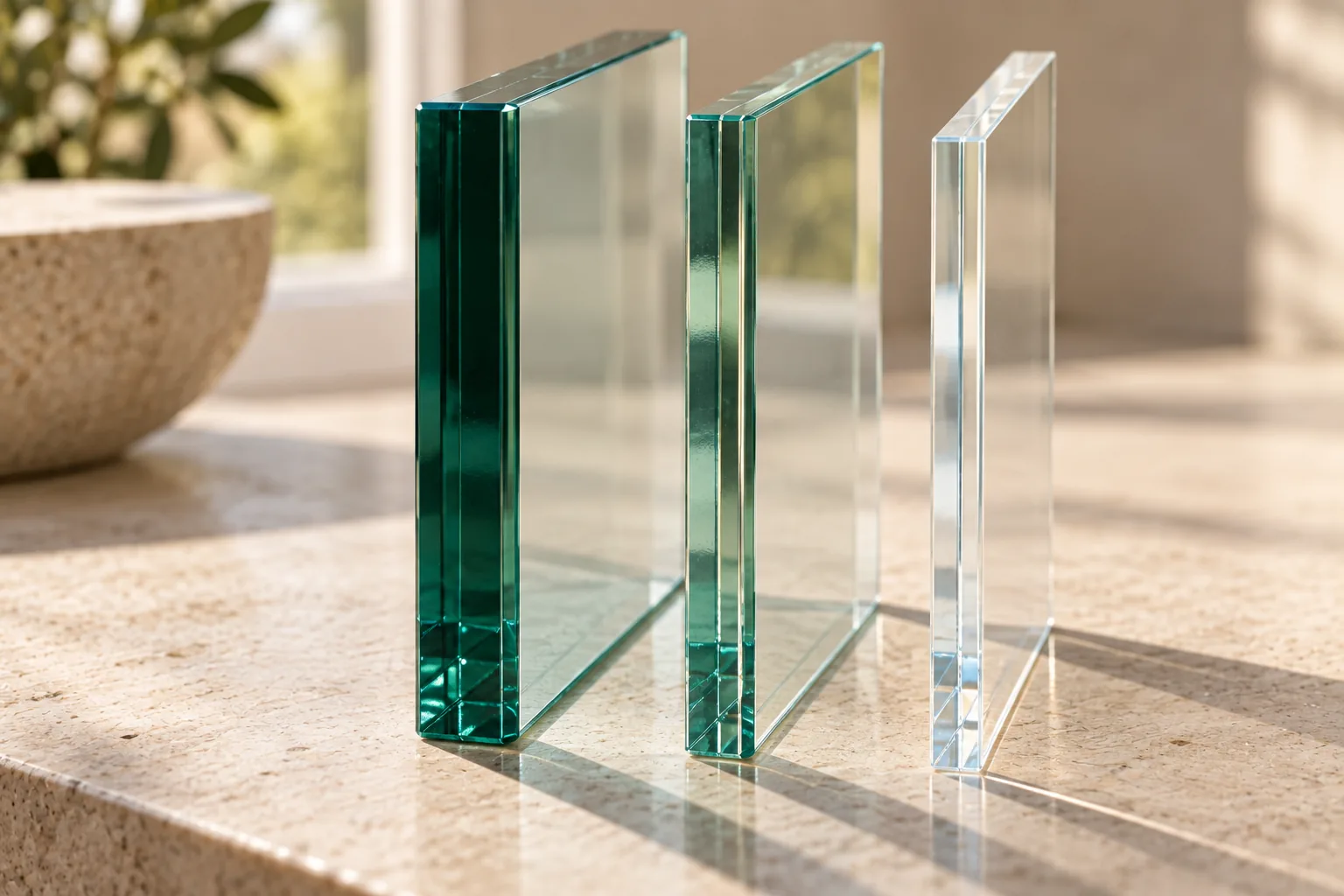
Laminated glass is two panes bonded to a thin plastic interlayer. The interlayer is invisible once installed, and it decides more about how the panel behaves than almost anything else you can specify.
It holds the two panes together. Under load it transfers force between them, so the pair behaves more like one thicker panel than two thin ones. And if the glass breaks, it keeps the pieces in place rather than letting them fall.
02
Why interlayer thickness is written in mils
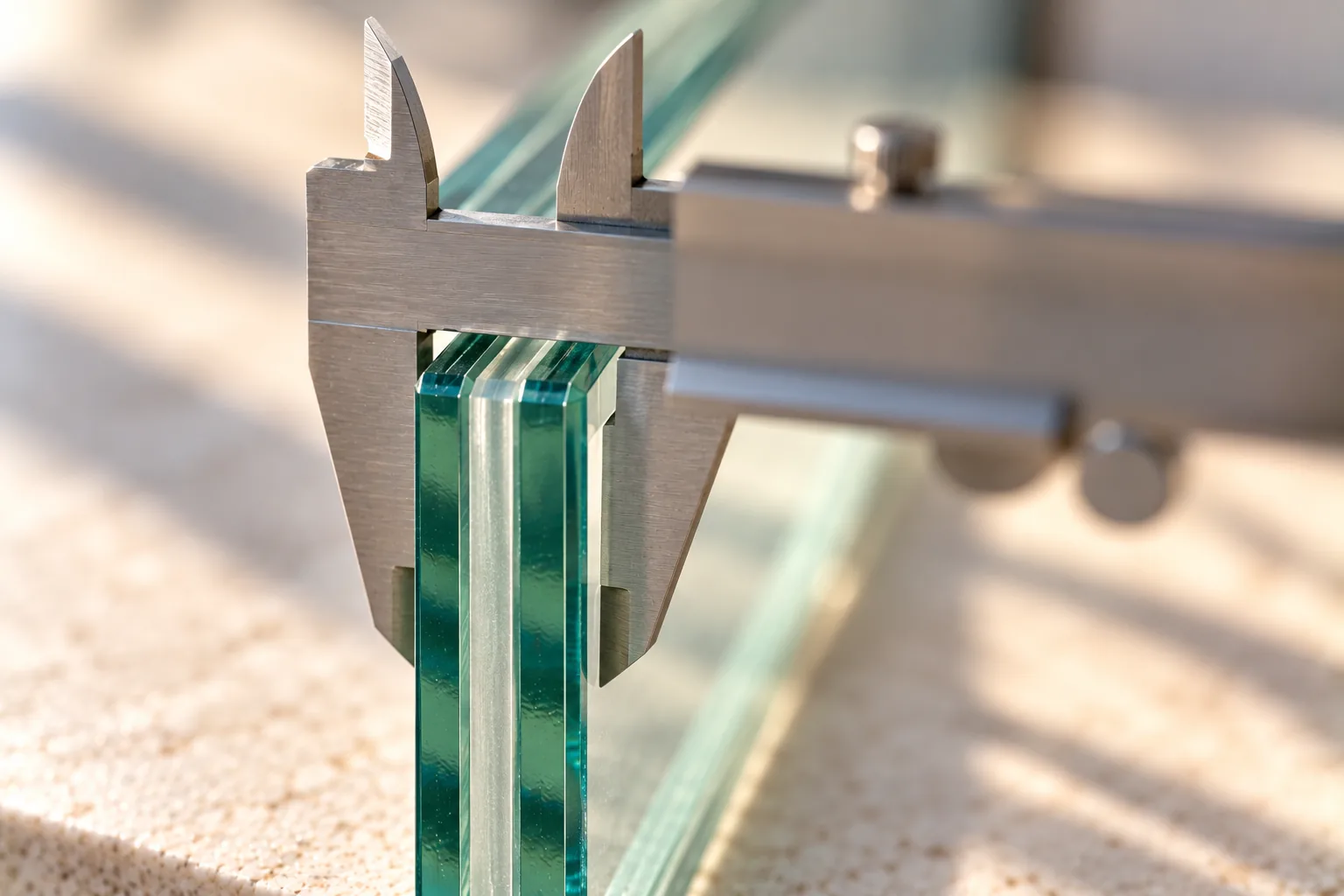
PVB is manufactured in plies of 0.015 in — fifteen mils. Two plies, 0.030 in, is the everyday laminate in a windshield or a storefront. Panels that carry load usually call for more: 0.060 in or 0.090 in, four or six plies. Ionoplast comes in its own thicknesses, commonly 0.035 in and 0.090 in. The number is not a detail. It is part of how the panel was engineered, and a quote that names the glass but not the interlayer thickness has left out half the specification.
03
PVB: the common one
Polyvinyl butyral has been the standard interlayer for decades. It is flexible, widely available, good at damping sound, and easy to get in colors and tints. It is also softer, and it does not love long-term moisture at an exposed edge.
04
Ionoplast: stiffer, and happier outdoors
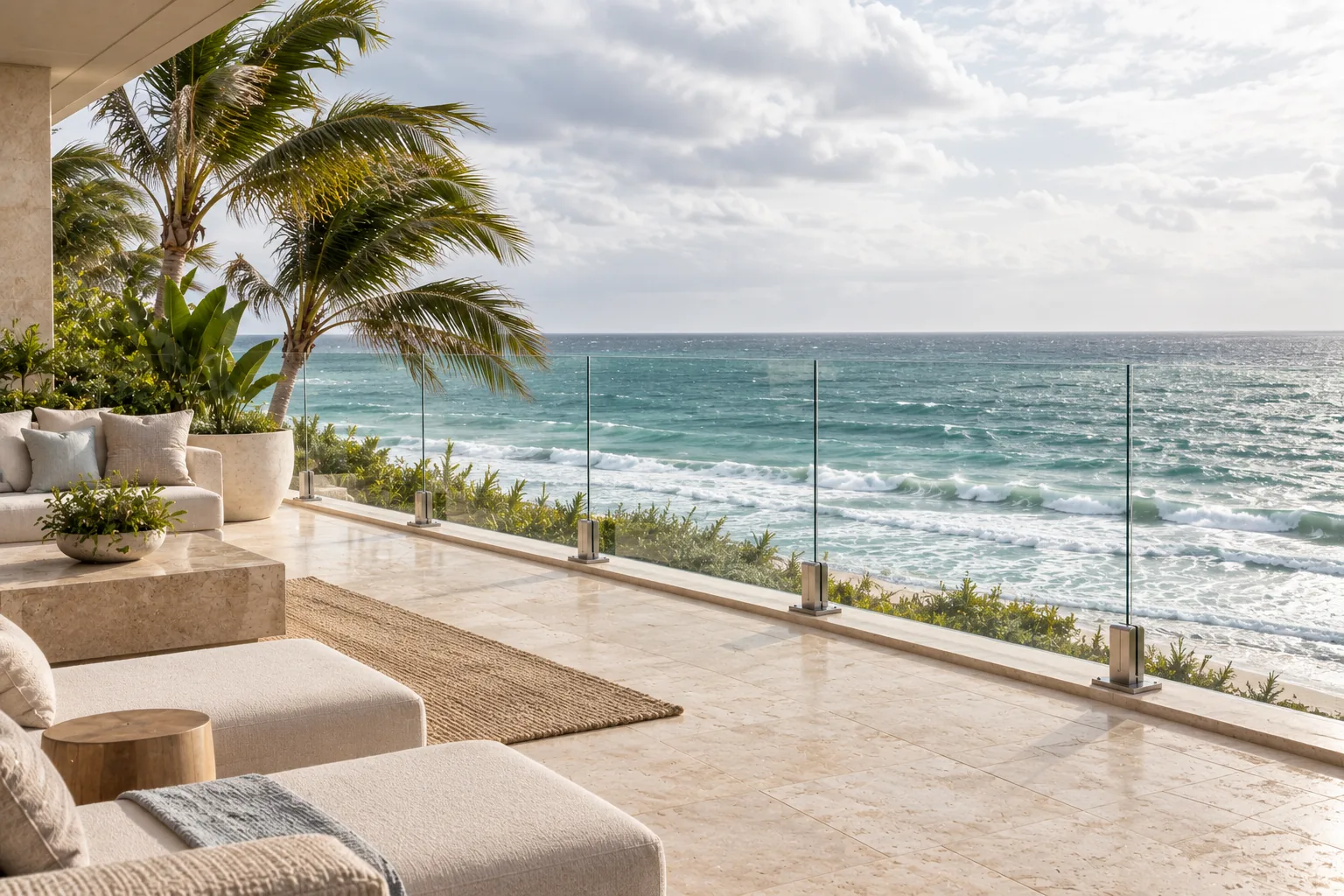
A stiffer interlayer — written SGP on a drawing, and sold most often under the SentryGlas name — that transfers load between the panes far more effectively and holds up better where the edge of the glass is exposed to weather. It costs more. On an open balcony a few streets from the ocean, that difference is the point rather than an upgrade.
05
Which one your project actually needs
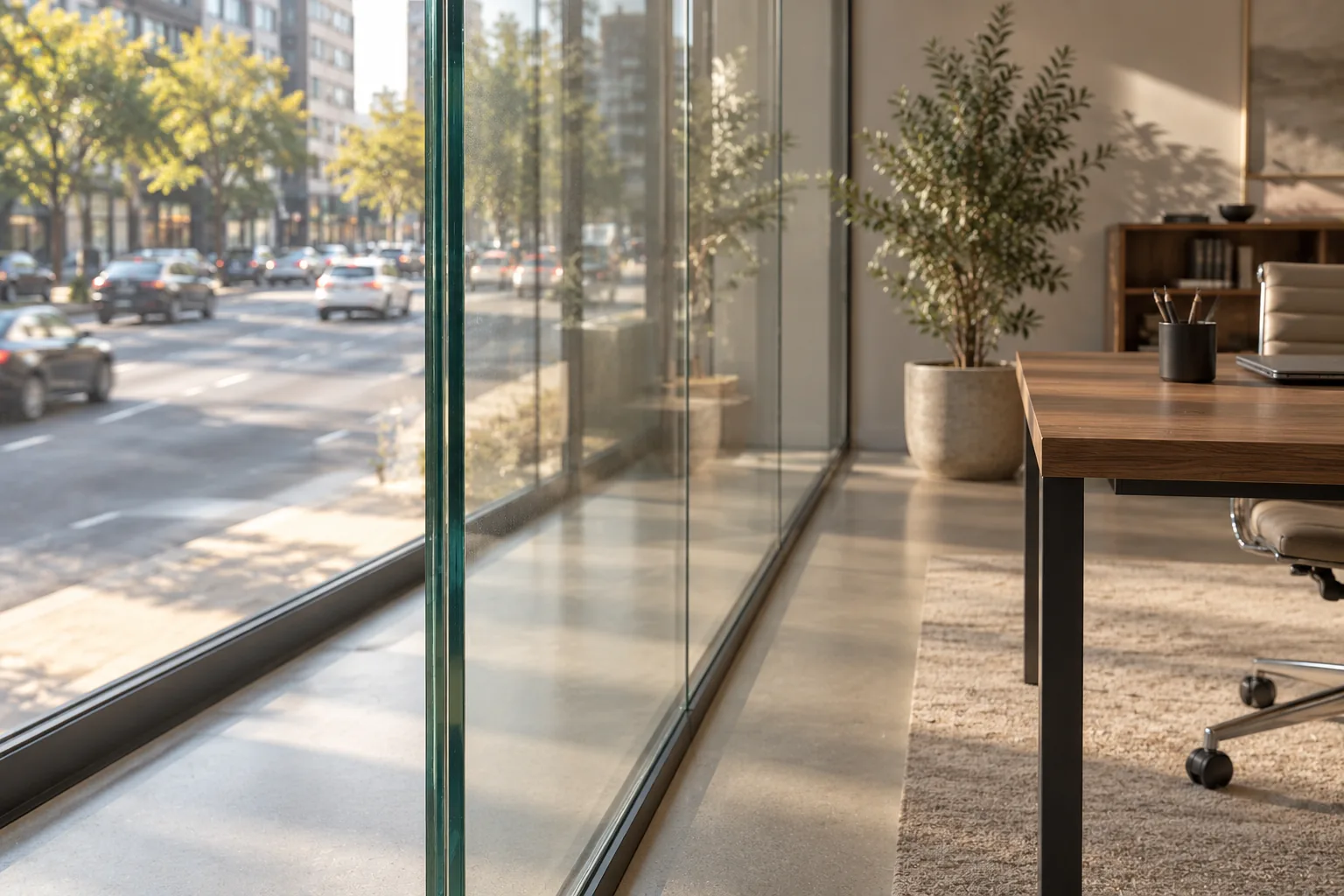
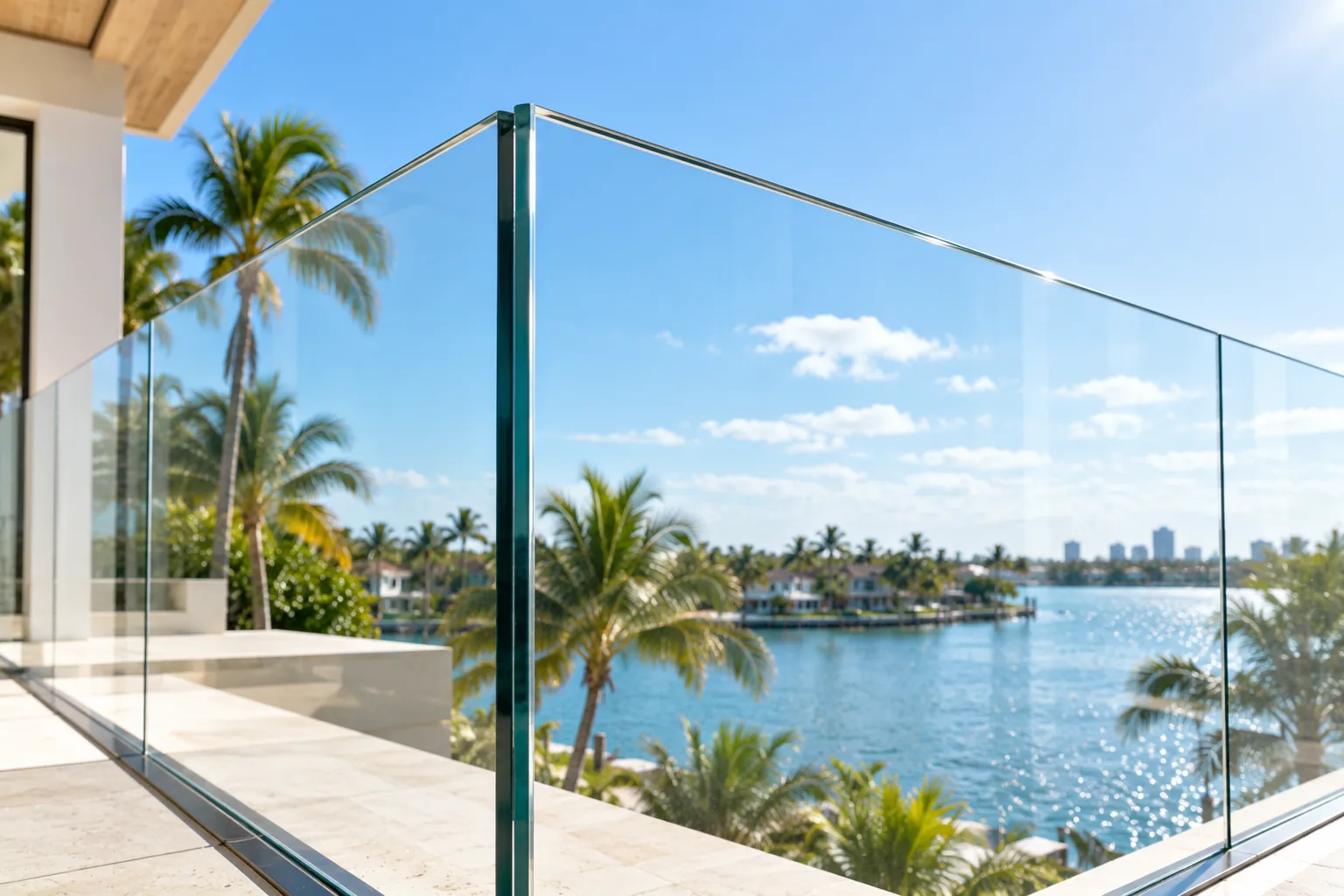
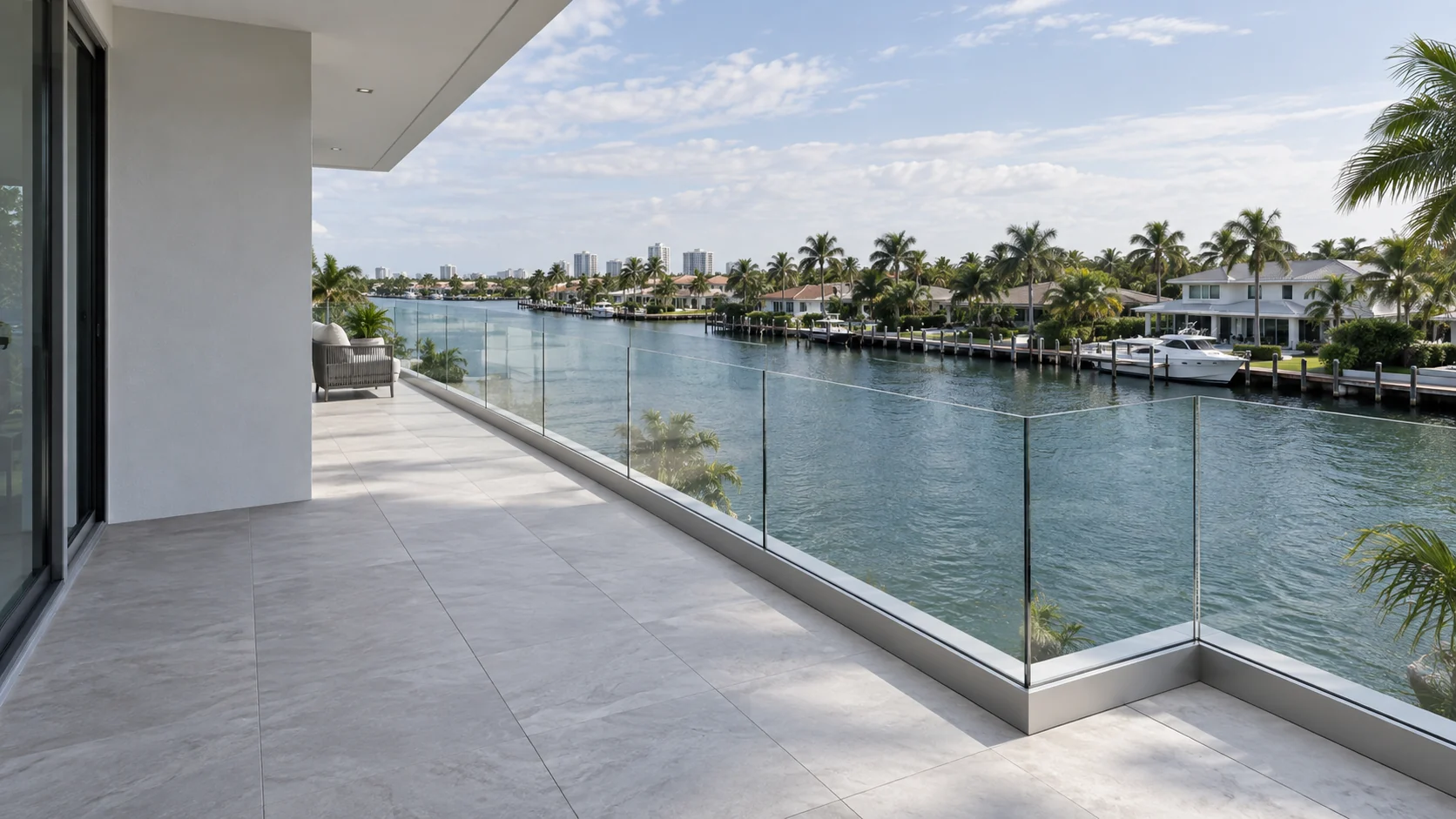
A rough rule first, then the real answer. An interior stair panel captured in a base channel under a top rail has its edge protected and its load shared, and PVB is usually enough. A panel outdoors, clamped only at the bottom, no top rail, open edge facing salt air, is the case ionoplast exists for. Between those two the deciding factors are the span, the fixing, the design load and the code path the project follows — which is why the interlayer is confirmed against the engineering for your opening rather than picked from a default.
Ionoplast is not simply the upgrade. PVB is the softer of the two, and softness is what damps sound, so a laminated partition or a balcony facing a busy road is often better served by PVB — and it takes tints and colors that ionoplast does not offer in the same range. If the edge is protected and the loads do not demand the stiffer interlayer, paying for ionoplast buys nothing you can see or hear.
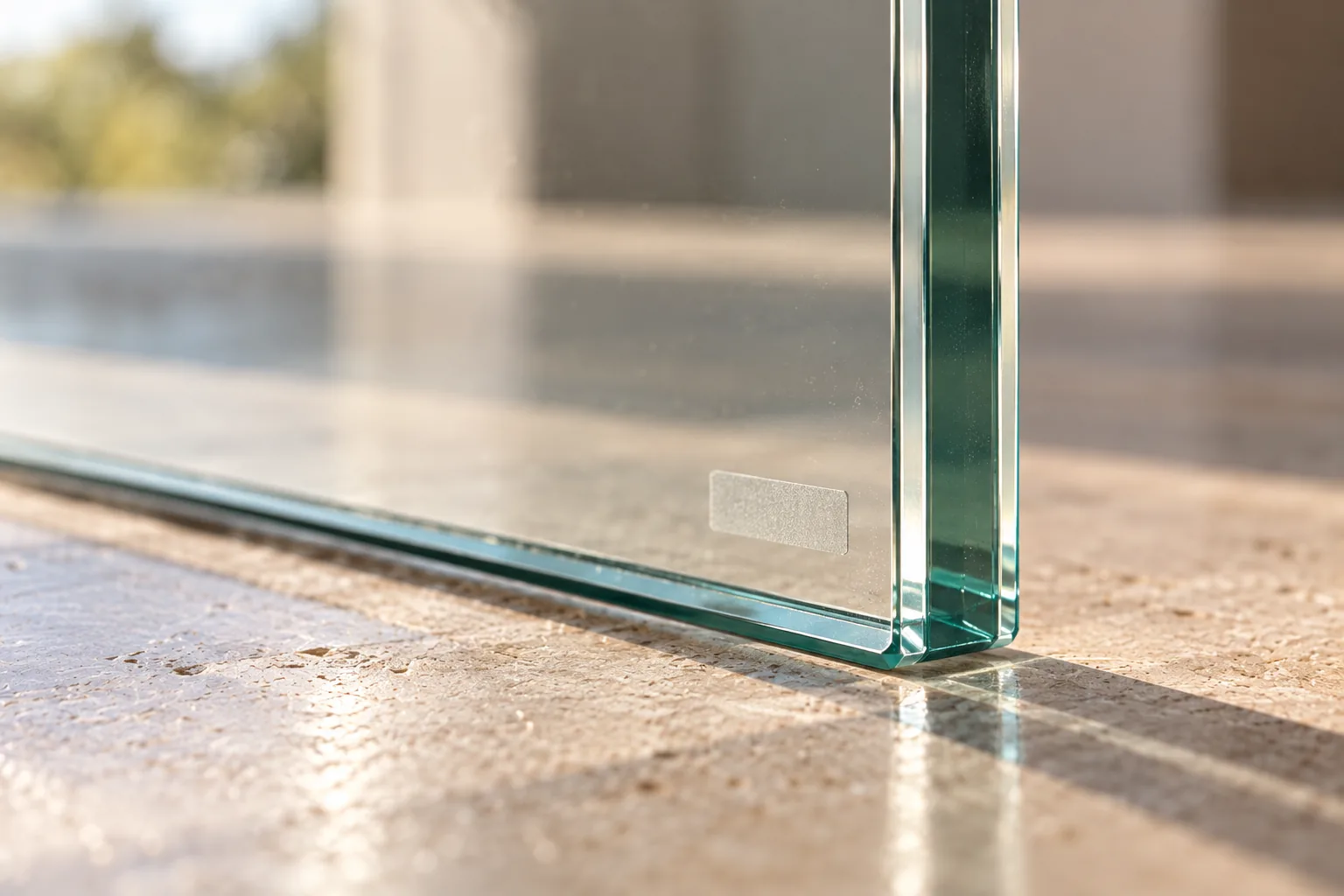
A laminated panel set into a channel has its edge protected. A panel clamped at the bottom with the rest open to the air does not. Salt, standing water and years of sun act on that exposed edge, and the interlayer is what has to survive it. Ask how the edge is treated, not just what glass was quoted.
08
Does laminated glass cloud or yellow over time?
A well-made laminate with a protected edge does neither. What does happen, and what you will occasionally see on an older coastal balcony, is delamination: moisture works into an exposed edge over years and leaves a hazy band an inch or two in from the perimeter, sometimes with small bubbles along it. That is an edge problem rather than a glass problem, and PVB is more prone to it than ionoplast. The fixes are all upstream — edge sealing, drainage in the base channel, and the right interlayer for the exposure.
09
What to ask for in writing
A quote that says "laminated glass" has not told you much. The useful version names the glass treatment of each pane, the interlayer type and thickness, and how the edges are finished and protected. That is also what makes two quotes comparable.
Which system suits a project depends on the surface it fixes to and how the space is used. Send photographs or a plan and we will go through the options against your own site rather than in general.