Two quotes for the same railing can differ by half, and the reason is almost never the glass. It is the system holding it, the shape of the run, and what each company decided to leave out of the page.
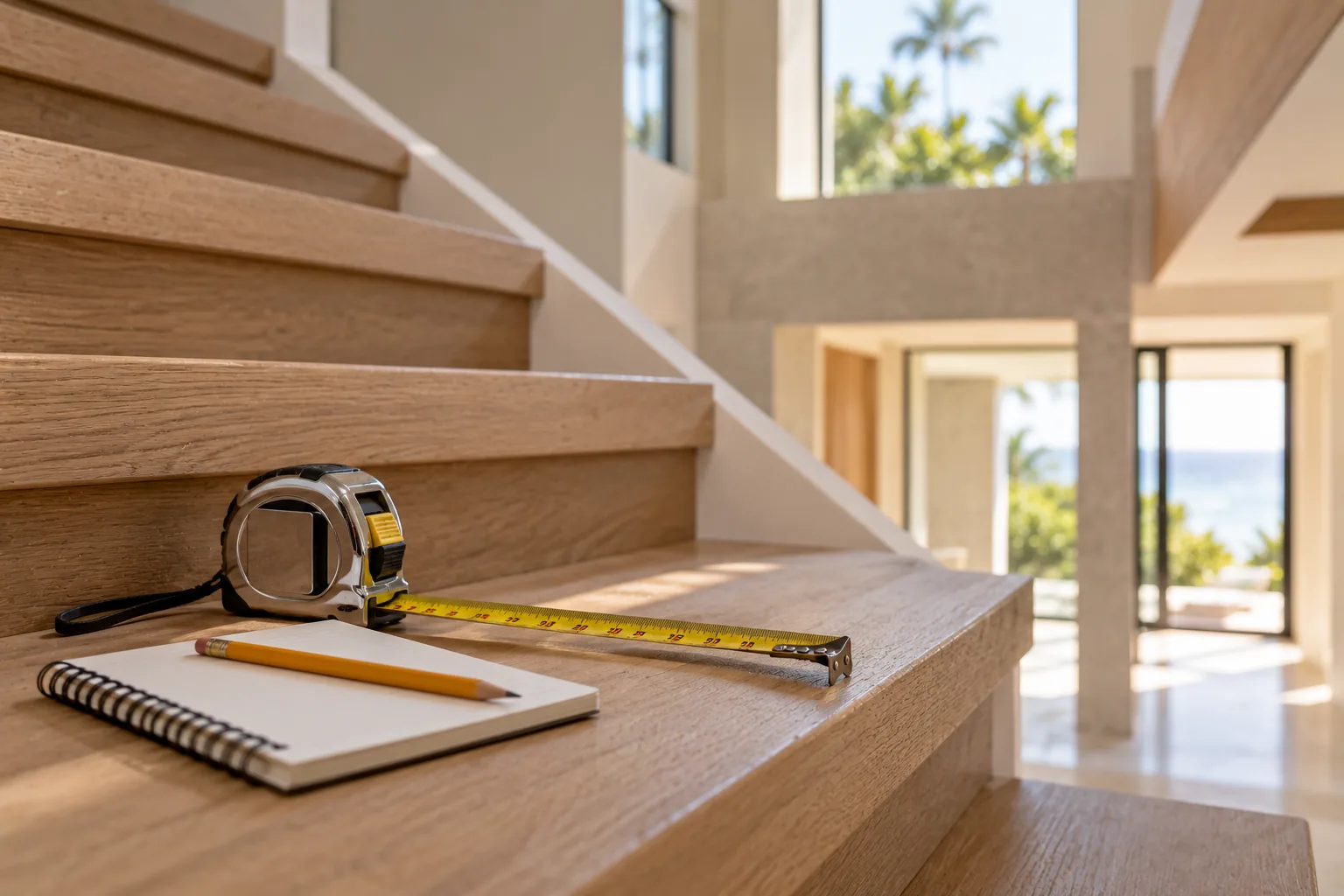
Every estimate starts with the length of the run, and that number is the easiest thing to compare — which is exactly why it hides the rest. Two runs of the same length behave differently if one is a single straight line and the other turns four corners, steps down a stair and ends at a gate. Corners, terminations and returns each add a part, a cut and a decision; the tape measure does not know that.
02
The mounting system is the biggest single lever
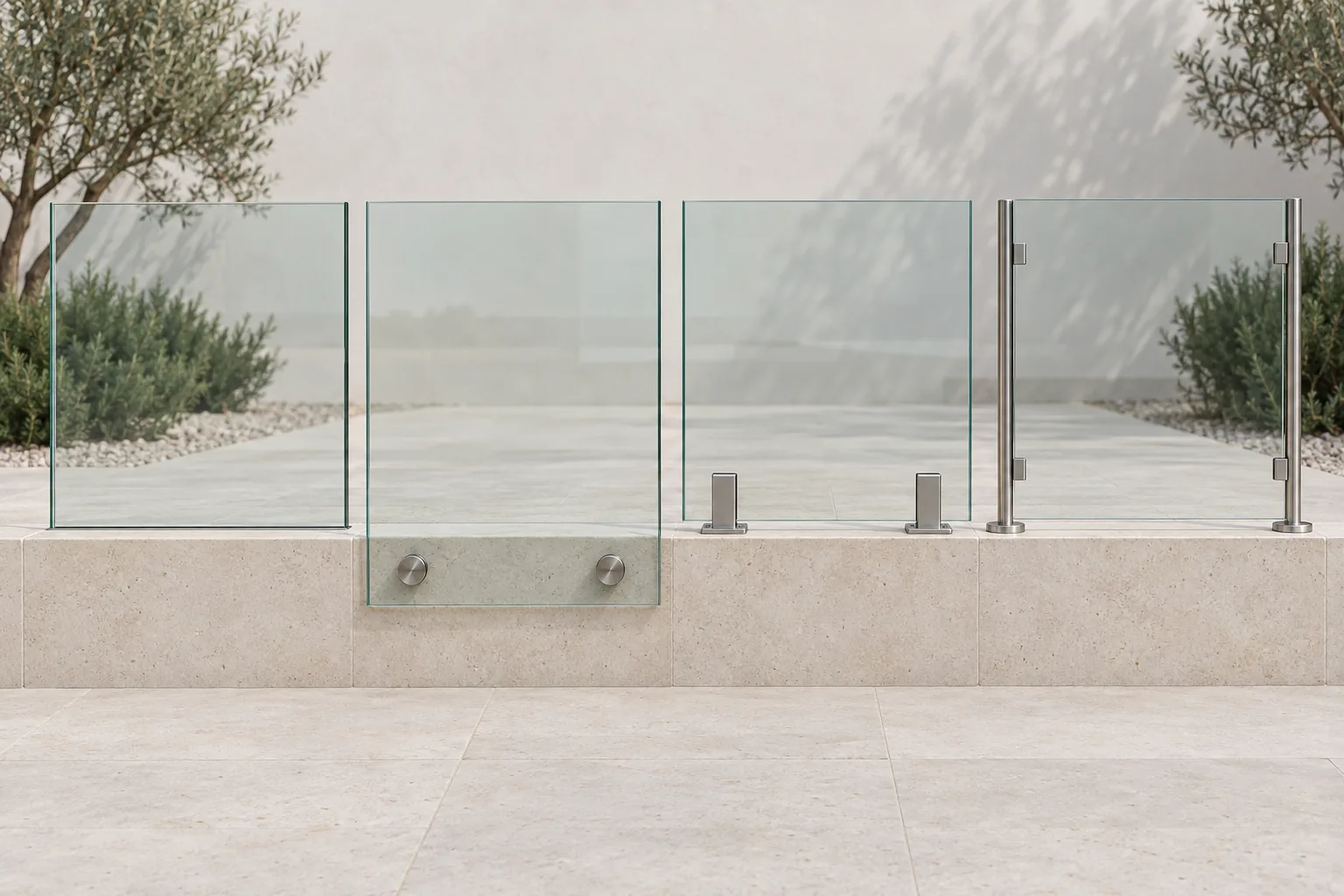
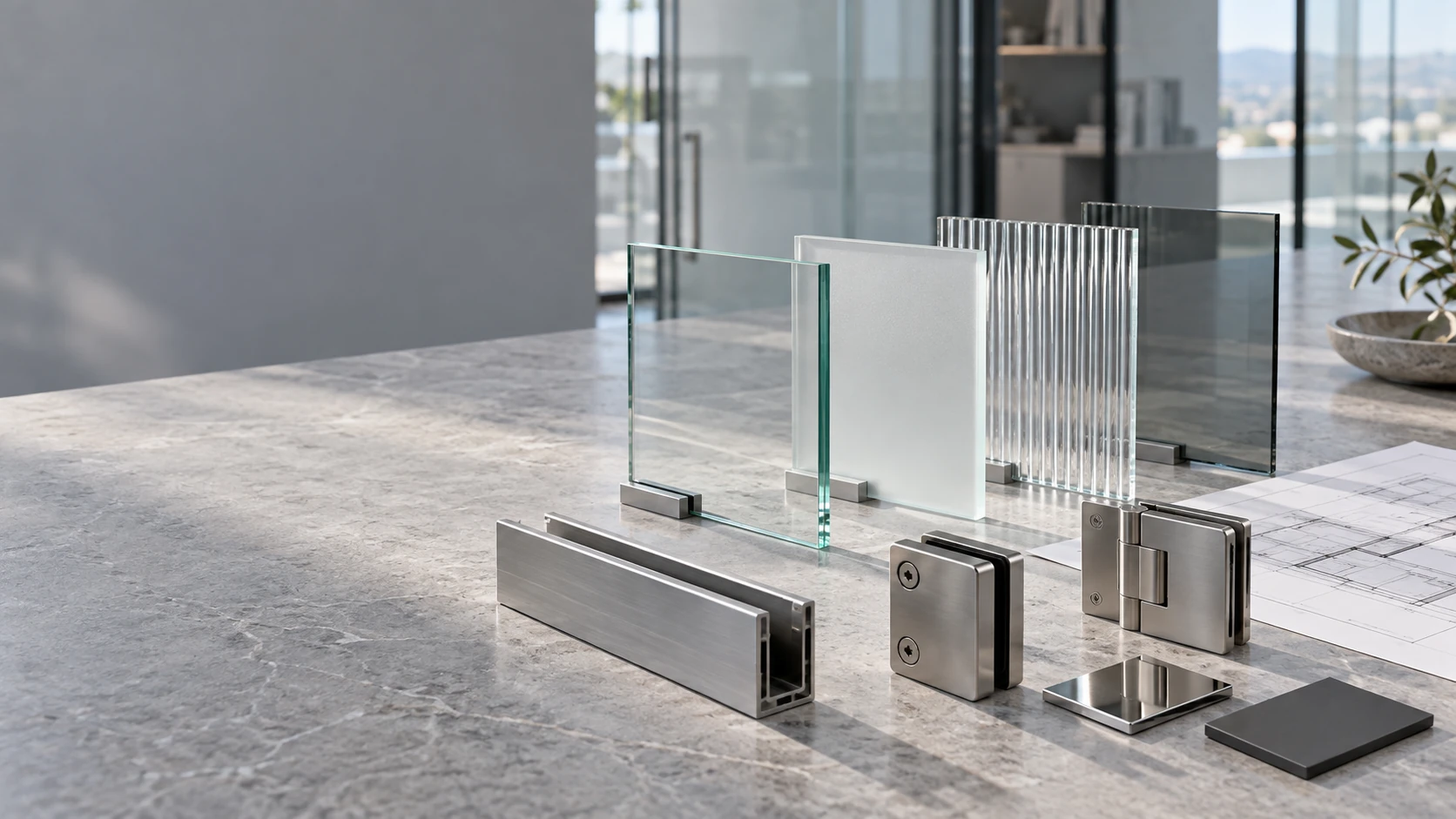
How the glass is held moves the price more than the glass does. A continuous base channel reads as one uninterrupted plane and asks the most of the substrate and the labour; point fixings and spigots put the load into fewer places and leave the floor line visible; posts carry the glass as infill and change the look entirely. These are not four prices for the same thing — they are four different assemblies with different structural demands.
Thickness steps up with span and height, laminated costs more than monolithic tempered, and low-iron costs more than ordinary float. Those differences are real, but across a whole project they are usually smaller than the gap between two mounting systems. Where glass does move the number sharply is when the panel gets big: oversized lites cost more per square foot, need more people to set, and sometimes need equipment to get them in.
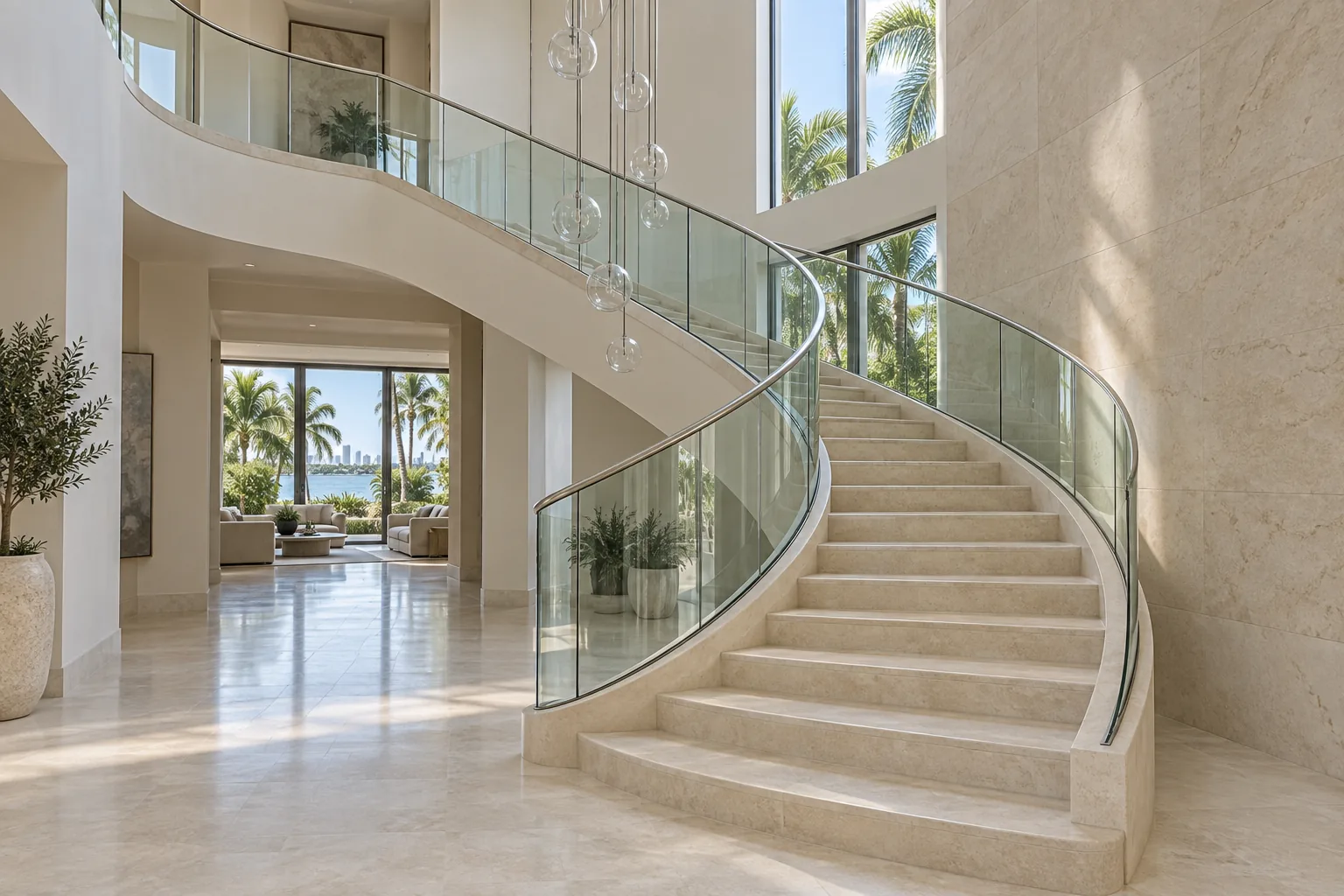
A curved run is a different product. Bent glass is formed over a mould before it is tempered or laminated, every panel is made for its own position, and a panel made to the wrong radius cannot be trimmed to fit. That shows up as a higher unit price, a longer wait, and a much higher cost for any mistake in the template. A faceted run of straight panels is the common middle path and it prices like straight glass.
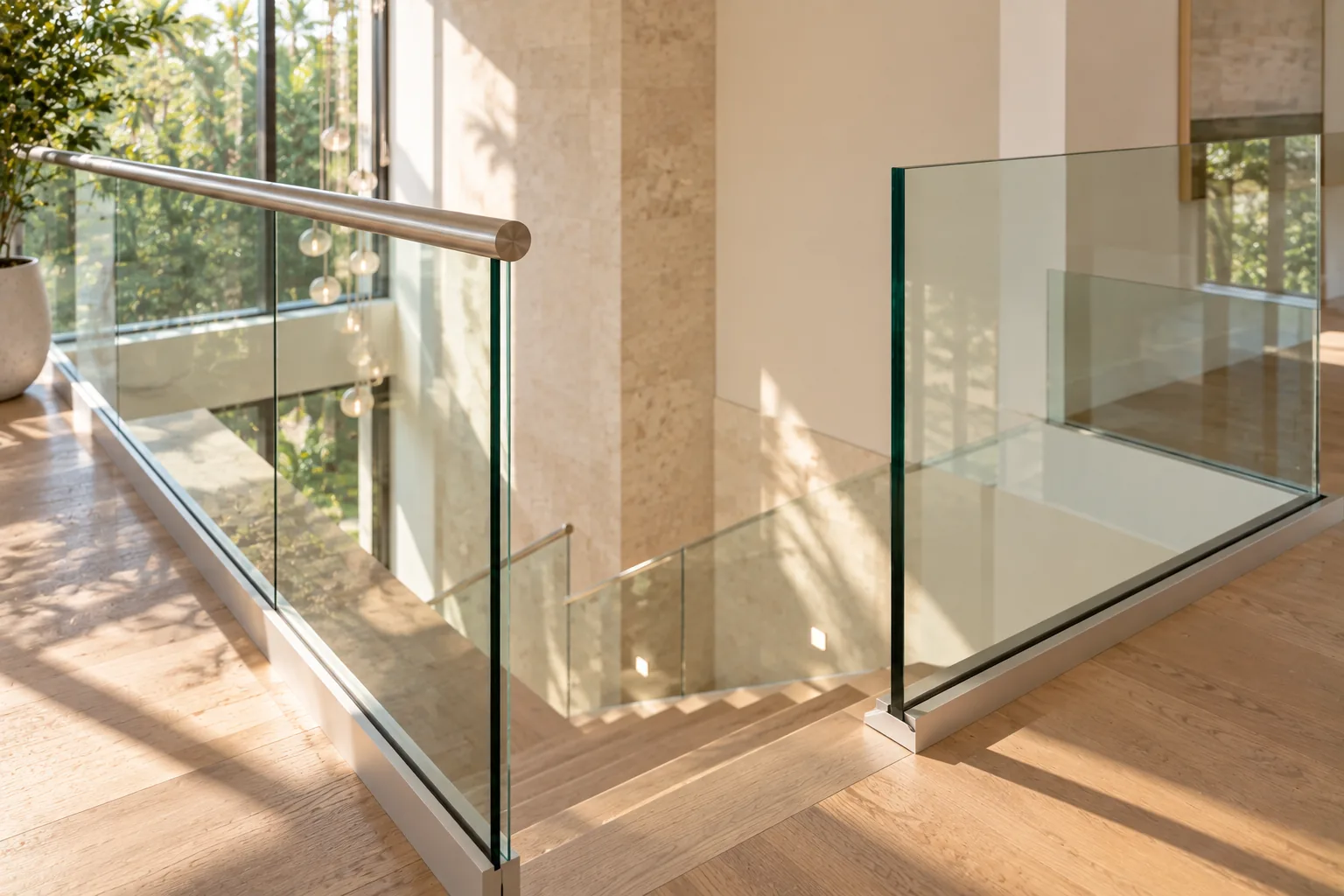
A railing with no top rail is the quieter detail and often the more expensive one: without a rail to tie the panels together, each panel has to carry itself, which usually means thicker glass, a stiffer base and tighter tolerances. A top rail adds material and labour but can let the panels work as a group. Neither answer is automatically cheaper — ask which one the quote assumes.
06
The site decides more than the drawing does
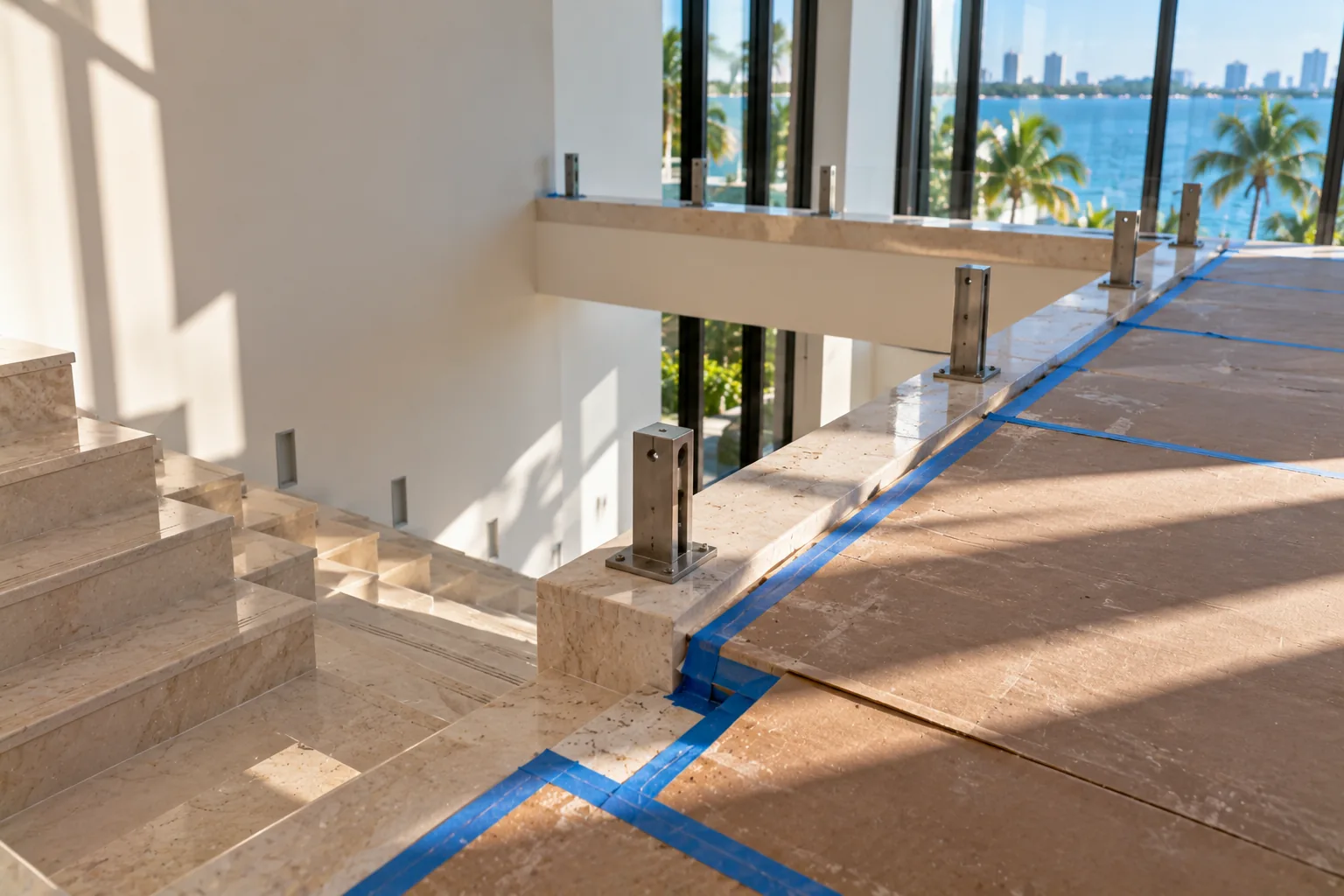
What the substrate is and whether it can take the fixing. Whether finished stone, hardwood or paint has to be protected or cut into. How the panels reach the opening — a stair turn, an elevator, a balcony that only opens from inside. Whether the work shares the day with other trades. Access and protection are real line items on a real quote, and they are the first thing a low estimate leaves out.
07
What a short quote usually left out
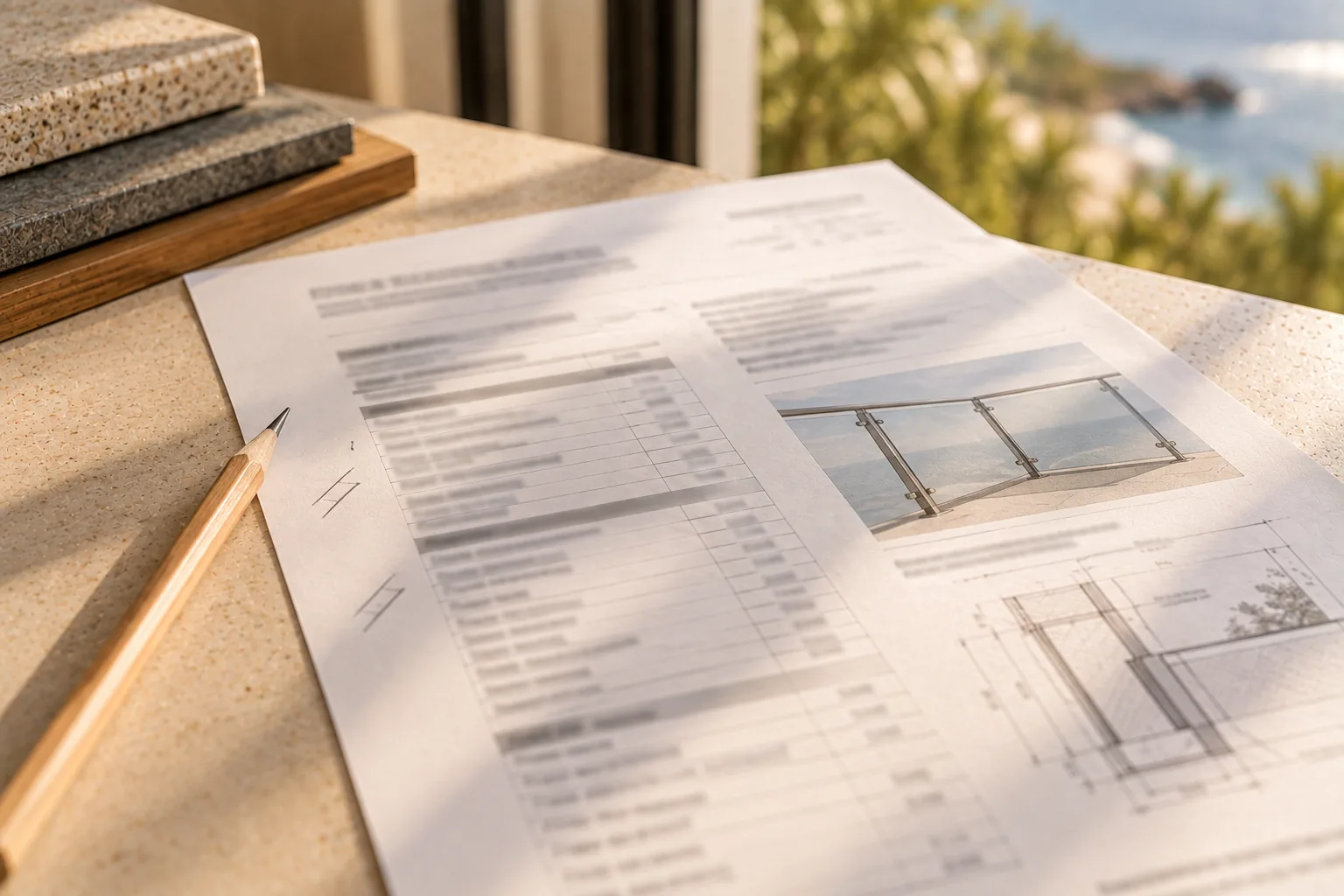
Permit drawings and engineering where the job needs them. Hardware grade — 316 instead of 304 near the ocean is a price difference, not a preference. Removal and disposal of what is there now. Sealant and finish repair at the fixings. Site protection. Delivery of oversized panels. A quote that names none of these is not cheaper; it is less complete, and the difference turns up later as a change order.
Put them side by side and line up five things: the mounting system, the glass make-up and thickness, the hardware grade and finish, what is written as excluded, and who is responsible for permits. If one quote is silent on any of those, the gap you are looking at is information, not price. We will do that comparison on an estimate you already have and tell you where it is thin.
Which system suits a project depends on the surface it fixes to and how the space is used. Send photographs or a plan and we will go through the options against your own site rather than in general.